
How Does Space Exploration Help Humans: Secretly Improves Your Life Every Day
Introduction
Have you ever wondered why billions of dollars go into launching rockets into space when there are so many problems here on Earth? It is a fair question. But here is something most people do not realize: How Does Space Exploration Help Humans in ways that touch your life every single day, even if you never look up at the sky.
From the camera in your pocket to the food you eat on a camping trip, space research has quietly transformed modern life. The technologies developed to keep astronauts alive in the most hostile environment imaginable have come back to Earth and solved real human problems.
This article breaks down exactly how space exploration benefits humanity, covering medical advances, environmental monitoring, technology spin-offs, economic growth, and even the big-picture survival of our species. By the time you finish reading, you will see outer space in a completely different light.
How Space Exploration Helps Humans: The Big Picture
Space exploration is not just about sending people to the Moon or Mars. It is a massive engine of innovation. Every mission forces engineers and scientists to solve problems that have never been solved before. And the solutions they come up with almost always find their way back to you.
NASA estimates that over 2,000 technologies originally developed for space missions have been transferred to the private sector. That number is staggering. It means that the benefits of space exploration ripple out far beyond the astronauts who experience them firsthand.
Let us break this down into the areas where the impact is most significant.
Life-Saving Medical Technologies Born in Space
How NASA Helped Save Premature Babies
In the 1980s, NASA engineers developed a chemical process to grow algae as a potential food source for long-duration space missions. What they accidentally discovered was an omega-3 fatty acid found naturally in breast milk. This discovery led to the creation of a nutritional supplement now added to most baby formulas worldwide.
Millions of premature babies have healthier brain and eye development because of a space experiment meant to grow food for astronauts.
The Invisible Braces on Your Teeth
You might be surprised to learn that the clear, nearly invisible dental aligners that millions of people wear today exist because of space research. NASA and a private company developed a translucent polycrystalline alumina material to track heat-seeking missiles. Orthodontists later adopted it to make cosmetic braces that are almost impossible to see.
Better Cancer Detection
Digital image processing technology, originally developed to enhance photos taken by the Hubble Space Telescope, is now used in breast cancer detection systems. These systems help radiologists identify tumors with much greater precision. Earlier and more accurate detection saves lives. It is that simple.
Robotic Surgery and Telemedicine
NASA developed remote surgery systems to treat astronauts who get injured far from Earth. That same technology is now used in robotic surgery suites in hospitals across the world. Surgeons can perform complex operations with smaller incisions, leading to faster recovery times and fewer complications.
Telemedicine, the ability to consult a doctor remotely, was also pioneered through NASA’s need to monitor astronaut health from thousands of miles away. During the COVID-19 pandemic, telemedicine became a lifeline for millions of people. Space research helped make it possible.
Everyday Technologies You Use That Came From Space
Your Phone Camera
The CMOS image sensor inside your smartphone camera was miniaturized by a NASA researcher in the 1990s. Before that breakthrough, cameras small enough to fit in a phone simply did not exist. Today, almost every digital camera, webcam, and medical endoscope uses this technology.
Scratch-Resistant Lenses
If you wear glasses, you benefit from another NASA spin-off. The agency developed a special coating to protect astronaut helmet visors and equipment from scratches in space. That same coating is now used on almost all plastic lenses sold today.
Memory Foam
NASA engineers originally developed memory foam in 1966 to improve crash protection in aircraft seats. Today, you find it in mattresses, pillows, wheelchair cushions, and shoe insoles. It has improved sleep quality and reduced pressure injuries for millions of people around the world.
Freeze-Dried Food
NASA developed freeze-drying technology to provide astronauts with lightweight, long-lasting food in space. Now it is used in everything from emergency ration packs to your morning instant coffee. Hikers, soldiers, and disaster relief teams all benefit from this innovation daily.
Water Filtration Systems
NASA built water purification and filtration technology to recycle water on the International Space Station. Astronauts cannot afford to waste a single drop. The systems developed to meet that extreme need are now used to bring clean drinking water to communities in developing countries and disaster zones around the world.
Space Exploration and Environmental Protection
Watching Climate Change From Above
One of the most critical ways space exploration helps humans right now is through Earth observation satellites. These satellites monitor deforestation, track melting ice caps, measure ocean temperatures, and detect changes in greenhouse gas concentrations. None of this would be possible from the ground alone.
The data collected by satellites like NASA’s Landsat program has been used by governments, scientists, and environmental organizations for over 50 years. It shapes climate policy, disaster response, and agricultural planning worldwide.
Predicting and Preparing for Disasters
Satellites track hurricanes, typhoons, and tornadoes in real time. The warning systems that give coastal communities 24 to 72 hours notice before a major storm hits rely entirely on space-based observation. Before these systems existed, storms arrived without warning and entire regions were devastated.
The 2004 Indian Ocean tsunami killed over 200,000 people in part because warning systems were inadequate. After that tragedy, space-based tsunami detection networks were dramatically improved. Similar upgrades are now in place for wildfires, floods, and volcanic eruptions.
Agricultural Benefits
Farmers around the world use satellite data to monitor soil moisture, detect crop disease, and plan irrigation schedules. Precision agriculture, guided by space technology, uses less water, fewer chemicals, and produces higher yields. For a world facing food insecurity and climate pressure, this is not a minor convenience. It is essential.
Economic and Educational Benefits of Space Exploration
A Trillion Dollar Industry
The global space economy was valued at over $546 billion in 2022 and is projected to exceed $1 trillion by 2040. That represents millions of jobs in engineering, manufacturing, data science, software development, and more. Space exploration fuels economic growth on a massive scale.
Private companies like SpaceX, Blue Origin, and hundreds of smaller firms are building an entirely new commercial space industry. That industry creates opportunities for entrepreneurs, engineers, and skilled workers across dozens of countries.
Inspiring the Next Generation of Scientists
When you watch a rocket launch or see an astronaut floating in space, something happens in your brain. Curiosity ignites. Space exploration has inspired more young people to pursue careers in science, technology, engineering, and mathematics than almost any other single field.
Countries that invest in space programs tend to have higher rates of STEM education and scientific literacy. The ripple effects of that investment show up decades later in the form of better healthcare systems, stronger economies, and more innovative industries.
International Cooperation
The International Space Station is perhaps the greatest example of international scientific cooperation in human history. The United States, Russia, Europe, Japan, and Canada have worked together continuously on the ISS since 1998. Despite political tensions on Earth, cooperation in space has remained steady and productive.
That kind of collaborative relationship builds trust, fosters scientific exchange, and demonstrates that nations can work together toward shared goals. That is a genuinely rare and valuable thing.
Space Exploration and Human Survival
The Long Game: Protecting Our Species
Here is the uncomfortable truth. Earth is the only home humanity has ever known. But it is not invincible. An asteroid impact, a supervolcanic eruption, or a runaway climate catastrophe could threaten civilization as we know it. This is not science fiction. It has happened before.
Sixty-six million years ago, an asteroid wiped out approximately 75% of all species on Earth. Dinosaurs had no way to see it coming and no way to escape. We do. And space exploration is how we develop both of those capabilities.
NASA’s DART mission in 2022 successfully changed the orbit of an asteroid called Dimorphos by crashing a spacecraft into it. That was the first real test of planetary defense technology. It worked. Humanity demonstrated for the first time that we can redirect an incoming asteroid.
Mars and the Multi-Planet Future
Becoming a multi-planet species is not a fantasy reserved for science fiction. It is a real goal being pursued by real engineers and scientists right now. Establishing a permanent human presence on Mars would give our species a second home. It would mean that no single catastrophic event could end the human story.
That may seem distant and philosophical. But the technologies being developed to get humans to Mars, including advanced life support, closed-loop agriculture, and radiation shielding, have direct applications here on Earth long before anyone sets foot on the red planet.
Space Exploration Helps Humans Understand Who We Are
The Overview Effect
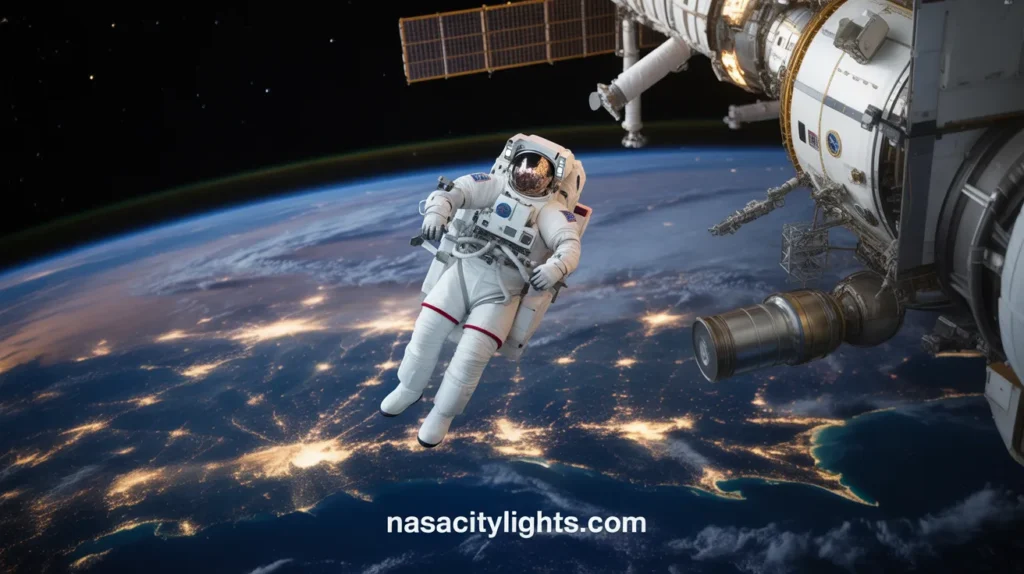
Astronauts who have seen Earth from space often describe a profound psychological shift. They see our planet as a small, fragile, beautiful sphere hanging in an infinite void. Political borders disappear. The conflicts that seem so urgent on the ground look trivial from orbit.
This experience, known as the “overview effect,” has led many astronauts to become passionate advocates for environmental protection and global cooperation. When you see the whole Earth at once, you understand that we are all in this together.
Answering the Oldest Questions
Are we alone in the universe? Where did life come from? How did the solar system form? These questions have driven human curiosity since the first people looked up at the night sky. Space exploration is the only way we will ever find real answers.
The discovery of microbial life on another planet, even extinct microbial life, would be the most significant scientific discovery in human history. It would change our understanding of biology, philosophy, religion, and our place in the cosmos. Space exploration keeps that possibility alive.
Common Myths About Space Exploration
Myth: Space exploration is a waste of money. Reality: Every dollar invested in NASA generates roughly seven to ten dollars in economic return through technology spin-offs, job creation, and industry development. It is one of the highest-return investments a government can make.
Myth: We should solve Earth’s problems before going to space. Reality: Space exploration actively helps solve Earth’s problems. Clean water technology, cancer detection, climate monitoring, and disaster prediction are all direct results of space research.
Myth: Only astronauts benefit from space missions. Reality: The technologies, data, and knowledge generated by space missions benefit billions of people who never leave the ground.
Conclusion
Space exploration helps humans in ways that are both practical and profound. It has put life-saving medical tools in hospitals, clean water in communities, accurate weather forecasts on your phone, and food on disaster relief tables. It monitors our climate, protects us from asteroid threats, drives economic growth, and inspires generations of young scientists.
The investment in space is not a choice between the stars and our planet. It is an investment in the future of both. Every mission we launch sends back something valuable, whether that is data, technology, inspiration, or a clearer picture of what Earth looks like from far away.
Next time someone questions the value of space exploration, you have a long list of answers ready. And maybe the most important one is this: going to space is how we learned to take better care of home.
What aspect of space exploration surprises you most? Share your thoughts and pass this along to someone who still thinks rockets are just for astronauts.
Frequently Asked Questions
1. How does space exploration help humans in everyday life? Space research has produced technologies like memory foam, camera sensors, water filters, and scratch-resistant coatings that billions of people use daily. It also drives advances in medicine, communications, and weather prediction.
2. What medical technologies came from space exploration? Key medical spin-offs include digital imaging for cancer detection, baby formula nutrients, robotic surgery systems, telemedicine platforms, and heart pump designs inspired by NASA engineering.
3. Does space exploration help the environment? Yes. Earth observation satellites monitor climate change, track deforestation, detect pollution, and give early warnings for natural disasters. Without space-based data, our understanding of the environment would be dramatically weaker.
4. How does space exploration help the economy? The global space economy is worth over half a trillion dollars. It creates jobs in high-tech manufacturing, data science, software, and engineering. NASA estimates it generates seven to ten dollars in economic return for every dollar invested.
5. Why is space exploration important for the future of humanity? Developing the ability to live beyond Earth gives our species a survival backup. It also advances technologies that improve life here, from energy systems to agriculture, that will matter enormously as Earth faces climate and resource pressures.
6. How does space exploration help developing countries? Satellite technology provides developing nations with better weather forecasting, improved agricultural planning, access to telemedicine, and clean water filtration systems originally designed for space missions.
7. What is the overview effect and why does it matter? The overview effect is the psychological shift astronauts experience when they see Earth from space. It promotes a sense of global unity and environmental responsibility. Many astronauts become advocates for protecting the planet after experiencing it.
8. Has space exploration helped solve water scarcity problems? Water purification technology developed for the International Space Station is now used in portable filtration systems that provide clean water in remote and disaster-affected areas around the world.
9. How does space exploration inspire education? Space missions consistently spark interest in STEM subjects among young people. Countries with active space programs tend to produce more scientists, engineers, and innovators across all industries.
10. Is space exploration worth the cost? By almost every measurable standard, yes. The return on investment through technology transfer, job creation, scientific knowledge, and national security benefits far exceeds the initial cost of space programs.
Must Read…
About the Author
Jordan Khalil is a science and technology writer with over eight years of experience covering space, innovation, and their real-world impact on society. Jordan has contributed to multiple science publications and holds a background in aerospace communications. A firm believer that space belongs to everyone, Jordan writes to make complex science accessible, relevant, and genuinely exciting for everyday readers.