
PECO Power Outage: What You Must Know to Stay Safe and Prepared in 2026
Introduction
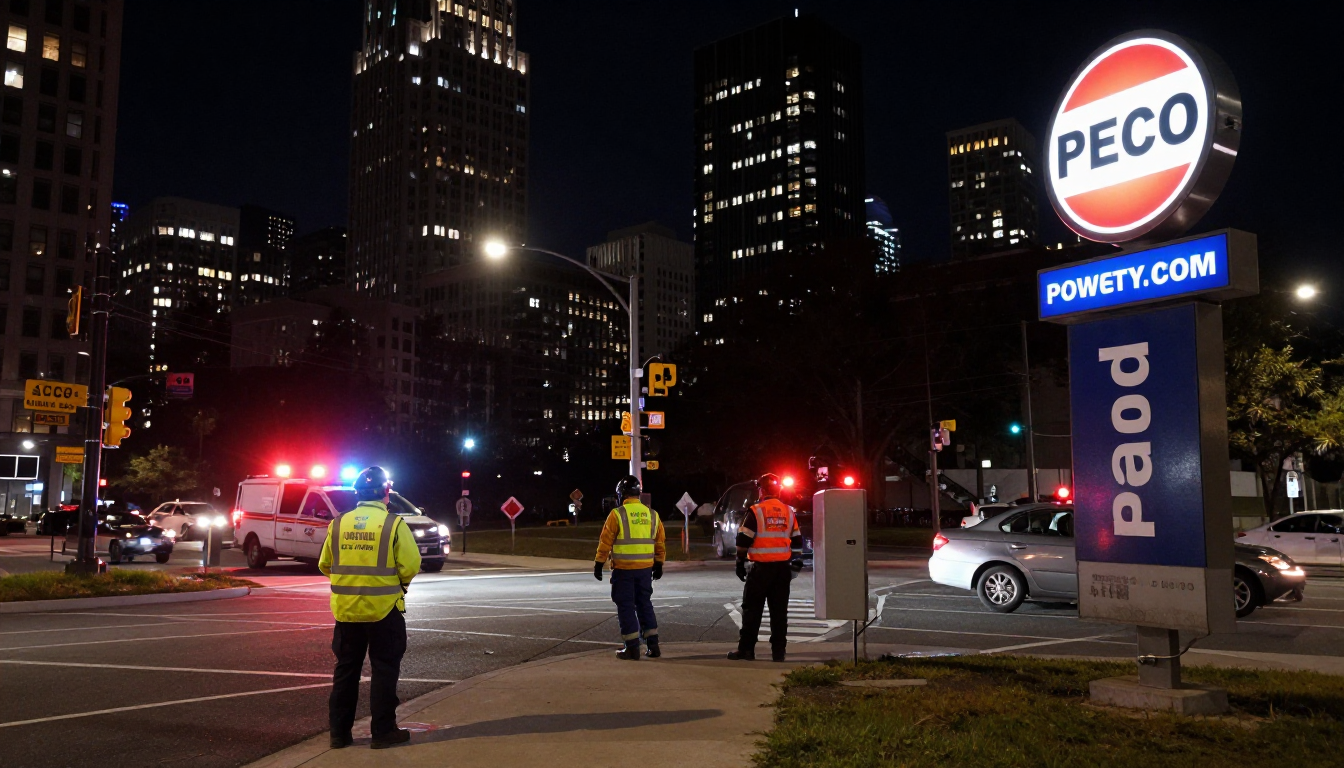
A PECO power outage hits at the worst possible times. Maybe it is a stormy Tuesday night, your dinner is half-cooked, and suddenly everything goes dark. You scramble for your phone, wondering what happened, how long it will last, and what you should do next.
If you are a PECO customer in Pennsylvania, you are not alone. Thousands of residents deal with unexpected outages every year, especially during severe weather. The good news is that PECO has solid systems in place to help you report, track, and survive an outage without losing your mind or your groceries.
This article walks you through everything you need to know about a PECO power outage, from how to report it and check your restoration status, to staying safe and protecting your home while you wait. Whether you are a first-time customer or a long-time resident, you will find practical tips here that actually help.
What Is PECO and Who Does It Serve?
PECO is one of the largest electric and natural gas utilities in the United States. It serves about 1.6 million electric customers and over 500,000 natural gas customers across southeastern Pennsylvania. The service area includes Philadelphia and surrounding counties like Bucks, Chester, Delaware, and Montgomery.
Because PECO covers such a large and densely populated region, any major storm or infrastructure failure can affect tens of thousands of customers at once. Understanding how the system works gives you a real advantage when the lights go out.
Common Causes of a PECO Power Outage
Not every outage has the same cause. Knowing what triggered the problem helps you estimate how long you might be without power.
Severe Weather
Storms are the number one cause of outages in PECO’s service area. High winds knock down trees and power lines. Ice storms add weight that snaps cables. Lightning can strike transformers and cause immediate failures.
Equipment Failures
Even without a storm, equipment wears out. Transformers age, underground cables corrode, and circuit breakers trip. These failures can affect a single street or an entire neighborhood.
Vehicle Accidents
Cars and trucks sometimes hit utility poles. When that happens, the pole and its lines come down, and customers in that zone lose power instantly.
Planned Outages
PECO sometimes schedules maintenance work. In those cases, they notify customers in advance. A planned peco power outage is inconvenient but predictable.
High Demand
During extreme heat waves, the electrical grid faces enormous pressure. Air conditioners running all day can overload circuits and trigger outages across a wide area.
How to Report a PECO Power Outage
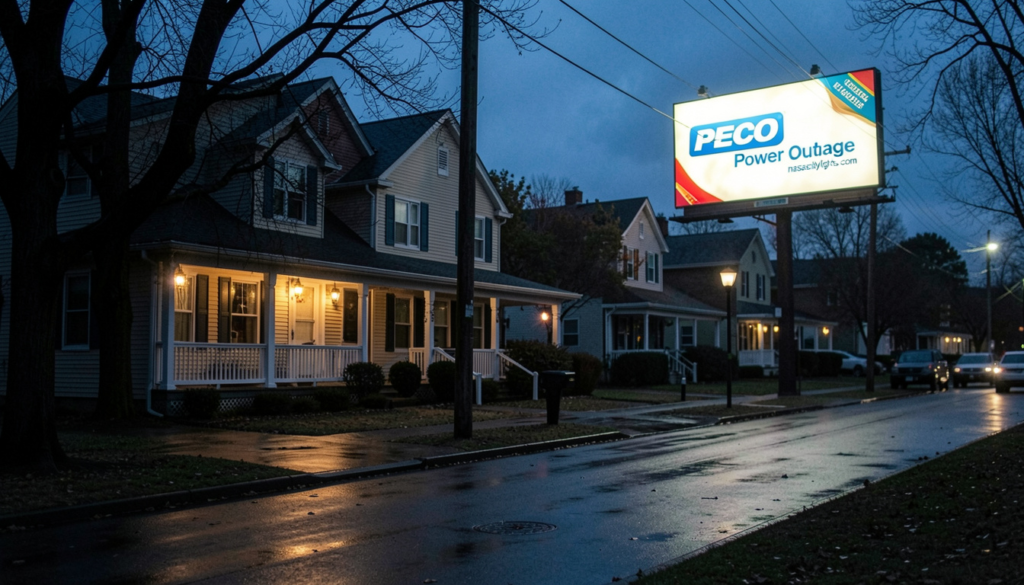
The moment your power goes out, your first move should be to report it. Even if you think your neighbor already did, report it yourself. More reports from the same area help PECO pinpoint the problem faster.
Here are the ways you can report a PECO power outage:
Online: Go to the PECO website at peco.com and use the outage reporting tool. You will need your account number or the phone number linked to your account.
By Phone: Call 1-800-841-4141. This line is available 24 hours a day, 7 days a week. It works even during major storms when online systems may be slow.
Through the PECO App: Download the PECO mobile app on iOS or Android. You can report an outage and track restoration progress directly from your phone.
Text Alerts: If you are enrolled in text alerts, you can text “OUT” to 84111 to report an outage and receive updates.
I always recommend having the phone number handy before a storm hits. Scrambling to find it in the dark adds unnecessary stress.
How to Check PECO Outage Status and Restoration Time
Once you have reported the outage, your next question is probably: when will my power come back?
PECO provides a real-time outage map on their website. Here is how to use it:
- Visit peco.com/outagemap
- Zoom into your neighborhood on the interactive map
- Click on your area to see the number of customers affected
- Check the estimated restoration time (ERT) if one has been posted
Keep in mind that early in an outage, PECO may not yet have an estimated restoration time. Crews first have to assess the damage before they can give a reliable estimate. Refresh the map every 30 to 60 minutes for updated information.
What the Estimated Restoration Time Actually Means
The ERT is not a guarantee. It is PECO’s best current estimate based on available information. Weather conditions, crew availability, and the complexity of repairs can all push that time back. Do not plan your evening entirely around it.
What to Do During a PECO Power Outage
Losing power can feel chaotic. Having a simple plan makes it much more manageable. Here is what you should do step by step.
Step 1: Check Your Breaker Box First
Before you report an outage, quickly check your circuit breaker. Sometimes a tripped breaker is the only issue, and resetting it takes 10 seconds. If your breaker looks fine but your neighbors have power and you do not, then it is likely an outage specific to your home. Call PECO directly in that case.
Step 2: Unplug Sensitive Electronics
Power surges happen when electricity is restored. These surges can damage computers, televisions, gaming consoles, and appliances. Unplug them or use surge protectors before power comes back.
Step 3: Keep the Refrigerator and Freezer Closed
A full freezer stays safe for about 48 hours if you keep it closed. A refrigerator holds safe temperatures for about 4 hours. Do not open them unless you need something. Every time you open the door, cold air escapes.
Step 4: Use Flashlights, Not Candles
Candles are a fire hazard, especially if you fall asleep or leave a room. LED flashlights and battery-powered lanterns are much safer. Stock up before storm season.
Step 5: Charge Your Devices
If you have any warning that a storm is coming, charge your phone, power bank, and any battery backups fully. A charged phone is your lifeline during a peco power outage.
Step 6: Stay Updated
Keep the PECO app open or check the outage map regularly. Sign up for text and email alerts so you get restoration updates automatically.
Food Safety During an Outage
This is one area where people often make mistakes. Eating unsafe food after an outage can make you seriously ill. Here are the basic rules:
When in doubt, throw it out. If you are unsure whether food has been at an unsafe temperature, do not risk it.
Use a food thermometer to check the temperature of perishables. The danger zone is between 40°F and 140°F. Bacteria multiply rapidly in this range.
Discard these items if they have been above 40°F for more than 2 hours:
- Meat, poultry, and seafood
- Dairy products like milk and soft cheese
- Eggs and egg-based dishes
- Cooked leftovers
- Cut fruits and vegetables
Foods that are generally safe to keep:
- Hard cheeses
- Butter and margarine
- Bread and rolls
- Peanut butter
- Jelly and jam
- Whole fruits and vegetables
- Fruit juices
Generator Safety: What You Need to Know
Many people turn to generators during a peco power outage. Generators are incredibly useful, but they are also dangerous if used incorrectly.
Never run a generator indoors. Carbon monoxide is odorless, colorless, and deadly. Every year, people die from running generators in garages, basements, or near open windows. Always operate your generator outside, at least 20 feet away from your home.
Do not plug a generator directly into your wall outlet. This is called backfeeding, and it can electrocute utility workers restoring power on the line. Use a transfer switch or plug appliances directly into the generator.
Keep fuel stored safely. Store gasoline in approved containers, away from heat sources. Do not overfill the tank.
If you are considering a standby generator, have a licensed electrician install it. It is a significant investment but gives you automatic backup power when the grid goes down.

How PECO Responds to Major Outages
During a large peco power outage, the company follows a priority restoration process. Understanding this helps you manage your expectations.
Priority 1: Critical Infrastructure Hospitals, water treatment plants, emergency services, and other critical facilities come first. This makes sense because public safety depends on these systems.
Priority 2: Transmission Lines These are the large lines that carry power across wide areas. Restoring these brings back power to large sections of the grid quickly.
Priority 3: Distribution Lines These lines deliver power to neighborhoods. Crews work block by block to restore smaller groups of customers.
Priority 4: Individual Services Sometimes the problem is with the line running directly to your home. This is the last step and can sometimes be handled separately from the main restoration effort.
PECO deploys additional crews during major storms, often bringing in workers from other utility companies to speed up restoration.
PECO’s Customer Protections and Rights
Pennsylvania law gives you certain rights as a utility customer. Here are a few worth knowing.
Medical Certificate: If someone in your home depends on electricity for life-sustaining medical equipment, you may qualify for a Medical Certificate. This gives you additional protections against service interruption.
Budget Billing: PECO offers budget billing to help you manage your payments year-round. This does not directly affect outage response, but it helps you stay current on your account.
Low-Income Assistance: Programs like the Customer Assistance Program (CAP) help qualifying low-income customers with reduced rates and payment plans.
For outage-specific concerns, PECO has a customer service team available around the clock. If you feel your outage has gone unaddressed for too long, call 1-800-841-4141 and ask to speak with a representative.
Preparing Before the Next PECO Power Outage
The best time to prepare is before the outage, not during it. Here is a simple preparation checklist to keep your household ready.
Build a power outage kit:
- Flashlights and extra batteries
- Battery-powered or hand-crank radio
- Portable phone charger or power bank
- First aid kit
- Three-day supply of water (one gallon per person per day)
- Non-perishable food items
- Manual can opener
- Copies of important documents
- Cash in small bills (ATMs may not work)
- Blankets and warm clothing
For your home:
- Install surge protectors on sensitive electronics
- Know where your circuit breaker is
- Consider a whole-home standby generator
- Sign up for PECO outage alerts
For medical needs:
- Keep medical devices fully charged
- Have a backup plan if you use oxygen or other powered medical equipment
- Register with PECO’s Medical Certificate program if eligible
Special Considerations for Businesses
A peco power outage does not just affect homes. Small businesses can lose thousands of dollars in a single day without power. Here is what businesses should have in place.
Invest in an uninterruptible power supply (UPS) for computers and point-of-sale systems. This gives you enough time to save data and shut down properly.
Talk to an electrician about backup power options. A commercial generator can keep essential systems running during extended outages.
Review your business insurance policy. Some policies cover losses from power outages. Knowing what your policy includes before a disaster is critical.
How Climate Change Is Affecting Power Outages in Pennsylvania
Extreme weather events are becoming more frequent and more intense. Research shows that the number of major weather-related outages in the United States has more than doubled since the early 2000s. Pennsylvania is not immune to this trend.
Stronger storms, longer heat waves, and more intense winter weather all put pressure on the electrical grid. PECO has been investing in grid hardening and infrastructure upgrades to improve resilience. However, customers still play an important role in preparing for longer and more frequent outages.
Conclusion
A PECO power outage is stressful, but it does not have to be overwhelming. When you know how to report the outage, track your restoration status, protect your home, and stay safe, you are already ahead of the curve.
The key takeaways are simple. Report the outage as soon as it happens. Keep your freezer closed and your generator outside. Unplug your electronics before power returns. And always have a basic emergency kit ready before storm season begins.
Have you ever been caught off guard by a power outage and wished you had prepared better? Now is the perfect time to put a plan together. Share this article with a neighbor or family member who might benefit, and help your community stay better prepared for the next outage.
Frequently Asked Questions
1. How do I report a PECO power outage? You can report it online at peco.com, by calling 1-800-841-4141, through the PECO mobile app, or by texting “OUT” to 84111.
2. How long does a PECO power outage usually last? It depends on the cause. A simple equipment failure may be resolved in a few hours. A major storm can leave customers without power for one to three days or longer.
3. How do I check PECO outage status? Visit peco.com/outagemap to see the real-time outage map and check the estimated restoration time for your area.
4. Does PECO prioritize certain customers during outages? Yes. Hospitals and critical infrastructure are restored first, followed by transmission lines, then neighborhoods, and finally individual homes.
5. What should I do if my neighbors have power but I do not? Check your circuit breaker first. If it looks fine, the issue may be with the service line running directly to your home. Call PECO to report the specific problem.
6. Is it safe to use a gas stove during a PECO power outage? You can often light a gas stove manually during an outage, but never use it for heating your home. Do not use gas grills or camp stoves indoors either.
7. How do I protect my appliances when power comes back? Unplug sensitive electronics before power is restored to protect them from surges. Use surge protectors as a long-term solution.
8. What if I have a medical device that requires electricity? Register for PECO’s Medical Certificate program. Also have a backup plan, such as a battery backup for your device or a plan to stay with someone who has power.
9. Will PECO compensate me for food lost during an outage? PECO generally does not reimburse for spoiled food. Check your homeowner’s or renter’s insurance policy, as some cover food loss during extended outages.
10. How can I sign up for PECO outage alerts? Log into your account at peco.com and update your notification preferences to receive text, email, or phone alerts during outages.
Also Read In nasacitylights.com
Email: johanharwen314@gmail.com
Author Name: Hamid Ali
About the Author: Hamid Ali is a content writer and researcher with a strong focus on utilities, home safety, and consumer rights. With years of experience covering energy topics across North America, Hamid brings practical, reader-first insights to complex topics. He believes that well-researched, clearly written content can genuinely help people make better decisions during everyday challenges, including those unexpected moments when the lights go out.