
SpaceX Starship Mars Mission 2026: Latest Status & Timeline

SpaceX Starship Mars Mission 2026: Current Status
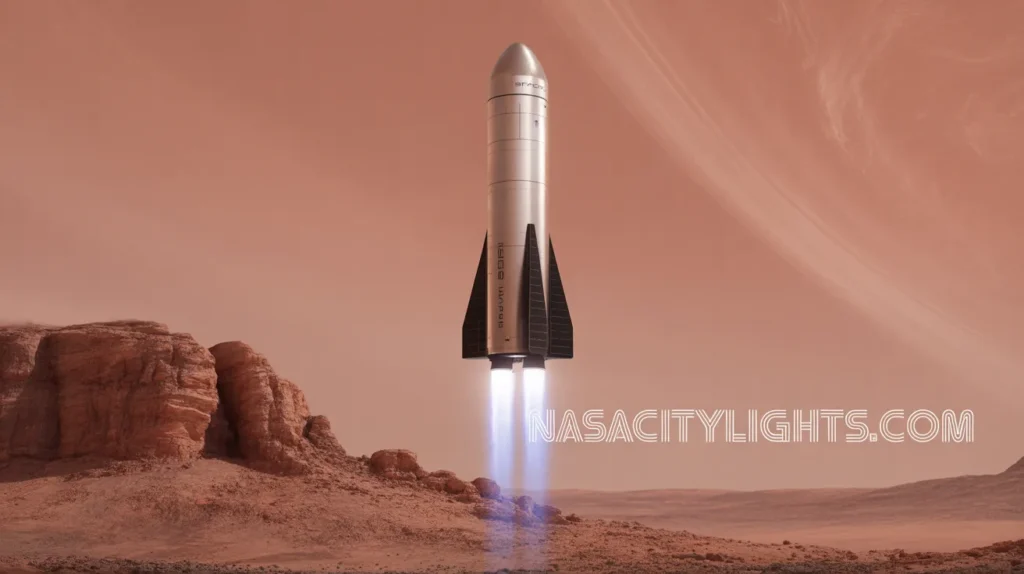
The SpaceX Starship Mars Mission 2026 is no longer following the original 2026 schedule. SpaceX has shifted its near term focus toward lunar missions while continuing to develop Starship for future Mars missions.
The original 2026 Mars concept involved sending uncrewed Starships toward Mars during the available Earth and Mars launch window. However, that plan should no longer be presented as a confirmed 2026 mission.
So what is the current SpaceX Mars timeline? What happened to the original 2026 plan? How much has Starship progressed? And when could Starship actually fly to Mars?
Here is the latest picture for August 2026.
Quick Answer: SpaceX Starship Mars Mission 2026
| Question | Current Status |
|---|---|
| Is Starship going to Mars in 2026? | No confirmed 2026 Mars mission is currently scheduled |
| What happened to the original 2026 plan? | SpaceX shifted near term priorities toward lunar missions and Starship development |
| When could Mars cargo missions begin? | SpaceX currently describes Mars cargo missions as no earlier than 2028 |
| Is Mars still a SpaceX goal? | Yes, Mars remains a long term objective for Starship |
| What is the biggest technical challenge? | Reliable Starship operations and large scale orbital propellant refueling |
| Is there a confirmed crewed Mars date? | No confirmed date has been announced |
The most important takeaway is simple: 2026 is now better understood as a Starship development year rather than a confirmed Mars landing year.
What Happened to the Original SpaceX Mars Mission 2026 Plan?
The original SpaceX Mars strategy was highly ambitious. Elon Musk had discussed sending uncrewed Starships toward Mars during the 2026 Earth and Mars transfer window.
The goal was to use early robotic missions to demonstrate that Starship could travel to Mars, enter the Martian atmosphere and deliver useful payloads before attempting crewed missions.
However, Starship development has taken longer than many earlier projections suggested. SpaceX also has major lunar objectives involving Starship, including NASA’s Artemis program.
The original 2026 plan should therefore be separated from the current Mars roadmap.
SpaceX has not abandoned Mars. Instead, Starship development and lunar missions have become important steps toward eventually attempting the much more difficult Mars mission.
SpaceX Starship Mars Mission Timeline 2026
The timeline below separates major development stages from future Mars mission targets.
| Period | SpaceX Starship Mars Timeline | Status |
|---|---|---|
| 2025 | Starship continued its iterative flight test campaign | Development |
| Early 2026 | SpaceX increased focus on lunar objectives and Starship development | Current strategy |
| July 2026 | Starship Flight 13 completed a major test mission | Completed |
| August 2026 | Starship development and preparation for future flight testing continued | Ongoing |
| 2026 onward | Recovery, reusability, heat shield and flight performance remain major priorities | Ongoing |
| 2028 or later | SpaceX publicly describes Mars cargo missions as no earlier than 2028 | Future target |
| Future | Crewed Mars missions remain a long term objective | No confirmed date |
Important Timeline Note
A specific Mars launch date should not be treated as confirmed unless SpaceX officially announces it.
The Mars timeline depends on Starship readiness, successful flight testing, regulatory approvals, orbital refueling, launch opportunities and the development of systems capable of supporting long duration missions.
SpaceX Starship Progress in 2026
Although the Mars schedule has changed, Starship itself continues to develop.
One major milestone came with Starship Flight 13 on July 24, 2026.
The test provided additional data about the newer Starship configuration, flight performance, heat shield behavior and recovery systems.
The upper stage completed its planned flight and splashdown, while the Super Heavy booster experienced problems during its landing sequence.
Each test gives SpaceX additional engineering data that can be used to improve future vehicles.
Latest SpaceX Starship Status in August 2026
Starship remains in an intensive testing and development phase.
SpaceX is working toward increasingly reliable launches, recovery operations and eventually rapid reusability.
One of the biggest future milestones is recovering the Starship upper stage with the launch tower’s mechanical arms.
Booster catches have already demonstrated the basic concept, but catching the much larger upper stage presents a different engineering challenge.
Because Starship schedules can change because of testing, technical readiness, weather and regulatory requirements, specific future launch dates should be treated as targets rather than guarantees.
Starship Development Progress Table
| Development Area | Why It Matters for Mars | Current Importance |
|---|---|---|
| Flight Testing | Provides data needed to improve reliability | Very High |
| Booster Recovery | Enables faster and cheaper future launches | Very High |
| Upper Stage Recovery | Essential for full Starship reusability | Very High |
| Heat Shield | Required for safe atmospheric reentry | Very High |
| Orbital Refueling | Provides the propellant needed for deep space missions | Critical |
| Launch Cadence | More launches allow faster testing and development | High |
| Deep Space Systems | Needed for long duration Mars missions | High |
| Mars Landing Systems | Required to safely land large spacecraft on Mars | Critical |

Why Is Starship Reusability Important for Mars?
Mars missions require enormous amounts of hardware, propellant and launch capacity.
A disposable rocket architecture would make a large scale Mars campaign extremely expensive.
SpaceX’s long term Starship strategy therefore depends on reusability.
The company wants both stages of the launch system to return safely and eventually fly again with a much shorter turnaround time.
If SpaceX can repeatedly launch and recover Starship and Super Heavy, it could dramatically increase the number of missions possible during future Earth and Mars launch windows.
Why Is Orbital Refueling Critical for the Mars Mission?
Orbital refueling is one of the most important technologies behind the SpaceX Mars plan.
A Starship leaving Earth for Mars needs much more propellant than it can practically carry while also transporting a useful payload.
The proposed solution is to launch tanker Starships that transfer propellant to a Mars bound Starship while it is in Earth orbit.
After refueling, the Mars bound vehicle could have enough propellant to begin its deep space journey with a meaningful payload.
Mars Mission Technology Requirements
| Technology | Purpose | Why It Matters |
|---|---|---|
| Reusable Starship | Repeated launches and landings | Reduces mission cost |
| Orbital Refueling | Transfers propellant in Earth orbit | Enables deep space departure |
| Advanced Heat Shield | Protects Starship during reentry | Essential for safe return |
| Mars Landing System | Lands the spacecraft on Mars | Required for cargo delivery |
| Life Support | Supports future astronauts | Essential for crewed missions |
| Surface Infrastructure | Provides power, resources and support | Needed for long term operations |
| Return Propellant | Enables eventual Mars to Earth journey | Critical for crewed missions |
What Are SpaceX’s Mars Plans After 2026?
SpaceX’s current public Mars information describes cargo missions as beginning no earlier than 2028.
Early cargo missions could deliver equipment, research payloads and other supplies to the Martian surface.
These missions would also allow SpaceX to learn how Starship performs during interplanetary travel and Mars atmospheric entry.
Eventually, SpaceX wants Starship to support human missions.
However, there is a major difference between an uncrewed cargo mission and a crewed Mars expedition.
A human mission would require reliable life support, radiation protection, navigation, landing systems, surface operations and a practical method for obtaining return propellant.
For that reason, any exact year for the first human Mars landing should be treated as a projection rather than a confirmed schedule.

What Does the Moon Have to Do With Mars?
The shift toward lunar missions does not remove Mars from SpaceX’s long term strategy.
The Moon can provide an important testing ground for technologies that could eventually be needed on Mars.
Lunar missions can help SpaceX develop experience with deep space operations, navigation, landing systems, surface logistics and high reliability spacecraft operations.
Starship is also an important part of NASA’s Artemis program, making lunar development a major near term priority. Source: aerospaceamerica.aiaa.org
What Are the Biggest Challenges for the SpaceX Mars Mission?
| Challenge | What SpaceX Needs to Solve |
|---|---|
| Orbital Refueling | Reliable large scale propellant transfer in Earth orbit |
| Starship Reusability | Reliable recovery and rapid reuse of both stages |
| Heat Shield | Consistent protection during atmospheric reentry |
| Long Duration Flight | Reliable spacecraft operation during the Mars journey |
| Mars Landing | Safe landing of a large Starship on the Martian surface |
| Surface Operations | Power, equipment, communication and resource systems |
| Return Propellant | A practical way to support future Mars to Earth missions |
| Crew Safety | Life support and radiation protection for astronauts |
These challenges explain why SpaceX continues to treat Starship development as an iterative process.
SpaceX Starship Mars Mission 2026 vs Future Mars Timeline
It is important to separate the original 2026 concept from the current roadmap.
The original concept focused on sending uncrewed Starships toward Mars during the 2026 transfer opportunity.
The current situation is different.
SpaceX is prioritizing Starship development and lunar objectives, while its public Mars information places cargo missions no earlier than 2028.
| Topic | Original 2026 Concept | Current Direction |
|---|---|---|
| Mars Mission | Uncrewed Starships discussed for 2026 | No confirmed 2026 Mars launch |
| Primary Focus | Mars preparation | Lunar missions and Starship development |
| Starship Testing | Needed before Mars | Continues throughout 2026 |
| Orbital Refueling | Required for Mars | Major technology still to demonstrate at scale |
| Mars Cargo | Early demonstration concept | No earlier than 2028 in current public information |
| Crewed Mars Mission | Long term goal | No confirmed launch date |
This makes 2026 an important Starship development period rather than a confirmed Mars landing year.
Will SpaceX Still Send Starship to Mars?
Yes, Mars remains a long term objective for Starship.
However, the timing has changed.
The original 2026 target should not be presented as a confirmed mission date. SpaceX’s current public information points to Mars cargo missions no earlier than 2028.
The company must first demonstrate enough progress with Starship testing and the supporting technologies required for interplanetary missions.

Frequently Asked Questions
Is SpaceX Starship going to Mars in 2026?
The original 2026 Mars plan is no longer the current near term schedule. SpaceX’s current public information describes Mars cargo missions as no earlier than 2028.
What is the SpaceX Starship Mars Mission 2026 status?
The Mars mission remains a long term objective, while SpaceX focuses on Starship development and lunar missions in the near term.
Why was the SpaceX Mars mission delayed?
The original timeline depended on rapid Starship development and several major technologies. SpaceX has also prioritized lunar objectives, making the original 2026 Mars target no longer a confirmed schedule.
What is the current SpaceX Starship Mars timeline?
SpaceX currently describes Mars cargo missions as no earlier than 2028. The exact launch date remains unconfirmed.
Why does Starship need orbital refueling for Mars?
Refueling in Earth orbit could give a Mars bound Starship enough propellant to carry a useful payload while still having the energy required for the journey to Mars.
Is SpaceX abandoning Mars?
No. Mars remains a long term objective for Starship. The near term focus is on lunar missions and continued Starship development.
When could humans go to Mars?
SpaceX has not confirmed a specific crewed Mars landing date. Human missions remain dependent on successful uncrewed missions and major advances in Starship, refueling and Mars surface infrastructure.
Final Verdict
The SpaceX Starship Mars Mission 2026 story has changed significantly.
The original plan for a 2026 Mars mission was highly ambitious, but SpaceX has shifted its near term priorities toward lunar missions and continued Starship development. The company’s current public information now places Mars cargo missions no earlier than 2028.
That does not make 2026 unimportant.
Starship continues through major flight tests, recovery experiments and hardware improvements. These developments will determine how quickly SpaceX can move from experimental flights toward the reliable, reusable system required for future Mars missions. source:space.com
Author Bio
Author: Zara Khalid Zara Khalid is a science and technology journalist with over eight years of experience covering space exploration, emerging technologies, and the future of humanity beyond Earth. She has written for leading digital publications and holds a degree in Astrophysics from the University of Edinburgh. Zara believes that making complex space science accessible to everyday readers is one of the most important jobs in journalism today. When she is not writing, she is usually stargazing or debating Mars colony ethics with anyone who will listen.