
How Do Rockets Escape Earth Gravity? The Powerful Truth in 2026
Introduction
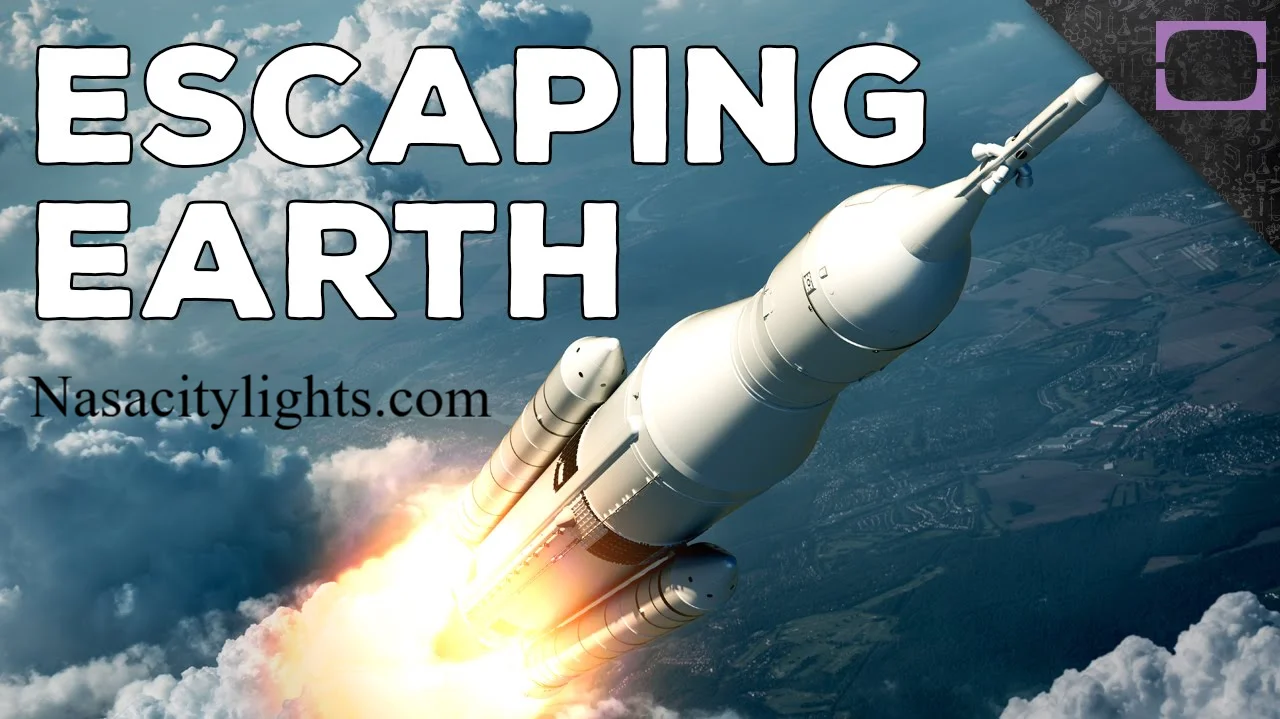
Have you ever watched a rocket launch and wondered how something so heavy actually leaves the ground? Earth’s gravity is strong. It holds mountains, oceans, and every one of us firmly in place. Yet somehow, massive rockets weighing hundreds of tons manage to break free and soar into space. So how do rockets escape Earth gravity when everything else stays grounded?
The answer comes down to raw power, smart engineering, and a bit of clever physics. Rockets do not simply fight gravity and win in one big moment. Instead, they build up speed gradually, shed unnecessary weight along the way, and use precise calculations to slip beyond Earth’s pull.
In this article, you will learn exactly how rockets pull off this incredible feat. We will break down thrust, gravity, and escape velocity in plain language. You will also discover why rockets are built in stages, how they behave once they leave the atmosphere, and what separates simply reaching orbit from truly escaping Earth’s gravity altogether.
What Is Gravity and Why Does It Matter for Rockets
Gravity is the invisible force that pulls every object toward the center of the Earth. It is why a ball you throw in the air always comes back down. Near the surface, this pull is strong enough that anything trying to fly upward needs an enormous amount of force just to get moving.
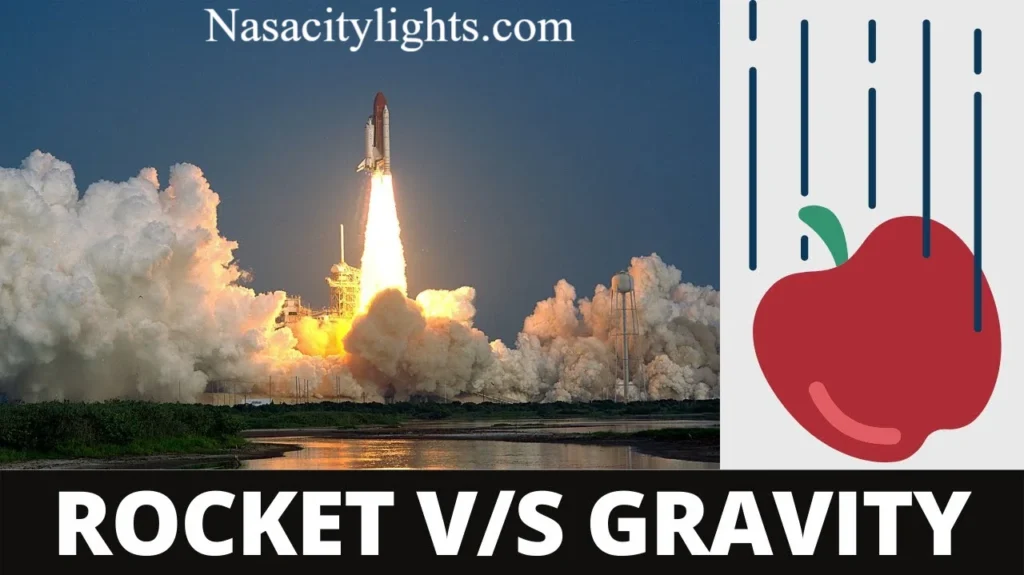
For a rocket, gravity acts like a constant weight trying to drag it back to the launch pad. To beat it, the rocket must generate more upward force than gravity is pulling down. This is where thrust comes into the picture.
What Is Thrust and How Does It Work
Thrust is the force that pushes a rocket forward or upward. Rocket engines create thrust by burning fuel and expelling hot gas at extremely high speed out of the bottom of the engine.
This process follows Newton’s Third Law of Motion, which states that every action has an equal and opposite reaction. When the engine forces gas downward and backward, the rocket gets pushed upward and forward with the same amount of force. It is the same basic idea as a balloon zipping across a room when you let the air out of it, just on a much larger and more controlled scale.
As long as the thrust produced is greater than the pull of gravity and the weight of the rocket, the vehicle lifts off and keeps climbing.
What Is Escape Velocity in Simple Terms
Escape velocity is the minimum speed an object needs to break completely free from a planet’s gravitational pull without any additional propulsion. For Earth, that speed is about 11.2 kilometers per second, or roughly 25,000 miles per hour.
That number sounds intimidating, but here is something important to understand. Rockets do not need to hit that speed instantly the moment they leave the launch pad.
Rockets Do Not Reach Escape Velocity Instantly
This is one of the most misunderstood parts of rocket science. Many people assume rockets blast off already moving at escape velocity. In reality, rockets accelerate gradually throughout their flight.
At liftoff, a rocket moves relatively slowly. It picks up speed steadily as it burns fuel and climbs higher. Engines keep firing continuously, pushing the vehicle faster and faster, minute by minute.
Because the engines provide continuous thrust, the rocket does not need to match escape velocity right away. It only needs enough thrust at each moment to overcome gravity and keep accelerating. Over several minutes, that steady buildup of speed eventually gets the rocket to the velocity it needs to leave Earth’s pull or settle into orbit.
Why Rockets Use Multiple Stages
If you have ever watched a rocket launch, you may have noticed parts of it falling away mid flight. This is intentional and it is one of the smartest tricks in rocket design.
Rockets carry multiple stages, each with its own engines and fuel supply. Here is why this matters.
- Fuel is heavy, and a rocket must carry a massive amount of it to reach space.
- As fuel burns off, the empty fuel tanks and engines become dead weight.
- Carrying that extra weight wastes energy and slows down acceleration.
By dropping used stages once their fuel runs out, the rocket becomes lighter. A lighter rocket needs less thrust to keep accelerating, which makes the remaining engines far more efficient. This staging process repeats as the rocket climbs, allowing it to reach incredibly high speeds without needing an impossibly massive amount of fuel from the very start.
Companies like SpaceX have taken this idea further by making some stages reusable, landing them back on Earth to be used again on future missions.
What Happens After a Rocket Leaves the Atmosphere
Once a rocket climbs above the dense part of Earth’s atmosphere, something interesting happens. Air resistance nearly disappears, so the vehicle can move much more efficiently.
The rocket does not stop accelerating at this point. Its engines continue firing, pushing it faster and faster. Guidance systems constantly adjust the rocket’s angle and trajectory to keep it on the correct path, whether that path leads to a stable orbit around Earth or a trajectory toward the Moon, Mars, or deep space.
At this stage, the rocket typically tilts and follows a curved path rather than flying straight up. This curved trajectory helps it build enough horizontal speed to either orbit Earth or break away entirely, depending on the mission’s goal.
Orbit Versus Escaping Earth Gravity: What Is the Difference
People often confuse reaching orbit with escaping gravity, but they are not the same thing.
When a rocket reaches orbit, it is moving fast enough that it continuously falls around the Earth instead of falling back onto it. Gravity is still very much in effect. The rocket and everything inside it, including satellites and astronauts, remain within Earth’s gravitational influence.
Escaping Earth’s gravity is a bigger achievement. It means the rocket reaches a speed high enough that it breaks completely free of Earth’s pull and will not return unless it uses additional propulsion to do so. This is the kind of speed needed for missions heading to the Moon, Mars, or beyond.
The Role of Fuel, Guidance, and Orbital Mechanics
Successfully leaving Earth requires more than raw power. It also relies on precise planning.
Fuel efficiency determines how much weight a rocket can carry and how far it can travel. Guidance systems use onboard computers, sensors, and sometimes ground control to steer the rocket accurately, correcting even tiny errors in real time.
Orbital mechanics, the science of how objects move under gravity’s influence, helps engineers calculate the exact speed, angle, and timing needed for a successful mission. A small miscalculation can send a spacecraft off course by thousands of kilometers, so this planning is taken very seriously.
How Space Agencies Around the World Apply These Principles
Whether it is NASA, SpaceX, the European Space Agency, or any other organization, the core physics remains the same. Every rocket must generate enough thrust to overcome gravity, manage weight efficiently through staging, and follow carefully calculated trajectories.
NASA’s Saturn V rocket used this approach to send astronauts to the Moon. SpaceX’s Falcon and Starship vehicles use modern versions of the same principles, with added focus on reusability. Satellite launches around the world, whether for communication, weather monitoring, or scientific research, follow this same fundamental process of building speed gradually and shedding weight along the way.
Real World Examples of Rockets Escaping Gravity
Some missions require rockets to fully escape Earth’s gravity rather than simply orbiting it.
- The Apollo missions needed enough velocity to travel to the Moon and back.
- Mars missions, including rovers and orbiters, require escape velocity to leave Earth’s influence entirely and travel through space toward the red planet.
- Deep space probes, such as those studying distant planets or leaving the solar system, also depend on reaching and often exceeding escape velocity.
Most satellite launches, on the other hand, only need to reach orbital velocity, which is lower than full escape velocity, since satellites are meant to stay near Earth.
Conclusion
So, how do rockets escape Earth gravity? It comes down to a careful balance of powerful thrust, smart engineering through staging, and precise calculations involving speed and trajectory. Rockets do not defy gravity instantly. They out power it gradually, shedding weight and building speed until they either settle into orbit or break free entirely.
The next time you see a rocket launch, you will know exactly what is happening behind that fiery blast. What part of this process do you find the most fascinating? Feel free to share this article with anyone who loves space as much as you do.
FAQs
How do rockets escape Earth’s gravity? Rockets escape Earth’s gravity by generating continuous thrust that gradually accelerates them past the speed needed to break free from gravitational pull, known as escape velocity.
What is escape velocity? Escape velocity is the minimum speed needed to leave a planet’s gravity without further propulsion. On Earth, this is about 11.2 kilometers per second.
Why do rockets have stages? Stages allow rockets to drop empty fuel tanks and engines once their fuel is used up, reducing weight and improving efficiency for the remaining flight.
Can rockets work in space without air? Yes. Rocket engines carry both fuel and oxidizer onboard, so they do not need atmospheric oxygen to function, unlike jet engines.
Why don’t rockets fall back to Earth? Rockets that reach orbital velocity keep falling around Earth rather than onto it, while rockets that exceed escape velocity move fast enough to break free of gravity entirely.
Do rockets travel in a straight line to space? No. Most rockets follow a curved trajectory, tilting gradually after launch to build horizontal speed needed for orbit or deep space travel.
What is the difference between thrust and gravity? Thrust is the forward or upward force produced by a rocket engine, while gravity is the downward pull trying to keep the rocket on the ground. A rocket climbs only when thrust exceeds gravity.
Do all rockets need to reach escape velocity? No. Rockets launching satellites usually only need orbital velocity. Escape velocity is required for missions heading to the Moon, Mars, or beyond.
Nasacitylights.com
Email: johanharwen314@gmail.com
Author name: Hamid Ali
About the Author: Hamid Ali is a science and technology writer who enjoys breaking down complex topics like space exploration and rocket science into simple, easy to understand articles. He is passionate about making science accessible to everyday readers who are curious about how the world, and the universe, actually works.