
Layers of the Earth Drawing: Simple Guide (No Confusion)
Have You Ever Wondered What Is Inside Our Planet?
Have you ever tried to draw the earth and got stuck after the outer circle? You are not alone. A layers of the earth drawing looks simple at first, but most students freeze when it comes to labeling the inner parts correctly.
I remember struggling with this exact same thing in school. My diagram looked more like a confused onion than a planet. That is why this guide exists.
In this article, you will learn what each layer means, how thick it is, and how to draw it correctly with labels. You will also find a simple table, quick facts, and answers to the most common questions people search for. By the end, your layers of the earth drawing will look accurate, clean, and exam ready.
Why Learning the Layers of the Earth Matters
Before you pick up your pencil, it helps to know why this topic matters. Earth is not a solid ball of rock all the way through. It is made of different sections, each with its own temperature, material, and thickness.
Understanding this helps you in:
- Science exams and geography classes
- Understanding earthquakes and volcanoes
- Making your layers of the earth drawing scientifically correct
- Building general knowledge about our planet
Now let us break down each layer one by one.
What Are the Main Layers of the Earth?
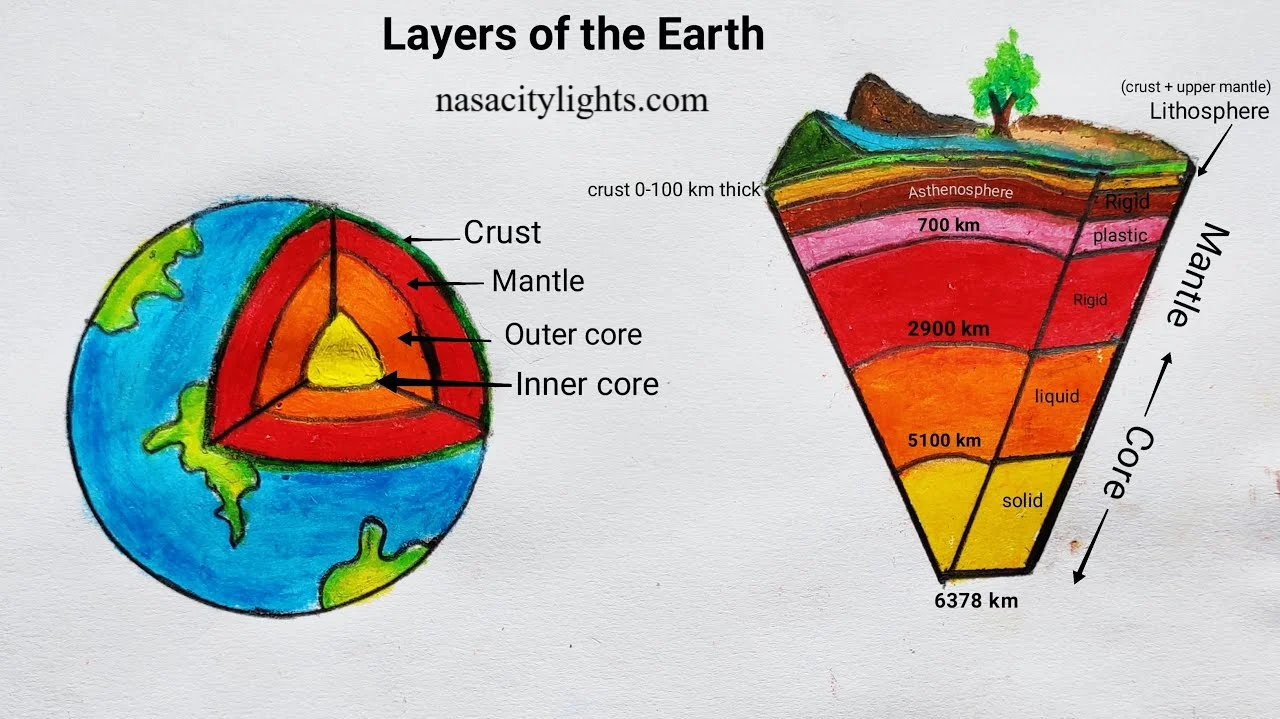
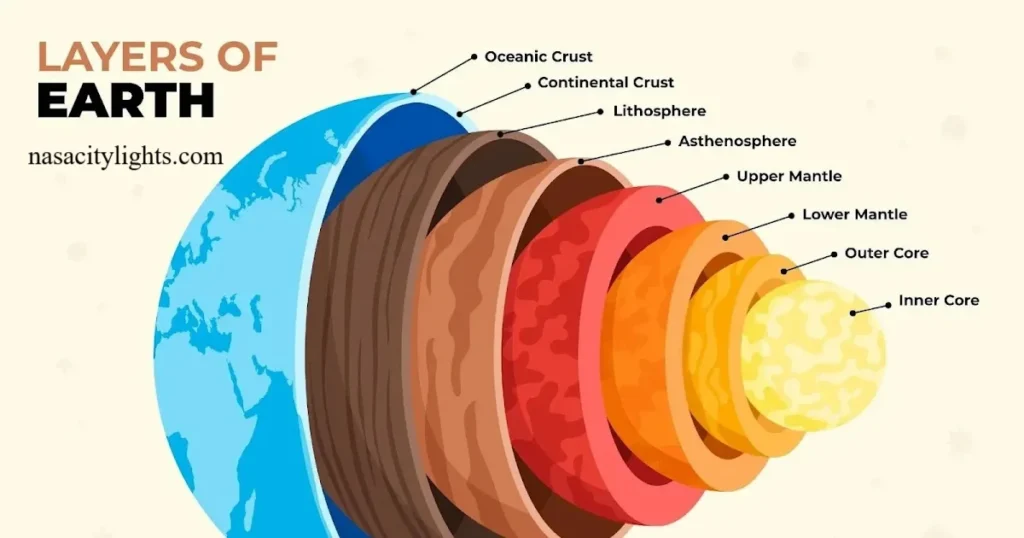
Earth has four major layers. Each one sits inside the other like a nested ball. This structure is exactly what you recreate when you make a layers of the earth drawing.
1. Crust
The crust is the outer layer you walk on every day. It is thin compared to the other layers, but it holds mountains, oceans, and everything you see around you.
- Average thickness: 5 to 70 kilometers
- Made of solid rock
- Divided into oceanic crust and continental crust
2. Mantle
Just below the crust sits the mantle. It is the thickest layer and made of hot, semi solid rock called magma.
- Thickness: about 2,900 kilometers
- Makes up nearly 84 percent of Earth’s total volume
- Movement here causes tectonic plate shifts
3. Outer Core
The outer core is liquid metal, mostly iron and nickel. This layer is responsible for Earth’s magnetic field.
- Thickness: around 2,200 kilometers
- Extremely hot, reaching temperatures near 4,000 to 5,000 degrees Celsius
- Constant motion generates the magnetic field that protects us from solar radiation
4. Inner Core
At the very center lies the inner core. Even though it is hotter than the outer core, it stays solid because of extreme pressure.
- Radius: about 1,220 kilometers
- Temperature: nearly 5,200 degrees Celsius
- Made mostly of solid iron and nickel
Quick Reference Table
Here is a simple table you can use while working on your layers of the earth drawing.
| Layer | State | Thickness | Main Material |
|---|---|---|---|
| Crust | Solid | 5 to 70 km | Rock |
| Mantle | Semi solid | 2,900 km | Magma |
| Outer Core | Liquid | 2,200 km | Iron and Nickel |
| Inner Core | Solid | 1,220 km radius | Iron and Nickel |
This table makes it easy to remember thickness and material without memorizing long paragraphs.
How to Make a Layers of the Earth Drawing Step by Step
Now comes the fun part. Follow these simple steps to create a clean and accurate diagram.
Step 1: Draw a Large Circle
Start with a big circle. This represents the full shape of the earth, including all layers.
Step 2: Add the Crust
Draw a thin ring just inside the outer circle. Keep it slightly rough or uneven since the crust includes mountains and valleys.
Step 3: Draw the Mantle
Inside the crust, draw a much thicker section. This is the largest part of your diagram since the mantle takes up most of the earth.
Step 4: Add the Outer Core
Draw another ring inside the mantle. Color it in a lighter shade to show its liquid state.
Step 5: Draw the Inner Core
Finally, draw a solid circle at the very center. Use a darker shade to represent its solid, dense nature.
Step 6: Label Everything
Use arrows and clear labels for each part. A labeled always scores better in exams because it shows real understanding, not just artistic skill.
Step 7: Add Colors
Use different colors for each layer. This is not just for looks. Color coding helps you and others quickly identify each section at a glance.
Common Mistakes Students Make
Many people struggle with the same issues when creating their diagram. Here are the most common ones.
- Making the crust too thick compared to other layers
- Forgetting to separate the outer core and inner core
- Skipping labels completely
- Using the same color for multiple layers
- Drawing the mantle smaller than it actually is
Avoiding these small errors instantly improves the accuracy of your layers of the earth drawing.
Fun Facts That Make This Topic Interesting
- The inner core spins slightly faster than the rest of the planet.
- Earth’s core is almost as hot as the surface of the sun.
- The mantle moves so slowly that it takes millions of years to shift noticeably.
- Scientists have never physically reached the mantle, most knowledge comes from seismic wave studies.
Geologists often study earthquake vibrations to understand what lies beneath our feet, since no drill has ever reached deep enough to touch the mantle directly.
Tips From My Own Experience
When I first tried this diagram, I made the mistake of drawing all layers the same thickness. My teacher pointed out that the mantle should look bigger than everything else combined. Once I fixed that, my drawing finally looked realistic.
My advice is simple. Do not rush. Sketch lightly first, check the proportions, then go over it with color and labels.
Conclusion
A layers of the earth drawing is more than just a school assignment. It helps you understand how our planet works from the ground beneath your feet to the fiery core thousands of kilometers below.
By following the steps above, remembering the table, and avoiding common mistakes, your diagram will look accurate and professional. Give it a try today, and feel free to share your finished drawing with friends or classmates.
Frequently Asked Questions
What are the four main layers of the earth? The four layers are the crust, mantle, outer core, and inner core.
Which layer of the earth is the thickest? The mantle is the thickest layer, making up most of Earth’s volume.
Why is the inner core solid if it is hotter than the outer core? Extreme pressure at the center keeps the inner core solid despite the high temperature.
What is the best way to label a layers of the earth drawing? Use clear arrows pointing to each section, along with the name and a short description of each layer.
How thick is the earth’s crust? The crust ranges between 5 and 70 kilometers, depending on location.
Do all layers of the earth have the same material? No, each layer has different material. The crust is rock, the mantle is magma, and the core is mostly iron and nickel.
Why do students draw the earth’s layers in science class? It helps visualize concepts like earthquakes, volcanic activity, and plate tectonics in a simple way.
nasacitylights.com
Email: johanharwen314@gmail.com
Author Name: Hamid Ali
About the Author: Hamid Ali is a science content writer who enjoys breaking down complex topics into simple, easy to understand lessons. He focuses on helping students and curious readers learn geography and earth science through clear explanations and practical guides.