
Agility Robotics in 2026: Digit 5, Safety, Customers and the SPAC Deal
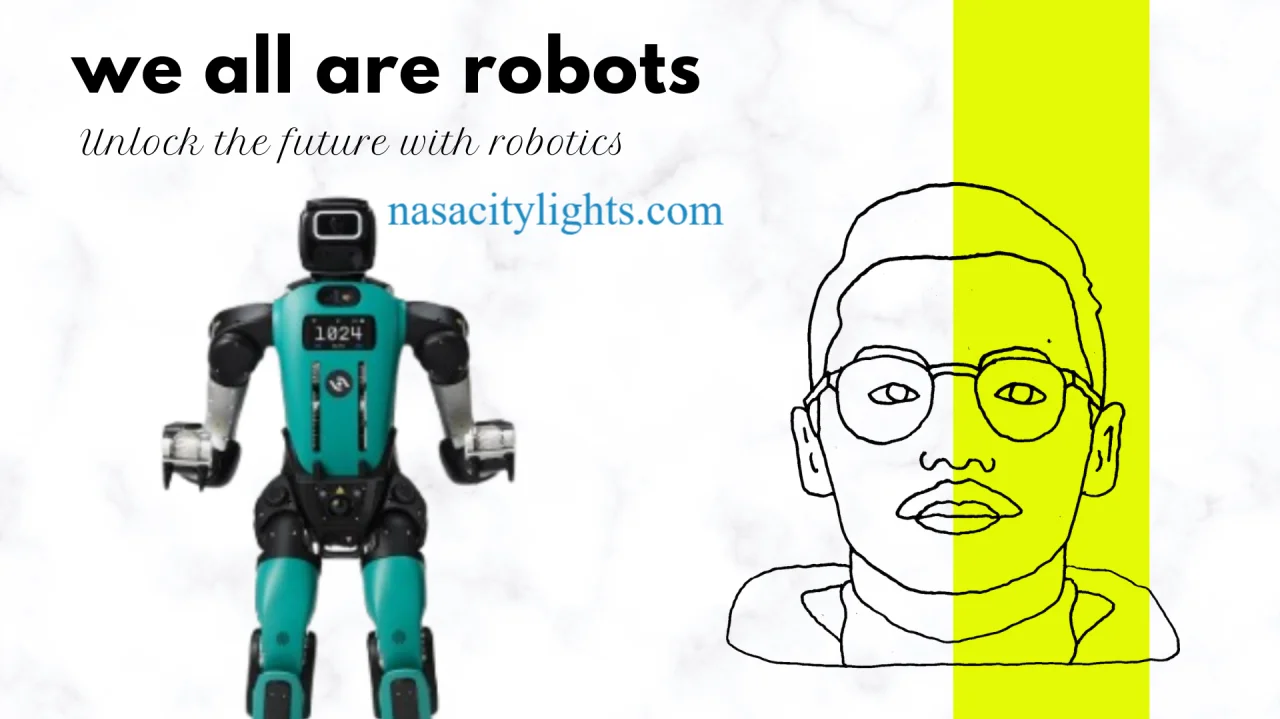
Agility Robotics is an Oregon-based maker of the Digit humanoid, a robot built to move totes and handle repetitive tasks in warehouses and factories. It unveiled Digit 5, its next-generation robot, on September 15, 2026, with a safety system meant to let it work near people without physical barriers. The company is also heading toward a public listing. This guide covers what Digit 5 is, how its safety design works, who uses Digit today, and what the company’s own filings say about its finances.
Who is Agility Robotics?
Agility is a privately held American humanoid robotics company founded in 2015 as a spin-off from Oregon State University’s Dynamic Robotics Lab. The founders are Jonathan Hurst, Damion Shelton and Mikhail Jones. Peggy Johnson, a former Microsoft and Magic Leap executive, is CEO. The company rebranded from “Agility Robotics” to simply “Agility” in 2026. This article uses both names, since most searches still use the longer one.
The company’s logic is that factories and warehouses are built around human bodies, so a human-shaped robot can enter them without redesigning the building. Whether that logic pays off commercially is the open question.
What is Digit 5, and what changed from Digit 4?
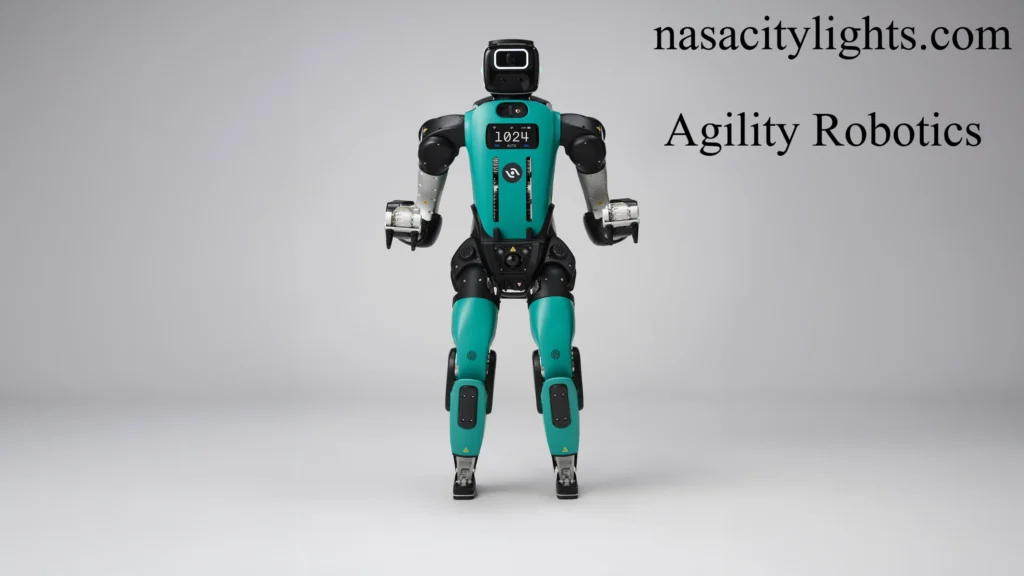
Digit 5 is Agility’s fifth-generation general-purpose humanoid, redesigned around industrial customer feedback. It stands 5 feet 11 inches tall and weighs 284 pounds. Key changes:
- Legs and lifting: The ostrich-like, backward-bending knees are gone, replaced by forward-facing legs with proprietary cycloidal actuators. The robot can repeatedly lift up to 50 pounds, matching OSHA single-person lift limits.
- Payload and reach: Payload capacity is up 40 percent, and the taller frame reaches 7.2 feet.
- Runtime: The 90-minute battery fast-charges in nine minutes, a 10:1 run-to-charge ratio.
- Task flexibility: Swappable end-effectors use ISO-standard mounts, and grippers can be changed for work such as tote handling and machine tending.
My read: the nine-minute charge may matter more than the headline payload. Runtime is the usual hidden cost of mobile robots, and a 10:1 ratio means a unit spends little of its shift on the charger.
How does Digit 5 stay safe around people?
Digit 5 is designed for “cooperatively safe” operation. It detects people, changes its behavior, and signals its intent. Safety has been one of the biggest obstacles to scaling humanoids, which is why this is the headline feature.
According to Agility, the architecture has three layers:
- Human detection: Proprietary AI algorithms and multiple sensors watch for people. The robot responds by avoiding them, stopping, or assuming a seated position.
- Visual and auditory cues: These signal the robot’s motion intent so nearby people can take part in safe operation.
- Independent safety controller: It supervises the robot’s response whenever someone comes within an unsafe distance and triggers the appropriate reaction immediately.
The system was developed with Nvidia’s Halos for Robotics platform. Agility says Digit 4 deployments passed field evaluations by an OSHA-recognized Nationally Recognized Testing Laboratory. Digit 5’s cage-free claim is newer, so independent validation in customer facilities is worth watching.
What work does Digit actually do?
Today, mostly tote handling. Digit 4 has focused on tote-based material handling. At GXO, for example, Digit moves totes from cobots onto conveyors, orchestrated through Agility Arc.
The experience behind Digit 5 is real but modest in scale:
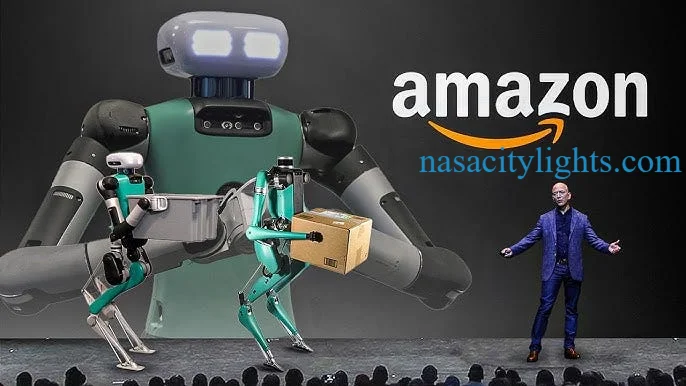
- Digit 4 logged more than 65,000 commercial hours across North American sites. Customers include GXO, Schaeffler, Amazon and Toyota Motor Manufacturing Canada.
- The S-4 filing counts deployments or commitments at nine customer facilities, and also names Mercado Libre.
- Toyota Motor Manufacturing Canada signed a February 2026 agreement for seven Digit units at its Woodstock, Ontario plant.
Machine tending is the other named use case. Adjacent jobs such as kitting, sequencing, palletizing or quality inspection are natural next steps for a humanoid, but I found no confirmed commercial deployments of them. Treat them as roadmap, not reality.
How does a Digit deployment work?
Software matters as much as the robot. Agility Arc is the cloud platform for deploying and managing Digit fleets. It reports uptime, throughput and Mean Time Between Incidents, and it connects to existing warehouse management systems. The robots are sold through robots-as-a-service agreements, with GXO’s June 2024 deal described as the first multi-year humanoid RaaS contract. Manufacturing happens at RoboFab in Salem, designed to produce up to 10,000 Digit robots a year.
What does the business look like?
This is where the story gets more complicated than the product launch.
| Item | What the filings and reports say |
|---|---|
| Merger | Announced June 24, 2026 with Churchill Capital Corp XI (Nasdaq: CCXI) |
| Valuation | $2.5 billion pre-money equity value |
| Proceeds | More than $620 million gross, including about $420 million in trust and a roughly $200 million PIPE led by Foxconn |
| Expected ticker | AGLT |
| 2025 revenue | $1.8 million in net sales against a $140 million operating loss |
| Going concern | The filing says that without the transaction, there is substantial doubt about the company continuing as a going concern Agility Robotics Stock (AGLT): How to Invest in the 2026 SPAC — and Should You? +5 |
The “more than $300 million in orders” figure needs context. The filings call it committed but not current revenue, dependent on milestones, and tied to a three-year contract for 1,000 robots from an undisclosed customer. The S-4 projects about 800 Digit v5 units in 2027 and 7,000 by 2030. A ramp that steep is the central bet behind the valuation.
What challenges do humanoid robots still face?
- Proof beyond pilots. A single lighthouse account is not yet a repeatable multi-site model.
- Cash burn. Agility burned $99.8 million in operating cash in 2025.
- Competition. The filing names Boston Dynamics, Tesla, Figure AI, Apptronik, 1X Technologies and others as main competitors.
- Timing. Early access starts in the first half of 2027, with general availability by the end of 2027. Europe and the UK follow in 2027. Digit 5 is not yet something customers can simply buy.
- Deal risk. Both parties can walk away if the merger has not closed by December 31.
Outlook
Agility has more real-world operating time than most humanoid rivals, a factory built to scale, and a sensible safety thesis. Its financial position still depends on the merger closing and on 2027 deliveries going well. For industrial buyers, the practical test is simple: does Digit 5 meet its uptime and safety numbers on a live floor, beside real workers?
Frequently Asked Questions
Is there Agility Robotics stock?
Not yet. Agility is private. Churchill Capital Corp XI trades as CCXI, and after the merger closes the combined company is expected to list as AGLT. This is not investment advice.
What is Agility Robotics’ revenue?
The S-4 reports $1.8 million in net sales for 2025. The company describes itself as development stage.
Where is Agility Robotics headquartered?
Salem, Oregon, which is also home to the RoboFab plant. A Fremont, California facility was announced in July 2026.
What is Agility Robotics’ Digit?
Digit is Agility’s bipedal, general-purpose humanoid for industrial work. Digit 5 is the newest model, built for cooperatively safe operation and repeated 50-pound lifts.
What is Agility Robotics’ valuation?
The pending merger values it at $2.5 billion pre-money. Its March 2025 Series C was reported at roughly $2.1 billion post-money by several trackers, though these sources vary.
Who is the CEO of Agility Robotics?
Peggy Johnson.
Is Agility Robotics going public through an IPO?
Through a SPAC merger rather than a traditional IPO. The S-4 was filed September 4, 2026, and the deal awaits SEC review and shareholder approval.
How much funding has Agility Robotics raised?
Trackers commonly cite about $640 million, but reported totals differ by source, and the S-4 shows about $162 million in net proceeds from 2025 Series C closings. Check the filing for the exact figure.
Author Bio: Hamid Ali is a technology writer covering robotics, artificial intelligence, automation, and emerging technology companies. He focuses on clear, factual guides that explain complex tech products, business developments, and industry trends.
Also Read: