
Solar Panel Cleaning: The Simple Truth Most Owners Get Wrong in 2026
Introduction
Your solar panels are working hard every single day. But here is something most people never think about: a thin layer of dust, bird droppings, or pollen could be quietly stealing your energy and your money.
Solar panel cleaning is one of the most overlooked parts of solar ownership. You spend thousands on a system, and then you let dirt do the damage for free. Studies show that dirty panels can lose anywhere from 15% to 25% of their efficiency. In some dusty or dry regions, that number climbs even higher.
This article covers everything you need to know. You will learn how often to clean your panels, what methods actually work, what to avoid, and whether you should hire a professional or do it yourself. By the end, you will have a clear, practical plan to keep your solar system running at its best.
Why Solar Panel Cleaning Actually Matters
Most people assume rain does the job. Sometimes it does. But light rain rarely washes off stubborn grime, bird droppings, or the oily film that builds up over time.
Think of your solar panels like a window. A cloudy window lets in less sunlight. Less sunlight means less electricity. It is that simple.
Research from the University of California San Diego found that panels left uncleaned for just two months lost nearly 5% of their output. In drier climates with little rainfall, the loss was closer to 8%. Over a full year, that adds up to a meaningful drop in your savings.
If you are paying for solar energy, you deserve to get every watt your system is capable of producing.
How Dirt Builds Up on Solar Panels
Understanding what causes the buildup helps you clean smarter.
Common culprits include:
- Dust and fine soil particles (especially in dry or windy regions)
- Bird droppings, which are acidic and can etch into the glass over time
- Pollen, particularly in spring and summer
- Pollution and exhaust residue in urban areas
- Leaves, moss, and organic debris near trees
- Hard water mineral deposits left after rain or irrigation
Each of these affects your panels differently. Dust spreads evenly and reduces output gradually. Bird droppings block small concentrated spots but have an outsized impact on the whole panel because of how solar cells are wired in series.
One dirty cell can drag down the performance of an entire row of cells. That one bird dropping could be more costly than you think.
How Often Should You Do Solar Panel Cleaning?
There is no universal answer, but here are solid guidelines based on your environment.
Twice a year is a good baseline for most homeowners in moderate climates. Spring and fall cleanings work well for removing seasonal buildup.
Quarterly cleaning is better if you live in a dusty area, near a highway, on a farm, or in a region with minimal rainfall.
Monthly checks are smart if you notice birds roosting on or near your panels, or if you live in a desert climate where dust storms are common.
A helpful rule: check your monitoring system or inverter app. If your output drops noticeably without a change in weather, that is a clear signal it is time for solar panel cleaning.
DIY Solar Panel Cleaning: Step-by-Step Guide
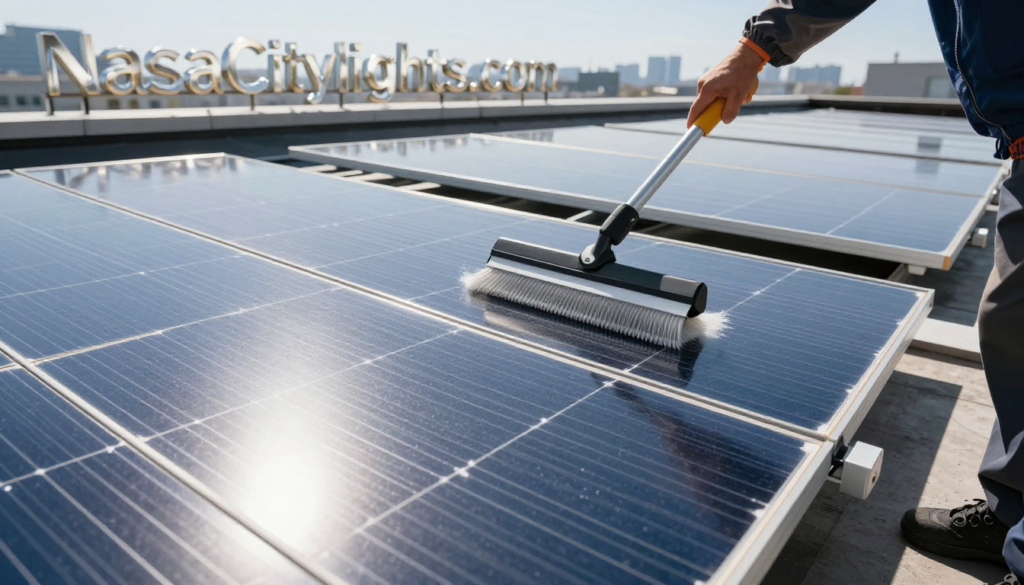
Cleaning your own panels is absolutely doable. You just need the right approach and a bit of care.
What You Will Need
- A soft-bristle brush or squeegee with an extension pole
- A garden hose with a gentle spray nozzle
- A bucket of warm water
- Mild dish soap (optional but helpful for oily residue)
- A microfiber cloth or chamois for finishing
The Cleaning Process
Step 1: Check the weather first. Clean your panels in the early morning or late evening. Midday heat causes water to evaporate quickly, leaving behind mineral deposits. A cooler surface also reduces the risk of thermal shock from cold water hitting hot glass.
Step 2: Rinse the panels first. Use your hose to do a gentle rinse. This removes loose debris and makes the actual scrubbing easier.
Step 3: Scrub gently in circular motions. Dip your soft brush or sponge into warm soapy water. Work from top to bottom. Do not press hard. The goal is to lift dirt, not scratch the surface.
Step 4: Rinse again thoroughly. Make sure no soap residue remains. Soap film can attract more dust.
Step 5: Dry if needed. In areas with hard water, let the panels air dry or wipe them down with a clean microfiber cloth to prevent water spots.
Safety Tips for DIY Cleaning
- Never use a pressure washer. The force can damage the panel surface, seals, and wiring.
- Avoid abrasive pads, steel wool, or harsh chemicals.
- If your panels are on a steep roof, do not climb up without proper safety gear or harness.
- Turn off your solar system before cleaning. Check your manufacturer’s guidelines on this.
Professional Solar Panel Cleaning: Is It Worth It?
Sometimes it makes more sense to bring in a professional, and there is no shame in that.
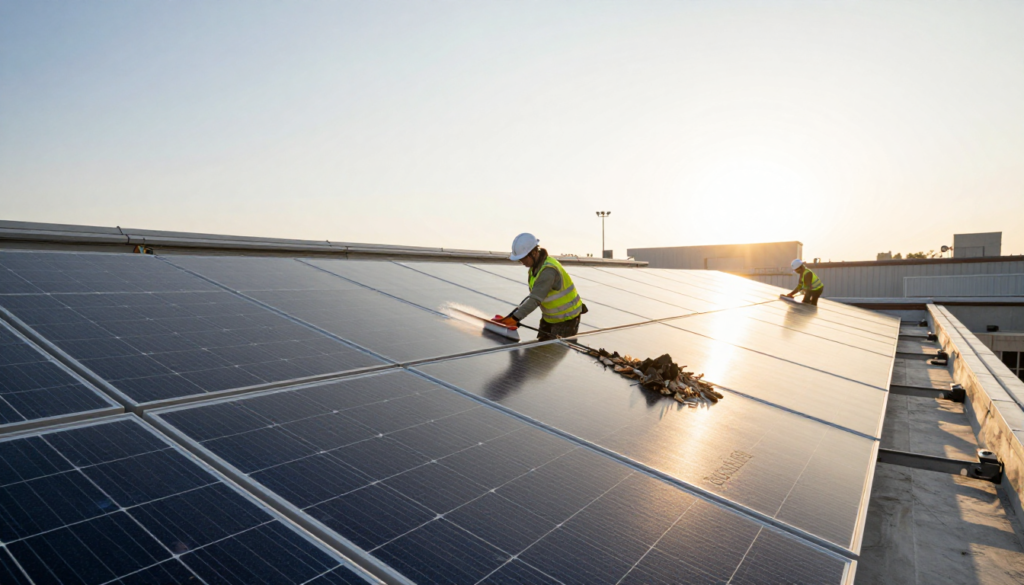
Professional solar cleaning services typically charge between $100 and $350 per visit, depending on your system size and location. They bring specialized equipment, purified water systems, and safety gear for hard-to-reach installations.
Here is when professional cleaning makes sense:
- Your roof pitch is steep or unsafe to access
- You have a large commercial installation
- Your panels have heavy buildup like moss or calcified hard water stains
- You want a detailed inspection alongside the cleaning
Professionals also spot micro-cracks, loose wiring, and other issues during a cleaning visit. That added value can save you much more than the service cost in the long run.
I always recommend at least one professional inspection per year, even if you handle routine cleaning yourself. Think of it like taking your car in for a service. You can wash it at home, but a mechanic still checks under the hood.
Automatic Solar Panel Cleaning Systems
Technology has stepped in to make solar panel cleaning even easier for some homeowners.
Automated cleaning systems use robotic devices or built-in sprinkler-style mechanisms to clean panels on a schedule. These are most common in large commercial solar farms and desert installations.
For residential use, some companies offer retrofit robotic cleaners that glide across your panel surface using soft brushes. They operate on a timer, require no water in some models, and connect to smart home systems.
The cost is still relatively high for most homeowners, typically ranging from $500 to several thousand dollars for a full residential setup. But as the technology matures, prices are dropping.
If you live in a very dusty region and hate climbing on roofs, this kind of system could pay for itself over time.
The Biggest Solar Panel Cleaning Mistakes to Avoid
People make the same mistakes over and over. Avoid these and your panels will thank you.
Using the wrong soap. Dish soap in small amounts is fine. But heavy-duty degreasers, bleach, or ammonia-based cleaners can strip coatings and damage your panels permanently.
Cleaning in direct sunlight. Hot glass plus cold water equals potential damage. Always clean during cooler parts of the day.
Skipping the rinse. Soap residue is a dirt magnet. Always do a final rinse.
Ignoring the shading issue. If a nearby tree has grown and now shades your panels, no amount of cleaning will fix that output problem. Pruning may be necessary.
Waiting too long between cleanings. The longer you wait, the harder the buildup becomes to remove. Consistent maintenance is always easier than a heavy restoration clean.
Does Rain Clean Solar Panels Enough?
This is one of the most common questions homeowners ask, and the honest answer is: sometimes, but usually not enough.
Rainfall can wash away loose dust and light debris. If you live somewhere with frequent, heavy rain, you might get away with less frequent cleaning.
But rain does not remove:
- Sticky bird droppings
- Pollen residue
- Hard water stains
- Oily pollution film
Even in rainy climates, studies have found that panels benefit from at least one or two manual cleanings per year. Rain is helpful maintenance but not a substitute for proper solar panel cleaning.
How to Monitor Your Panel Performance
Cleaning is more effective when you track your results.
Most modern solar systems come with a monitoring app or inverter display. This shows your daily, weekly, and monthly energy production. When you clean your panels, note the date and check your output numbers in the following days.
If your output jumps after cleaning, that is confirmation that the buildup was costing you energy. Over time, you can use this data to find your ideal cleaning schedule.
Some homeowners see a 10% to 20% jump in output right after a proper cleaning. That is real money back in your pocket.
Solar Panel Cleaning for Different Climates
Your location changes everything about your cleaning strategy.
Desert regions: Dust is constant. Monthly or even bi-weekly cleaning may be necessary. Dry climates also mean you need to use water wisely. Some owners use a dry brush system first to remove loose particles before a water rinse.
Coastal areas: Salt air leaves a film on panels that rain does not wash off easily. Quarterly cleaning with fresh water is recommended to prevent salt corrosion.
Urban environments: Pollution, exhaust, and industrial particles settle on panels constantly. Every two to three months is a sensible schedule.
Rural and suburban areas: Twice a year is often enough, but check more frequently during pollen season or after nearby construction.
Conclusion
Solar panel cleaning is not complicated. It is consistent, simple maintenance that protects your investment and keeps your energy bills as low as possible.
Here is a quick recap of what matters most:
- Clean your panels at least twice a year, more often if your environment demands it
- Use soft tools, mild soap, and low-pressure water
- Avoid cleaning in direct midday sun
- Track your energy output to measure the impact
- Consider a professional service at least once a year for a thorough clean and inspection
Your solar system was built to last 25 to 30 years. How well it performs over that lifetime depends a lot on how well you maintain it. The good news is that solar panel cleaning is one of the easiest and most affordable forms of maintenance there is.
So, how long has it been since you last cleaned your panels? If you cannot remember, that is your answer right there. Share this article with a fellow solar owner who might need the nudge too.
Frequently Asked Questions
1. How often should I clean my solar panels? Twice a year is the standard recommendation. If you live in a dusty, dry, or heavily polluted area, quarterly cleaning gives better results.
2. Can I use a pressure washer on solar panels? No. A pressure washer can crack the glass, damage seals, and void your warranty. Always use a gentle hose and soft brush.
3. Does cleaning solar panels really make a difference? Yes. Dirty panels can lose 15% to 25% of their efficiency. Regular solar panel cleaning restores that lost output and improves your savings.
4. What is the best time of day to clean solar panels? Early morning or late evening is ideal. The panels are cooler, which reduces the risk of thermal shock and water evaporation.
5. Is rainwater enough to keep solar panels clean? Rain helps with loose dust but does not remove bird droppings, pollen, or oily film. Manual cleaning is still necessary even in rainy climates.
6. Can I clean solar panels myself or do I need a professional? You can definitely clean them yourself with the right tools and safety precautions. For steep roofs, large systems, or heavy buildup, a professional is the smarter choice.
7. What should I use to clean solar panels? Warm water, a soft-bristle brush or sponge, and a small amount of mild dish soap. Always rinse thoroughly and avoid abrasive materials.
8. How much does professional solar panel cleaning cost? Typically between $100 and $350 per visit, depending on system size and location. Some companies offer annual service contracts at a discounted rate.
9. Will cleaning my solar panels void the warranty? Not if you follow the manufacturer’s cleaning guidelines. Using harsh chemicals or pressure washers might void it. Always check your warranty documentation first.
10. What happens if I never clean my solar panels? Output gradually declines, sometimes by 20% or more. Over years, hard water deposits and bird dropping residue can etch into the glass and cause permanent damage.
Also Read In NasaCityLights.com
Email: johanharwen314@gmail.com
Author Name: Hamid Ali
About the Author: Johan Harwen is a renewable energy writer and solar systems consultant with over a decade of experience helping homeowners get the most from their solar investments. He writes practical, no-fluff guides on solar panel maintenance, energy efficiency, and sustainable living. When he is not writing, Johan enjoys testing new solar technologies and helping local communities make the switch to clean energy.