
Why Is Mars Called The Red Planet? The Amazing Truth in 2026

Introduction
Look up at the night sky and you might spot a small orange dot glowing quietly among the stars. That dot is Mars, and it has fascinated humans for thousands of years. So why is Mars called the Red Planet? The answer lies in something as simple as rust, yet the story behind it is far more interesting than you might expect.
In this article, you will learn exactly why is Mars called the Red Planet, what gives it that unique color, and why scientists still consider it one of the most important places in our solar system. We will also look at how its surface compares to Earth, what NASA and ESA have discovered, and what the future holds for Mars exploration. By the end, you will understand this planet in a way that goes far beyond its nickname.
Why Is Mars Called The Red Planet?
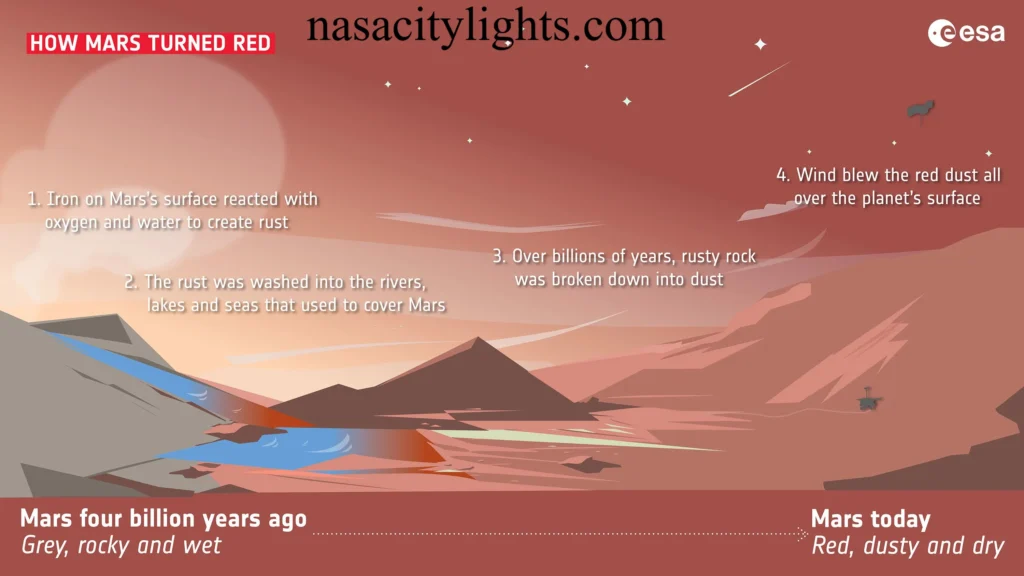
The short answer is iron oxide, also known as rust. Mars’ soil contains a large amount of iron, and over billions of years, that iron has reacted with the small amount of oxygen in the Martian atmosphere. This chemical reaction created a fine reddish dust that now covers most of the planet’s surface.
So when people ask why is Mars called the Red Planet, the honest answer is simple. It is basically a giant rusty desert floating in space. The dust is so fine that strong winds lift it into the atmosphere, giving the whole planet a rusty orange glow when viewed from space or through a telescope.
What Makes Mars Appear Red?
Mars appears red because of the way sunlight reflects off its iron rich surface. The dust particles absorb certain wavelengths of light and reflect back the reddish orange tones we see from Earth. This is the main reason why is Mars called the Red Planet in almost every culture throughout history.
Ancient civilizations, including the Egyptians and the Babylonians, noticed this reddish tint thousands of years ago. They often linked it to war and blood because of its color, which is part of how it earned its name in mythology as well as science.
Is Mars Actually Red?
This is where things get interesting. Mars is not solid red like a painted ball. Its surface actually shows shades of brown, orange, gold, and even tan in certain regions. The red tone becomes more obvious from a distance because the dust layer dominates what we see.
If you were standing on Mars yourself, the ground beneath your feet might look more rusty brown than bright red. The vivid red color we associate with Mars is really an overall visual effect created by dust spread across the entire planet.
What Causes The Red Color On Mars?
The main cause is a mineral called iron oxide, the same compound that creates rust on metal here on Earth. Mars has a much higher concentration of iron in its crust compared to Earth. Combined with ancient exposure to small amounts of oxygen and water, this iron slowly oxidized over millions of years.
Here are the key factors behind the color:
- High iron content in Martian rocks and soil
- Chemical reaction between iron and oxygen molecules
- Fine dust particles that spread across the surface
- Strong seasonal winds that carry dust into the atmosphere
Each of these factors adds another piece to the puzzle of why is Mars called the Red Planet.
Does Iron Oxide Make Mars Red?
Yes, iron oxide is the single biggest reason for Mars’ color. Scientists have studied Martian rock samples using rovers like Curiosity and Perseverance, and they consistently find high levels of this rust like compound. NASA’s research confirms that iron oxide dust is spread almost uniformly across the planet, which explains the consistent reddish tone seen from space.
This discovery answers one of the most common questions people search for, which is exactly why is Mars called the Red Planet from a scientific standpoint rather than just a visual guess.
Can You See Mars’ Red Color From Earth?
Yes, you can see it with your own eyes on a clear night. Mars often appears as a bright orange red star in the sky, especially during its closest approach to Earth. You do not need a telescope to notice the color, although one will help you see more surface detail.
Astronomers and casual sky watchers alike have used this reddish tint for centuries to identify Mars among the stars, long before we understood the science behind it.
Why Is Mars Different From Other Planets?
Mars stands out from other planets for several reasons beyond its color. It has the largest volcano in the solar system, Olympus Mons, along with a massive canyon system called Valles Marineris. Its thin atmosphere also makes seasonal changes more dramatic compared to gas giants like Jupiter or Saturn.
Unlike Venus, which is covered in thick clouds, Mars offers a much clearer view of its surface from orbit. This visibility is part of the reason its red color became so widely recognized throughout history, and it adds another layer to why is Mars called the Red Planet compared to its neighboring planets.
What Is The Surface Of Mars Made Of?
The Martian surface consists mainly of basalt rock, volcanic soil, and iron rich dust. Here is a simple breakdown of its composition:
- Iron oxide dust covering most surface areas
- Basaltic volcanic rock formed billions of years ago
- Frozen water ice near the polar regions
- Sulfates and clays discovered in certain valleys
This mixture creates the varied landscape we see in photos sent back by Mars rovers, ranging from rocky plains to deep craters and towering cliffs.
How Did Mars Get Its Nickname?
Mars earned its nickname long before modern science existed. Ancient astronomers noticed its reddish appearance and associated it with fire, war, and conflict. The Romans named the planet after their god of war, largely because of this fiery color.
Even today, when people casually ask why is Mars called the Red Planet, they are echoing a naming tradition that stretches back thousands of years across multiple civilizations.
Why Is Mars Important To Scientists?
Mars is one of the most studied planets because it shows signs that it may have once supported liquid water and possibly microbial life. Scientists believe understanding Mars can help explain how planets evolve over time, including Earth’s own future.
NASA and ESA continue sending rovers and orbiters to study soil samples, atmospheric conditions, and potential resources for future human missions. This ongoing research keeps Mars at the center of space exploration conversations worldwide.
Dust Storms And Their Effect On Mars’ Appearance
Mars experiences massive dust storms that can sometimes cover the entire planet for weeks. These storms lift fine iron oxide particles high into the atmosphere, intensifying the reddish appearance seen from space during certain seasons.
In some cases, these storms have been strong enough to block sunlight from reaching solar powered rovers, showing just how powerful Martian weather can be despite its thin atmosphere.
Common Myths About The Red Planet
There are several myths people believe about Mars that are simply not true. Let’s clear a few up:
- Mars is not solid red all over, it has a mix of colors
- Mars has never confirmed life, only signs of potential past conditions
- The red color is caused by dust, not lava or fire
- Mars was not always red, its surface changed over billions of years
Clearing up these myths helps people better understand why is Mars called the Red Planet based on real science rather than assumptions.
Why Mars Is A Top Target For Space Exploration
Mars remains a priority for space agencies because it offers the best chance of supporting future human colonization. Its day length is close to Earth’s, and evidence of frozen water makes it a realistic target for long term missions.
Private companies and government agencies alike continue investing billions of dollars into Mars research, hoping to unlock more secrets about its past and prepare for future exploration.
Future Mars Missions And Scientific Goals
Upcoming missions aim to bring Martian soil samples back to Earth for deeper analysis. Scientists hope this research will finally confirm whether microbial life ever existed on the planet.
Future goals also include testing technology for human habitats, oxygen production, and sustainable food growth, all crucial steps if humans ever hope to live on Mars permanently.
Conclusion
So, why is Mars called the Red Planet? It comes down to iron oxide dust covering its surface, created through a natural rusting process over billions of years. This reddish tint made Mars easy to identify long before telescopes existed, and it continues to fascinate scientists and space enthusiasts today.
Understanding why is Mars called the Red Planet gives us a deeper appreciation for how planets form, change, and reveal their history through something as simple as color. Next time you spot that orange glow in the night sky, you will know exactly what you are looking at.
What do you think about Mars becoming humanity’s next home? Share your thoughts and pass this article along to someone curious about space.
Frequently Asked Questions
Why is Mars called the Red Planet? Mars is called the Red Planet because iron oxide dust covers its surface, giving it a rusty reddish color visible from space and Earth.
What gives Mars its red color? Iron oxide, commonly known as rust, forms on Mars due to iron reacting with small amounts of oxygen over billions of years.
Is Mars completely red? No, Mars shows shades of brown, orange, and tan, but the overall dust layer creates a strong reddish appearance from a distance.
Can I see Mars from Earth without a telescope? Yes, Mars appears as a bright reddish star in the night sky and is visible to the naked eye during certain times of the year.
Does Mars have any other nicknames? Mars is sometimes called the War Planet due to its historical connection to gods of war based on its fiery color.
Why do scientists study Mars so much? Scientists study Mars because it may have once had liquid water, making it a strong candidate for past or present microbial life.
Are Mars dust storms dangerous? Mars dust storms can cover the entire planet and block sunlight, which can affect solar powered equipment used by rovers.
Will humans ever live on Mars? Space agencies are actively researching habitats, water resources, and oxygen production to make future human life on Mars possible.
nasacitylights.com
Email: johanharwen314@gmail.com
Author Name: Hamid Ali
About The Author: Hamid Ali is a space and science writer passionate about making complex astronomy topics simple and engaging for everyday readers. He enjoys breaking down planetary science, space missions, and cosmic discoveries in a way that feels relatable rather than technical. When he is not writing, Hamid loves stargazing and following the latest updates from NASA and ESA.