
How Do Astronauts Sleep in Space? The Surprising Truth in 2026
Introduction
Have you ever tossed and turned at night, wishing you could just float peacefully instead? Astronauts actually do float while they sleep, and it is not as relaxing as it sounds. How do astronauts sleep in space is one of the most fascinating questions people ask about life beyond Earth, and the answer involves some clever engineering and a lot of adaptation.
Sleeping in orbit is nothing like sleeping at home. There is no gravity pulling you down into a mattress, no true night or day, and no silence either. Astronauts on the International Space Station deal with constant hums, sixteen sunrises a day, and bodies that do not know when to feel tired.
In this article, you will learn exactly how astronauts sleep in space, why they use special sleeping bags, how mission control helps them stay rested, and what microgravity does to the human body during rest. By the end, you will understand why something as simple as sleep becomes a real challenge once you leave Earth.
How Do Astronauts Sleep in Space?
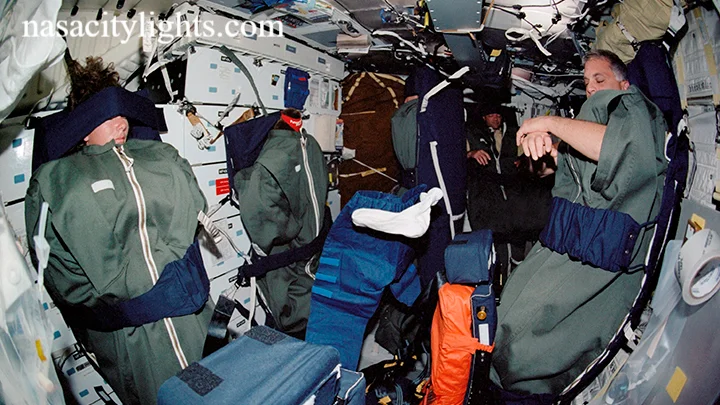
Astronauts sleep in individual sleeping bags attached to the walls, ceiling, or floor of their spacecraft to prevent floating in microgravity. Since there is no up or down in orbit, these bags can be mounted almost anywhere inside the crew cabin.
Each astronaut on the International Space Station has a small private sleep station, roughly the size of a phone booth. This tiny space gives them privacy, a place to store personal items, and a spot to zip themselves in for the night.
The sleeping bag is strapped loosely around the body. It keeps the astronaut from drifting into equipment or bumping into walls while unconscious. Without this simple restraint, a sleeping astronaut could slowly float across the module and wake up somewhere completely different.
Many astronauts describe the feeling as similar to being hugged gently from all sides. Once your body adjusts, it can actually feel comforting rather than restrictive.
Do Astronauts Sleep Lying Down?
Not in the way you might expect. Because there is no gravity, astronauts do not lie down flat on a mattress like we do on Earth. Instead, they sleep in whatever position feels natural inside their strapped in sleeping bag, whether that is horizontal, vertical, or somewhere in between.
Your body does not care about direction in microgravity. Muscles relax the same way no matter which way the sleep station is oriented. Some astronauts sleep standing upright inside their bag, while others prefer a more curled position, similar to how we naturally rest on Earth.
This is one of the more surprising facts about how do astronauts sleep in space. The concept of lying down simply does not apply the same way once gravity disappears.
Why Don’t Astronauts Float Away While Sleeping?
This is probably the most common question people ask. Astronauts do not float away because their sleeping bags are securely fastened to a fixed structure inside the spacecraft.
Here is what keeps them anchored during rest:
- The sleeping bag is clipped or strapped to a wall, floor, or ceiling mount
- Some astronauts also use bungee style straps across the shoulders
- Sleep stations have small enclosed walls that limit drifting
- Restraints prevent limbs from floating and hitting nearby equipment
Without these restraints, an astronaut would slowly drift through the cabin as air currents from the ventilation system pushed their body along. It sounds strange, but even gentle airflow is enough to move a sleeping person in zero gravity.
How Many Hours Do Astronauts Sleep?
NASA schedules eight hours of sleep time for each astronaut every day, similar to a normal night on Earth. However, actual sleep duration often falls short of that goal.
Studies from NASA and the European Space Agency show that astronauts typically get around six hours of sleep per night while in orbit. This is largely due to a demanding schedule, disrupted circadian rhythm, and the unusual environment.
Mission control builds structured sleep periods into every astronaut’s daily timeline. These scheduled hours help maintain some consistency, even though the ISS orbits Earth every ninety minutes, creating sixteen sunrises and sunsets in a single day.
Do Astronauts Use Pillows or Blankets?
Yes, but they work differently than the ones on your bed. Because there is no gravity to hold objects in place, pillows and blankets must be attached rather than simply placed.
Some sleeping bags include a small pillow that straps to the headrest area. Astronauts can rest their head against it, and the strap keeps it from floating away mid sleep. Blankets are less necessary since the sleeping bag itself provides insulation, but some astronauts still like the psychological comfort of tucking one around themselves.
Small personal touches like this help astronauts feel more at home during long missions.
Is It Difficult to Sleep in Space?
Yes, sleeping in space is genuinely difficult for most astronauts, especially during the first few nights. Several factors make quality rest harder to achieve compared to sleeping on Earth.
Common Sleep Challenges in Space
Constant noise The International Space Station never goes quiet. Life support systems, fans, and equipment run continuously, creating a steady hum that some astronauts find hard to ignore.
Disrupted circadian rhythm Your body relies on light and darkness to regulate its internal clock. With sixteen sunrises and sunsets every day, the brain receives confusing signals about when to feel sleepy.
Microgravity effects on the body Fluid shifts toward the upper body in space, causing facial puffiness and mild congestion. This shift can make breathing feel slightly different and may affect sleep quality.
Motion sickness Many astronauts experience space adaptation syndrome during their first few days. This condition can cause nausea and disorientation, both of which interfere with restful sleep.
Most astronauts adjust within a week or two, though many still report lighter and more fragmented sleep compared to their normal routine at home.
Do Astronauts Dream in Space?
Yes, astronauts do dream in space, just as they would on Earth. Sleep researchers have found that REM sleep, the stage where most dreaming occurs, still happens in microgravity, although it may be shorter or more disrupted.
Some astronauts have reported vivid dreams about floating, flying, or even swimming, which makes sense given the sensation of weightlessness they experience while awake. Others say their dreams feel completely normal, focusing on family, Earth, or everyday memories rather than anything related to space itself.
The mind clearly continues functioning normally during sleep, even when the body is in a completely foreign environment.
The Role of Sleeping Bags, Crew Quarters, and Lighting
Understanding how do astronauts sleep in space really comes down to three key systems working together.
Sleeping Bags
These specially designed bags attach firmly to a surface and loosely restrain the astronaut’s body. They prevent drifting, provide warmth, and create a sense of physical boundary that mimics the feeling of lying in a bed.
Crew Quarters
Each astronaut aboard the ISS has a private crew quarter about the size of a small closet. These compact spaces include ventilation, lighting controls, a laptop connection, and storage for personal items. Having a private space, even a small one, greatly improves an astronaut’s ability to relax and recharge.
Lighting Systems
NASA has installed advanced LED lighting on the ISS that can shift color temperature throughout the day. Blue toned light during work hours helps astronauts stay alert, while warmer tones in the evening signal the body that it is time to wind down. This lighting system helps compensate for the lack of a natural day and night cycle.
Together, these three elements create an environment that supports rest as much as possible, considering the unusual conditions of space travel.
How Microgravity Affects Sleep and Circadian Rhythm
Microgravity changes far more than movement. It directly impacts the body’s internal clock and overall sleep quality.
On Earth, your circadian rhythm relies on the rising and setting sun to regulate melatonin production. In orbit, the sun rises and sets every ninety minutes, completely confusing this natural cycle. Without intervention, astronauts would struggle to maintain any consistent sleep pattern.
NASA and other space agencies work around this by using scheduled lighting, structured sleep periods, and consistent daily routines that mimic a twenty four hour day, regardless of what is actually happening outside the window.
Microgravity also affects the vestibular system, which controls balance and spatial orientation. Since there is no gravity pulling fluids downward, some astronauts feel mild disorientation that can affect how easily they fall asleep, especially early in a mission.
How Mission Control Supports Healthy Sleep
Mission control plays an active role in helping astronauts maintain healthy sleep habits during long duration missions. NASA flight surgeons monitor crew wellness closely and adjust schedules when needed.
Some ways mission control supports better rest include:
- Scheduling consistent eight hour sleep periods in the daily timeline
- Reducing non essential communication during designated sleep hours
- Providing sleep masks and noise reducing earplugs
- Monitoring astronaut health data to catch early signs of sleep deprivation
- Coordinating exercise routines that support better sleep quality
The European Space Agency and Roscosmos follow similar practices aboard their sections of the ISS, since sleep health is critical for cognitive performance and mission safety.
Quick Recap: How Do Astronauts Sleep in Space
To summarize everything simply, here is exactly how do astronauts sleep in space:
- They use sleeping bags strapped to a wall, floor, or ceiling
- They rest inside small private crew quarters
- They follow a scheduled eight hour sleep period
- They rely on adjustable lighting to regulate their body clock
- They deal with noise, disorientation, and shifting fluids during the adjustment period
- They still dream, just like people on Earth
Once you break it down, sleeping in space is less about comfort and more about careful planning, smart engineering, and adapting to an environment the human body was never originally designed for.
Conclusion
Sleep might seem like a small detail compared to rockets and spacewalks, but it plays a massive role in astronaut health and mission success. Learning how do astronauts sleep in space shows just how much thought goes into even the simplest human needs once you leave the planet.
From secured sleeping bags to specially designed lighting systems, every detail is built to help astronauts rest despite floating, noise, and a broken day and night cycle. It is a small reminder that even in the most advanced environments, basic human needs never really change.
What do you think? Would you be able to sleep peacefully while floating in a metal capsule orbiting Earth at seventeen thousand miles per hour? Share your thoughts, and if you found this interesting, pass it along to someone who loves space as much as you do.
Frequently Asked Questions
How do astronauts sleep in space? Astronauts sleep in sleeping bags attached to walls or ceilings inside small crew quarters, which keeps them from floating around the cabin during rest.
Do astronauts sleep lying down in space? Not exactly. Since there is no gravity, astronauts sleep in whatever position feels comfortable inside their strapped sleeping bag, which can be vertical or horizontal.
Why don’t astronauts float away while sleeping? Their sleeping bags are secured to a fixed surface, and some use additional straps to keep their body from drifting during sleep.
How many hours do astronauts sleep each night? NASA schedules eight hours of sleep, though astronauts often average around six hours due to a busy schedule and disrupted body clock.
Do astronauts use pillows and blankets in space? Yes, though pillows must be strapped in place, and blankets are mostly optional since the sleeping bag already provides warmth.
Is it hard to sleep in space? Yes, noise, constant light changes, and microgravity effects on the body make sleep more challenging, especially during the first week of a mission.
Do astronauts dream while sleeping in space? Yes, astronauts experience REM sleep and dreaming in space, sometimes reporting dreams related to floating or flying.
How does the International Space Station handle day and night for sleep? The ISS uses adjustable LED lighting that shifts color temperature to mimic a normal day and night cycle, since the station experiences sixteen sunrises daily.
Does mission control monitor astronaut sleep? Yes, NASA flight surgeons track astronaut sleep patterns and adjust schedules to protect their health and performance during missions.
What is the biggest challenge to sleeping in space? The biggest challenge is the disrupted circadian rhythm caused by frequent sunrises and sunsets, combined with constant background noise from station equipment.
nasacitylights.com
Author Name: Hamid Ali
Email: johanharwen314@gmail.com
About the Author: Hamid Ali is a science and technology writer passionate about space exploration and human spaceflight. He enjoys breaking down complex space topics into simple, engaging content that helps everyday readers understand life beyond Earth.