
Physical Media vs Digital Media: Amazing Wins and Sad Losses in 2026
Introduction
Remember the last time you held a movie in your hands before watching it? That feeling is slowly disappearing, and it has sparked a real debate around physical media vs digital media. Some people still love flipping through CDs and DVDs on a shelf. Others prefer tapping a screen and watching instantly. Both sides have strong opinions, and both are right in their own way.
This article breaks down physical media vs digital media in a simple, honest way. You will learn what each option means, how they differ, and which one actually suits your daily life. We will also look at real advantages, real drawbacks, and answer the questions people search for most. By the end, you will know exactly where you stand in the physical media vs digital media debate.
What Is Physical Media?
Physical media means content you can actually touch. It lives on a tangible object rather than a screen alone.
Common examples include:
- DVDs and Blu ray discs
- CDs for music
- Printed books
- Game discs for consoles
You buy it once, you own the item, and you can place it on a shelf. It feels real, and for many collectors, that is exactly the appeal.
What Is Digital Media?
Digital media is content you access electronically, without ever holding a physical object. It lives on servers, apps, or devices.
Common examples include:
- Streaming movies on Netflix or similar platforms
- Music on Spotify or Apple Music
- E books on a tablet or phone
- Digital games downloaded straight to a console or PC
Everything is stored online or on a device, and you access it with a simple tap or click.
Physical Media vs Digital Media: The Core Difference
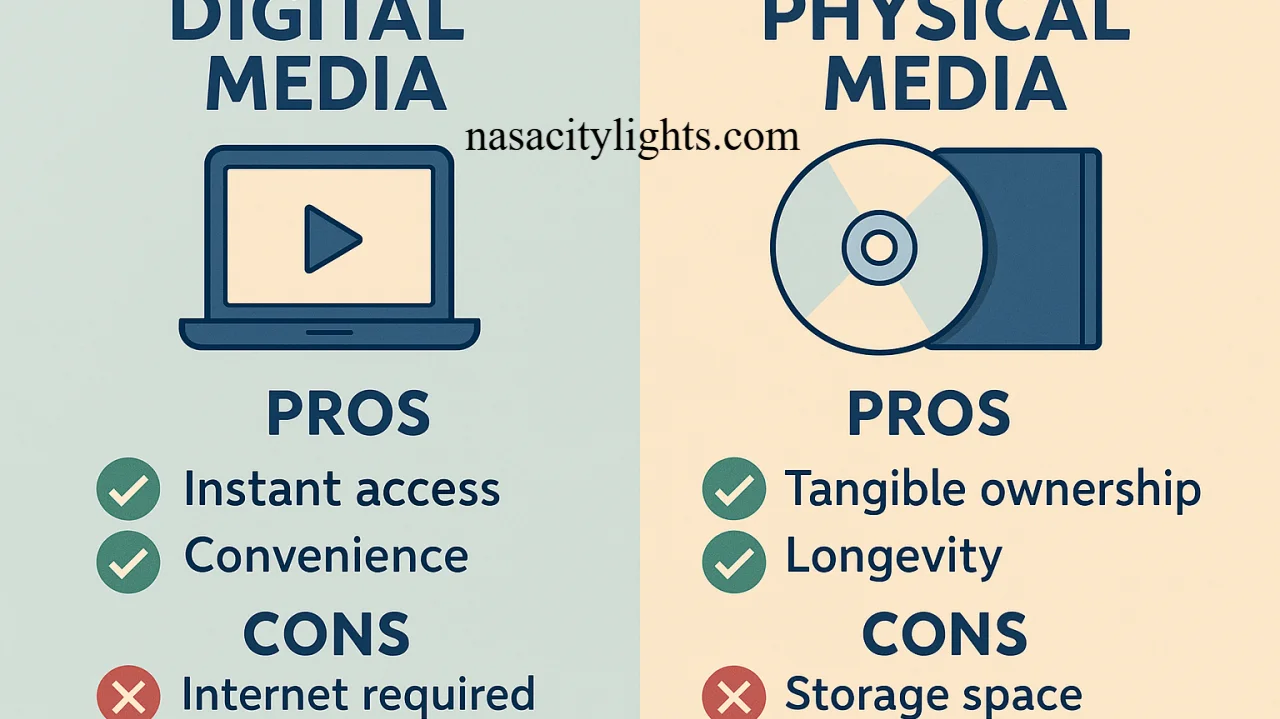
The biggest difference in physical media vs digital media comes down to how you receive the content. Physical media requires a product you can hold, ship, and store somewhere in your home. Digital media, on the other hand, arrives through downloads, apps, websites, or streaming services with no shipping involved at all.
Think of it this way. Physical media is like owning a car parked in your garage. Digital media is like using a ride sharing app whenever you need to go somewhere. One gives you a permanent object, the other gives you constant convenience.
Physical Media Advantages
Physical media still holds strong appeal for many reasons.
You Actually Own It
When you buy a DVD or a printed book, it belongs to you completely. No company can revoke your access later.
Collectible Value
Many fans enjoy building a personal collection. Limited editions, special covers, and rare discs often grow in value over time.
Resale Option
You can sell or trade physical items whenever you want. Try doing that with a digital movie you streamed last night.
Works Without Internet
A DVD plays fine even during an internet outage. Digital media usually cannot say the same.
Long Term Access
As long as the disc or book stays in good condition, you can enjoy it for decades without worrying about a service shutting down.
Physical Media Disadvantages
Of course, physical media is not perfect either.
- It takes up real storage space in your home
- Discs and books can get scratched, damaged, or lost
- You often need to visit a store or wait for shipping
- Prices can be higher than digital versions
If you move often or live in a small space, this can quickly become a real problem.
Digital Media Advantages
Digital media has exploded in popularity for good reason.
Instant Access
You can start watching, reading, or playing within seconds. No waiting, no driving to a store.
Easy Storage
Your entire music library or book collection fits inside one small device. No shelves needed.
Portability
Carry thousands of songs, movies, and books in your pocket wherever you go.
No Physical Space Required
Your living room stays clean and clutter free, since nothing physical piles up.
Digital Media Disadvantages
Digital media also comes with real downsides worth knowing.
- You often depend on an active internet connection
- Access ties to accounts, which can get suspended or hacked
- Licensing rights can change, sometimes removing content you paid for
- Device compatibility issues can limit playback
In many ways, digital media hands convenience to you while quietly holding some control for itself.
Physical Media vs Digital Media: Which One Wins?
Honestly, there is no single winner in the physical media vs digital media debate. It depends entirely on what matters most to you personally.
If you value ownership, collectability, and long term reliability, physical media fits your lifestyle better. I personally still keep a small shelf of favorite films, simply because I like knowing they are mine forever.
If you value speed, convenience, and minimal clutter, digital media clearly wins. Most people today lean toward digital simply because life moves fast, and instant access feels effortless.
Quick Comparison Table
| Factor | Physical Media | Digital Media |
|---|---|---|
| Ownership | Full ownership | Often licensed access |
| Storage | Needs physical space | Needs minimal space |
| Internet | Not required | Usually required |
| Resale | Possible | Rarely possible |
| Access Speed | Slower | Instant |
| Damage Risk | Yes | No |
This table makes the physical media vs digital media choice easier to visualize at a glance.
Real World Examples
To understand physical media vs digital media better, look at everyday examples.
Physical examples: A Blu ray boxset, a printed novel, a CD album, or a game disc for your console.
Digital examples: Streaming a show on Netflix, listening to a playlist on Spotify, reading an e book on Kindle, or downloading a new game directly to your device.
Most people today actually use both, mixing convenience with occasional collectible purchases.
Common Questions People Ask
Is physical media making a comeback?
Yes, in certain niches like vinyl records and collector edition Blu rays, physical media has seen a small revival among enthusiasts.
Is digital media cheaper than physical media?
Usually yes, since digital media skips manufacturing, shipping, and packaging costs.
Can digital media be lost like physical media?
Yes, if an account gets banned, a service shuts down, or licensing changes, you can lose access completely.
Which lasts longer, physical or digital media?
A well kept physical disc or book can last decades. Digital media depends entirely on the platform staying active.
Do collectors prefer physical or digital media?
Collectors almost always prefer physical media, since digital items offer no shelf value or resale option.
Is streaming considered digital media?
Yes, streaming is one of the most common forms of digital media available today.
Can I own digital media the same way I own physical media?
Not really. Most digital purchases are technically licenses, meaning the company retains some control.
Which is better for travel, physical or digital media?
Digital media wins here, since you can carry unlimited content without extra weight or bulk.
Final Thoughts
The physical media vs digital media debate does not have a perfect answer, because both options serve different needs beautifully. Physical media gives you something real to hold, collect, and pass down. Digital media gives you speed, convenience, and freedom from clutter.
So which side do you lean toward? Do you still buy discs and books, or have you gone fully digital? Share your thoughts, and if this article helped clear things up, pass it along to a friend who is still stuck deciding between physical media and digital media.
nasacitylights.com
Author Name: Hamid Ali
Email: johanharwen314@gmail.com
About the Author: Hamid Ali is a content writer who enjoys breaking down everyday technology topics into simple, relatable articles. He writes about entertainment, digital trends, and consumer choices, helping readers make informed decisions without confusing jargon.