
Alpha and Beta Rays: The Amazing Truth Behind Invisible Radiation
Introduction
Have you ever wondered what actually happens inside a radioactive atom? It sounds like something out of a science fiction movie, but alpha and beta rays are real, and they are around us more often than you think. From smoke detectors in your home to cancer treatments in hospitals, alpha and beta rays play a bigger role in daily life than most people realize.
In this article, we will break down everything you need to know about alpha and beta rays in plain, simple language. No confusing jargon, no boring textbook talk. Just clear answers to the questions people actually search for. By the end, you will understand what these rays are, how they differ, which one is more dangerous, and where they are used in the real world.
Let us dive right in.
What Are Alpha and Beta Rays?
Alpha and beta rays are two types of radiation released when unstable atoms break down. This process is called radioactive decay. When an atom has too much energy or an unstable nucleus, it releases particles to become more stable. These released particles are what we call alpha and beta rays.
Think of an unstable atom like an overfilled balloon. It needs to let some air out to feel comfortable again. In the same way, radioactive atoms release energy in the form of alpha and beta rays until they settle into a stable state.
Both alpha and beta rays are forms of ionizing radiation. This means they carry enough energy to knock electrons out of atoms, creating charged particles called ions. This ionizing ability is exactly why alpha and beta rays are useful in some situations and risky in others.
What Is the Difference Between Alpha and Beta Radiation?
The biggest difference between alpha and beta radiation comes down to size, charge, and speed.
Alpha radiation consists of heavy, slow moving particles. Beta radiation, on the other hand, is made of much smaller, faster particles. This single difference explains almost everything else about how they behave, including how far they travel and how dangerous they are.
Here is a quick comparison to make it easier:
- Alpha particles are large and heavy. Beta particles are tiny and light.
- Alpha particles travel slowly. Beta particles move much faster, close to the speed of light.
- Alpha radiation has a strong positive charge. Beta radiation carries a negative charge in most cases.
- Alpha rays cannot travel far. Beta rays can travel further through air and materials.
Understanding this difference between alpha and beta radiation helps explain why each type is treated differently in science, medicine, and safety guidelines.
What Are Alpha Particles Made Of?
Alpha particles are made of two protons and two neutrons bound tightly together. This is actually identical to the nucleus of a helium atom, just without its electrons.
Because alpha particles contain two protons, they carry a positive electric charge. Their heavy mass and strong charge make them powerful but also make it hard for them to travel very far.
You can picture an alpha particle like a small, dense cannonball. It has a lot of force behind it, but it slows down quickly once it hits something in its path.
What Are Beta Particles Made Of?
Beta particles are much simpler in structure. They are either fast moving electrons or their positive counterparts called positrons.
When a neutron inside an atom converts into a proton, it releases an electron. This electron shoots out of the atom as a beta particle. Since electrons are incredibly small and light, beta particles move at very high speeds, sometimes close to the speed of light itself.
If alpha particles are like cannonballs, beta particles are more like tiny bullets. They are much lighter but move fast enough to travel further and penetrate deeper into materials.
Which Is More Penetrating, Alpha or Beta Radiation?
Beta radiation is far more penetrating than alpha radiation. This is one of the most important facts to understand about alpha and beta rays.
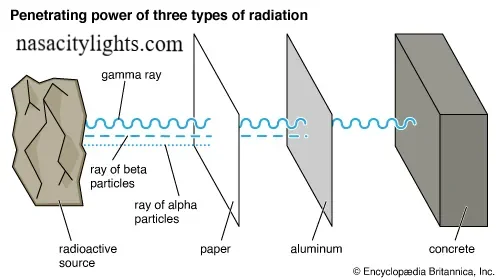
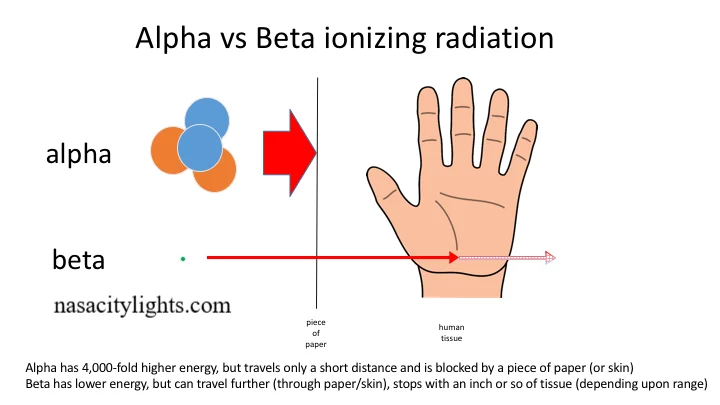
Because alpha particles are heavy and bulky, they lose energy quickly. A single sheet of paper or even a few centimeters of air can stop alpha radiation completely.
Beta radiation, being smaller and faster, can travel much further. It can pass through paper and even skin to some extent, though it can usually be stopped by something like a thin sheet of aluminum or plastic.
So when comparing the penetrating power of alpha and beta rays, beta wins by a clear margin.
Which Is More Dangerous, Alpha or Beta Radiation?
Here is where things get interesting. Even though beta radiation travels further, alpha radiation is actually more dangerous in certain situations.
Alpha particles are highly ionizing. This means they cause intense damage over a very short distance. As long as alpha radiation stays outside the body, it is relatively harmless because skin blocks it easily. But if alpha emitting material is inhaled or swallowed, it can cause serious internal damage to cells and tissues.
Beta radiation is less ionizing per particle but can penetrate further into the body from outside, making external exposure more of a concern compared to alpha rays.
In short, alpha radiation is more dangerous internally, while beta radiation poses more risk externally. This is a key point people often misunderstand about alpha and beta rays.
Can Alpha and Beta Rays Pass Through Skin?
Alpha rays cannot pass through skin. The outer layer of dead skin cells is more than enough to block them completely.
Beta rays are different. They can penetrate a few millimeters into skin and living tissue, which is why prolonged exposure to beta radiation can cause skin burns or damage in industrial or medical settings.
This is another reason why understanding alpha and beta rays is so important for safety in nuclear facilities, hospitals, and laboratories.
What Materials Can Stop Alpha Radiation?
Alpha radiation is surprisingly easy to block. You do not need thick lead shields or heavy equipment.
Materials that stop alpha radiation include:
- A single sheet of paper
- A few centimeters of air
- The outer layer of human skin
- Thin plastic sheeting
Because alpha particles lose energy so quickly, almost any barrier is enough to stop them from traveling further.
What Materials Can Stop Beta Radiation?
Beta radiation needs slightly stronger protection since it travels faster and further.
Materials commonly used to block beta radiation include:
- Aluminum sheets
- Thick plastic or acrylic
- Glass
- Layers of clothing in some cases
Unlike alpha rays, beta rays require denser or thicker materials to be fully absorbed.
Where Are Alpha and Beta Rays Used?
Alpha and beta rays are not just something you read about in physics class. They have real world applications that touch everyday life.
Common uses of alpha radiation:
- Smoke detectors use a small amount of alpha emitting material to detect smoke particles in the air
- Static eliminators in industrial machines use alpha radiation to neutralize static charges
- Certain cancer treatments use targeted alpha therapy to destroy cancer cells with minimal damage to surrounding tissue
Common uses of beta radiation:
- Medical imaging and cancer treatment often rely on beta emitting isotopes
- Thickness gauges in manufacturing use beta radiation to measure material thickness accurately
- Beta radiation is also used in certain types of luminous paint and instrument dials
These practical uses show just how valuable alpha and beta rays are when handled correctly and safely.
Alpha and Beta Decay Explained With Examples
Radioactive decay happens naturally in certain elements. A classic example of alpha decay is uranium breaking down into thorium while releasing an alpha particle. Over time, this decay process continues through several stages until a stable element is formed.
A well known example of beta decay is carbon fourteen turning into nitrogen fourteen. This process is actually the foundation of carbon dating, a technique scientists use to determine the age of ancient fossils and artifacts.
These real examples show how alpha and beta rays are not just theoretical concepts. They shape scientific research, medical breakthroughs, and even our understanding of history.
Final Thoughts
Alpha and beta rays might sound intimidating at first, but once you break them down, they are easy to understand. Alpha particles are heavy, slow, and easily blocked, but dangerous if they get inside your body. Beta particles are lighter, faster, and can travel further, making external exposure more of a concern.
Both alpha and beta rays play essential roles in medicine, industry, and scientific research. Understanding how they behave helps us use them safely and effectively.
What do you think? Did this article help clear up your understanding of alpha and beta rays? Feel free to share it with someone who might find it useful, or leave a comment with any questions you still have.
Frequently Asked Questions
1. What are alpha and beta rays in simple terms? Alpha and beta rays are particles released by unstable atoms as they break down to become more stable. Alpha rays are heavy and slow, while beta rays are light and fast.
2. Are alpha and beta rays harmful to humans? They can be harmful depending on exposure. Alpha rays are dangerous if inhaled or swallowed, while beta rays can harm skin and tissue through external exposure.
3. Which travels faster, alpha or beta radiation? Beta radiation travels much faster than alpha radiation because beta particles are far lighter.
4. Can alpha and beta rays be detected at home? Yes, devices like Geiger counters can detect both alpha and beta rays, though specialized detectors are needed for accurate readings.
5. Why are alpha and beta rays used in smoke detectors? A small amount of alpha emitting material ionizes air particles, allowing the detector to sense smoke when the ionization pattern changes.
6. Do alpha and beta rays cause cancer? Excessive or prolonged exposure to either type of radiation can increase cancer risk, which is why safety measures are strictly followed in workplaces that use them.
7. How are alpha and beta rays different from gamma rays? Gamma rays are pure energy waves with no mass, while alpha and beta rays are actual particles. Gamma rays also penetrate much further than either alpha or beta radiation.
8. Is beta radiation used in medicine? Yes, beta radiation is commonly used in certain cancer treatments and diagnostic procedures.
nasacitylights.com
Author Name: Hamid Ali
Email: johanharwen314@gmail.com
About the Author: Hamid Ali is a science content writer who enjoys breaking down complex physics topics into simple, relatable articles. He believes that understanding science should not feel like a chore, and he writes with the goal of making difficult concepts accessible to everyone.