
Optimal Foraging Theory Explained: How Smart Animals Maximize Feeding Success
Introduction
Have you ever wondered why birds spend only a few seconds at each bird feeder before flying away? The answer lies in a powerful ecological concept called optimal foraging theory. This groundbreaking approach to understanding animal behavior reveals that creatures across the planet make sophisticated feeding decisions based on energy costs and benefits. Optimal foraging theory fundamentally changes how scientists view nature’s complexity and animal intelligence.
From tiny hummingbirds calculating nectar rewards to massive whales filtering ocean waters, animals consistently apply principles that maximize their energy intake relative to effort spent. You’ll discover that optimal foraging theory isn’t just academic theory—it explains real survival strategies that animals use every single day. This article explores how this behavioral ecology framework works and why understanding optimal foraging theory matters for both wildlife conservation and human behavior.
What Is Optimal Foraging Theory?
Optimal foraging theory represents a mathematical framework developed by ecologists to predict how animals make feeding decisions. This theory proposes that natural selection favors animals that maximize their net energy gain from food sources. Put simply, optimal foraging theory suggests that animals behave like efficient consumers, balancing the energy they obtain against the energy they spend searching and capturing prey.
The concept emerged during the 1960s and 1970s when biologists recognized consistent patterns in animal feeding behavior. Scientists noticed that animals didn’t randomly select food sources. Instead, they demonstrated remarkable precision in choosing when to stay at a feeding location and when to leave. This observation led researchers to develop optimal foraging theory as a predictive model for understanding these decisions.
Core Principles of Optimal Foraging Theory
The Marginal Value Theorem
The marginal value theorem sits at the heart of optimal foraging theory. This principle states that an animal should leave its current food source when the rate of energy gain drops below the average rate available in the environment. Imagine you’re eating from a diminishing fruit bowl. You’d stop eating when each additional fruit takes more time to find than it’s worth.
Animals appear to calculate these trade-offs unconsciously. Researchers studying optimal foraging theory have found that patch residence time directly correlates with predicted values from mathematical models. This alignment between theory and behavior astounds many biologists.
Prey Choice Model
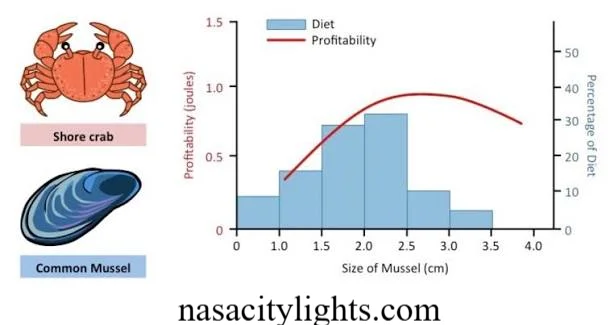
The prey choice model within optimal foraging theory addresses a fundamental question: which food items should an animal pursue and which should it ignore? According to this model, animals rank prey by their energy return relative to handling time. They pursue high-value prey consistently and ignore low-value items, even when they’re abundant.
This aspect of optimal foraging theory explains why predators often reject easy-to-catch prey when more nutritious options become available. A lion won’t waste energy on a rabbit when zebras are nearby. Optimal foraging theory predicts this behavior mathematically and accurately.
Search Time and Handling Time
Optimal foraging theory distinguishes between search time and handling time. Search time involves locating food, while handling time includes capturing, killing, and consuming it. Different prey types require different handling times, directly influencing optimal foraging theory predictions about animal choices.
An animal’s total feeding time depends on both variables. Optimal foraging theory suggests that as prey abundance increases, search time decreases but handling time remains constant. This insight shapes how ecologists understand predator prey relationships throughout nature.
How Optimal Foraging Theory Applies Across Species
| Species | Primary Food Source | Foraging Strategy | Optimal Foraging Theory Application |
|---|---|---|---|
| Honeybees | Nectar and pollen | Efficient flower visitation routes | Maximize nectar collection per unit flight time |
| Great Blue Herons | Small fish | Stationary hunting in shallow water | Minimize energy per fish caught |
| Squirrels | Nuts and seeds | Selective caching and retrieval | Choose highest calorie nuts first |
| Wolves | Large ungulates | Pack hunting and territory defense | High energy yield justifies search effort |
| Aphids | Plant sap | Minimal movement feeding | Stay put where caloric intake exceeds search costs |
The Energy Economics of Feeding
Calculating Energy Budgets
Optimal foraging theory rests on energy accounting. Animals possess limited energy reserves and must decide how to allocate them between competing activities. Feeding represents just one component of their daily energy budget. Other essential activities include reproducing, defending territory, and avoiding predators.
When you understand optimal foraging theory through this lens, animal behavior makes remarkable sense. A rabbit stops grazing when the remaining grass provides insufficient nutrition to justify predation risk. Optimal foraging theory predicts these life-or-death decisions with surprising accuracy.
Trade-offs and Constraints
Optimal foraging theory recognizes that animals face unavoidable trade-offs. Energy spent searching for food cannot be spent building nests or rearing young. Time invested in one activity necessarily reduces time available for others. These constraints shape evolutionary fitness directly.
Natural selection favors individuals whose foraging behavior maximizes overall reproductive success, not just caloric intake. This refined understanding of optimal foraging theory explains why some animals pursue seemingly suboptimal strategies. They’re actually optimizing for broader fitness goals than simple energy maximization.
Factors That Influence Foraging Decisions
Environmental Variables
Seasonal changes dramatically affect optimal foraging theory applications. Prey availability fluctuates throughout the year, forcing animals to adjust their strategies continually. Winter scarcity makes energy-rich foods increasingly valuable. Optimal foraging theory predicts that animals become less selective during food shortages, accepting lower-quality prey they’d normally reject.
Weather patterns also influence foraging success rates. Strong winds reduce insect availability for insectivorous birds, forcing them to invest more search effort per insect caught. These conditions directly test optimal foraging theory predictions in real time.
Social Factors
Competition with other foragers complicates optimal foraging theory applications. When multiple animals search the same patch, individual feeding rates decline. Optimal foraging theory predicts that animals should leave crowded patches earlier than they would alone. Researchers consistently confirm this prediction in both field studies and laboratory experiments.
Dominance hierarchies within groups further modify optimal foraging theory outcomes. Dominant individuals access better feeding locations first, experiencing higher energy gains. Subordinate animals accept lower-quality patches because competition prevents access to premium resources.
Real-World Examples of Optimal Foraging Theory
Toucans and Fruit Selection
Toucans in Central American rainforests demonstrate optimal foraging theory principles beautifully. These birds must decide which fruit trees to visit, how long to stay at each tree, and which fruits to consume. Researchers discovered that toucans spend more time at trees offering larger fruit. This behavior aligns perfectly with optimal foraging theory predictions about patch quality and residence time.
Humans and Consumer Behavior
Interestingly, optimal foraging theory extends beyond wildlife. Humans apply similar decision-making processes when shopping, dining, or searching for information online. You naturally leave a depleted grocery shelf for a better-stocked one. This mirrors the marginal value theorem central to optimal foraging theory. Your brain performs these calculations unconsciously, just like animal brains do.
Criticisms and Limitations of Optimal Foraging Theory
Despite its predictive success, optimal foraging theory has critics who highlight genuine limitations. Some argue that optimal foraging theory oversimplifies animal cognition by assuming complex mathematical calculations. Animals don’t consciously solve equations, yet they behave as if they do. This raises philosophical questions about mechanism.
Additionally, optimal foraging theory sometimes fails to predict behavior when animals prioritize goals beyond energy maximization. Animals may select certain foods for nutritional variety, disease avoidance, or social bonding. Optimal foraging theory accounts for these factors imperfectly, requiring modifications for specific contexts.
Why Optimal Foraging Theory Matters Today
Understanding optimal foraging theory helps conservation efforts tremendously. When wildlife managers alter habitats, optimal foraging theory predicts how animals will respond. Protecting food sources and reducing search time can enable species recovery. This practical application has saved numerous endangered species from extinction.
Optimal foraging theory also illuminates human nutrition and behavior patterns. As food becomes abundant and cheap, humans face different foraging trade-offs than our ancestors. This mismatch between evolved optimal foraging theory-driven preferences and modern food environments contributes to obesity and metabolic disease. Recognizing these patterns helps address public health challenges.
Conclusion
Optimal foraging theory represents one of ecology’s most elegant and powerful frameworks. This theory successfully predicts how animals make feeding decisions across countless species and environments. From the smallest insects to the largest mammals, optimal foraging theory explains the strategic decisions that drive survival and reproduction.
What makes optimal foraging theory particularly valuable is its universal applicability. Whether studying microscopic organisms or human economics, the same principles govern resource acquisition decisions. You can apply optimal foraging theory thinking to your own life, recognizing that your time and energy represent scarce resources requiring strategic allocation.
As environmental pressures intensify and ecosystems face unprecedented challenges, optimal foraging theory becomes increasingly important for understanding and protecting wildlife. By recognizing that animals behave strategically and efficiently, we gain deeper respect for nature’s complexity.
Frequently Asked Questions About Optimal Foraging Theory
Q1: Who developed optimal foraging theory? Robert MacArthur and Richard Levins pioneered optimal foraging theory in 1966. They published groundbreaking work applying optimization theory to animal feeding behavior. Since then, thousands of studies have tested and refined optimal foraging theory principles.
Q2: Can optimal foraging theory predict human behavior? Yes, optimal foraging theory principles apply to human decision-making. We unconsciously calculate effort versus reward when shopping, working, or socializing. Understanding optimal foraging theory helps explain consumer behavior and time management patterns.
Q3: Do all animals follow optimal foraging theory? Most animals demonstrate behavior consistent with optimal foraging theory predictions. However, some species prioritize other goals over pure energy maximization. Optimal foraging theory works best for explaining immediate feeding decisions rather than long-term strategy.
Q4: How do scientists test optimal foraging theory? Researchers use field observations, laboratory experiments, and mathematical modeling. They measure patch residence times, prey selection, and energy gains. Findings consistently support optimal foraging theory predictions across diverse species.
Q5: What is the marginal value theorem in optimal foraging theory? The marginal value theorem states animals should leave a food patch when energy gain rates fall below environmental averages. This principle forms the mathematical foundation of optimal foraging theory.
Q6: How does optimal foraging theory relate to ecology? Optimal foraging theory bridges individual behavior and population-level ecology. It explains predator-prey dynamics, competition, and energy flow through ecosystems. Understanding optimal foraging theory illuminates fundamental ecological relationships.
Q7: Can optimal foraging theory help with climate change adaptation? Yes, optimal foraging theory predictions help anticipate how species respond to changing food availability. As climate shifts prey distributions, understanding optimal foraging theory guides conservation strategies.
Q8: Does stress affect optimal foraging theory applications? Stress and danger certainly modify optimal foraging theory outcomes. Predation risk causes animals to leave profitable patches earlier. Optimal foraging theory accounts for predation risk through adjusted patch value calculations.
Q9: How do scientists measure energy gained in optimal foraging theory studies? Researchers use caloric analysis of consumed food and measure time invested in foraging activities. Energy gained divided by time spent provides the currency optimal foraging theory models use.
Q10: What are practical applications of optimal foraging theory? Conservation biology, fisheries management, and wildlife habitat design all apply optimal foraging theory. This theory informs decisions about protected area design and resource management policies.
Also Read
Author Bio: Hamid Ali is an accomplished science writer specializing in ecology and evolutionary biology. With extensive research background in optimal foraging theory and animal behavior, Hamid translates complex scientific concepts into accessible, engaging content. His work bridging optimal foraging theory research with mainstream audiences has influenced conservation awareness globally. When not writing, Hamid conducts field research studying how wildlife implements optimal foraging theory in natural settings.
Author Name: Hamid Ali
Email: johanharwen314@gmail.com