
Third Law of Thermodynamics: The Ultimate Cold Truth
What Is the Third Law of Thermodynamics?
Have you ever wondered why nothing in the universe can ever get perfectly cold? That question sits at the heart of the third law of thermodynamics, and it is more fascinating than most textbooks make it sound.
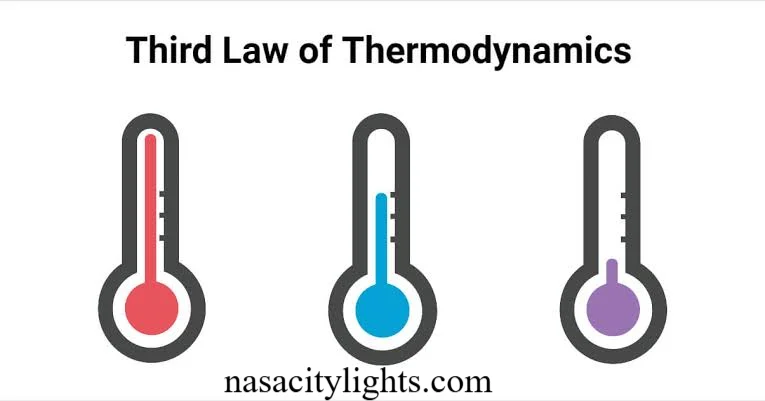
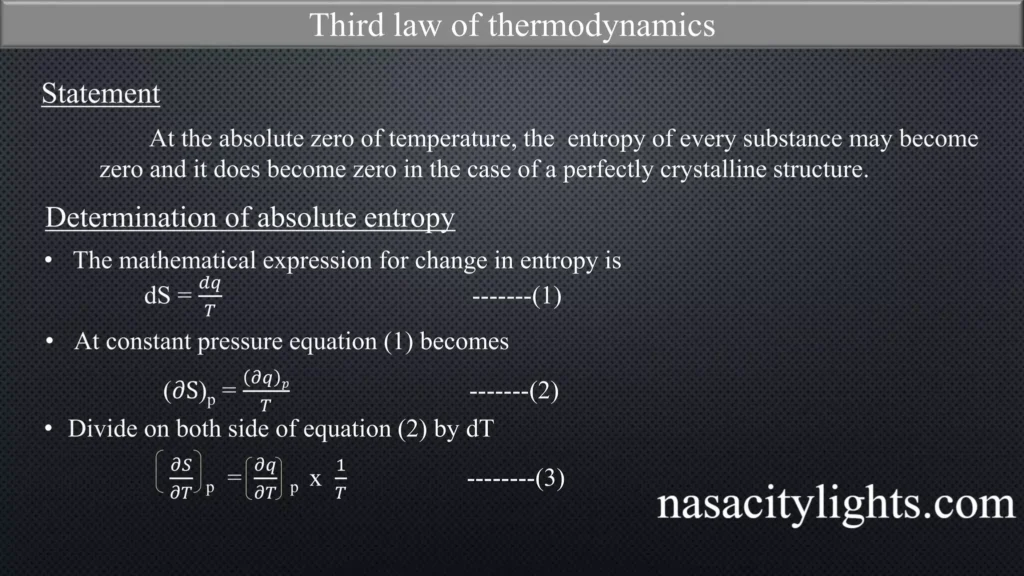
In simple terms, the third law of thermodynamics states that as a system approaches absolute zero, its entropy approaches a minimum, fixed value. For a perfect crystal, that value is zero. This single idea helps scientists understand everything from superconductors to space exploration.
In this article, you will learn what the third law of thermodynamics actually means, why it matters, how it connects to the other laws of thermodynamics, and how researchers use it today. We will also look at real numbers, expert insights, and answer the most common questions people ask about this topic. By the end, you will understand the third law of thermodynamics well enough to explain it to a friend without sounding like a textbook.
The Simple Definition You Actually Need
You do not need a physics degree to understand the third law of thermodynamics. Here is the plain version.
As a system gets closer and closer to absolute zero (0 Kelvin, or negative 273.15 degrees Celsius), the disorder inside that system, known as entropy, drops toward its lowest possible value. For a perfectly ordered crystal, entropy at absolute zero equals zero.
This law was first proposed by German chemist Walther Nernst in the early 1900s, so many scientists still call it the Nernst Heat Theorem. Nernst won the Nobel Prize in Chemistry in 1920 largely because of this discovery.
Why Absolute Zero Is Impossible to Reach
One of the biggest takeaways from the third law of thermodynamics is this: you can get extremely close to absolute zero, but you can never actually touch it. Every attempt to cool a system further requires energy, and that energy always leaves a tiny bit of residual motion behind.
Think of it like trying to walk halfway to a wall every single step. You get closer and closer, but you never truly arrive.
How the Third Law Fits With the Other Laws of Thermodynamics
To fully appreciate the third law of thermodynamics, it helps to see it alongside its siblings.
| Law | Core Idea | Everyday Example |
|---|---|---|
| Zeroth Law | If two systems are each in equilibrium with a third, they are in equilibrium with each other | A thermometer reading the same temperature for two cups of tea |
| First Law | Energy cannot be created or destroyed, only transferred | A car engine converting fuel into motion and heat |
| Second Law | Entropy in an isolated system always increases over time | Ice melting in a warm room |
| Third Law | Entropy approaches a minimum as temperature approaches absolute zero | Atoms slowing down almost completely in a lab experiment |
Notice how each law builds on the last one. The third law of thermodynamics essentially closes the loop by describing what happens at the extreme edge of the temperature scale.
Real World Applications of the Third Law of Thermodynamics
You might think this law only matters in a physics classroom, but it actually powers several modern technologies.
- Cryogenics: Engineers use principles from the third law of thermodynamics to design MRI machines, which rely on superconducting magnets cooled to extremely low temperatures.
- Quantum Computing: Many quantum computers, including systems built by companies like IBM and Google, operate at temperatures colder than deep space to reduce interference.
- Space Research: NASA’s Cold Atom Lab aboard the International Space Station studies matter at temperatures near absolute zero, building directly on ideas from the third law of thermodynamics.
- Material Science: Understanding entropy at low temperatures helps researchers create better superconductors, which could one day transform energy transmission.
I find it genuinely exciting that a law written down over a century ago still guides cutting edge experiments today.
The Numbers Behind the Cold
Statistics help put the third law of thermodynamics into perspective.
- Absolute zero equals 0 Kelvin, or negative 273.15 degrees Celsius.
- In 2021, MIT researchers cooled sodium atoms to about 38 trillionths of a degree above absolute zero, one of the coldest temperatures ever recorded in a lab.
- NASA’s Cold Atom Lab has reached temperatures near 100 picokelvin in microgravity, far colder than anything achievable on Earth.
- Entropy at absolute zero for a perfect crystal equals exactly zero, according to the formal statement of the third law of thermodynamics.
These numbers show just how seriously scientists take this law. Reaching temperatures this low takes enormous precision, and the third law of thermodynamics explains why the final step toward zero is always the hardest.
What Experts Say About the Third Law of Thermodynamics
Physicists often describe the third law of thermodynamics as the quiet law, since it gets far less attention than the second law, yet it plays a huge role in modern quantum research. According to physics educators at institutions like MIT OpenCourseWare, this law provides the theoretical foundation for calculating absolute entropy values, something the other laws alone cannot do.
Many chemistry professors also point out that without the third law of thermodynamics, calculating standard entropy values for chemical reactions would be far less accurate. That accuracy matters in industries ranging from pharmaceuticals to battery design.
Common Misunderstandings About the Third Law
You are not alone if some of this feels confusing at first. Here are a few myths worth clearing up.
- Myth: Absolute zero has been achieved in a lab. Fact: Scientists have only gotten extremely close, never fully reached it, which is exactly what the third law of thermodynamics predicts.
- Myth: The third law of thermodynamics only applies to gases. Fact: It applies to all matter, including solids, liquids, and complex molecules.
- Myth: Entropy always equals zero at low temperatures. Fact: Entropy approaches zero only for a perfect crystal structure. Impure or disordered materials retain some residual entropy.
Why This Law Still Matters Today
Modern science keeps circling back to the third law of thermodynamics because it sets a hard limit on what is physically possible. Engineers designing next generation computer chips, physicists building quantum processors, and chemists calculating reaction entropy all rely on this principle daily.
Understanding the third law of thermodynamics also helps you appreciate just how extraordinary our universe is. Even with unlimited technology, nature draws a line that cannot be crossed.
Final Thoughts
The third law of thermodynamics teaches us that perfection, at least when it comes to temperature, stays just out of reach. As systems cool, their entropy shrinks toward a fixed minimum, but true absolute zero remains a theoretical boundary rather than a destination.
Now that you understand the third law of thermodynamics, take a moment to think about where else in life we chase something we can approach but never fully reach. If you found this explanation helpful, share it with a friend who loves science, or leave a comment with your own questions.
Frequently Asked Questions
What is the third law of thermodynamics in simple words? It states that as temperature approaches absolute zero, the entropy of a perfect crystal approaches zero as well.
Who discovered the third law of thermodynamics? German chemist Walther Nernst first proposed this idea in the early 1900s, which is why it is sometimes called the Nernst Heat Theorem.
Why can we never reach absolute zero? Because cooling a system further always requires energy, and that process leaves behind a small amount of unavoidable motion, exactly as the third law of thermodynamics predicts.
What is entropy in the third law of thermodynamics? Entropy measures disorder within a system. The third law of thermodynamics explains that entropy reaches its lowest possible value near absolute zero.
How does the third law of thermodynamics apply to real life? It applies to cryogenics, quantum computing, MRI technology, and space research, all of which depend on cooling matter to extremely low temperatures.
Is the third law of thermodynamics the same as absolute zero? No. Absolute zero is a temperature point, while the third law of thermodynamics is the principle explaining why that point can never truly be reached.
What happens to entropy at absolute zero? For a perfectly ordered crystal, entropy equals exactly zero, according to the third law of thermodynamics.
Does the third law of thermodynamics apply to all materials? Yes, it applies universally, though only perfect crystal structures reach true zero entropy. Other materials retain some residual entropy.
Also Read
About the Author: Hamid Ali is a science content writer who enjoys breaking down complex physics topics into simple, relatable explanations. He focuses on making subjects like thermodynamics, energy, and chemistry easy to understand for everyday readers.
Author Name: Hamid Ali
Email: johanharwen314@gmail.com