
Atari Cosmos: 1978 History, Value, Price, and Where to Buy
Introduction to Atari Cosmos
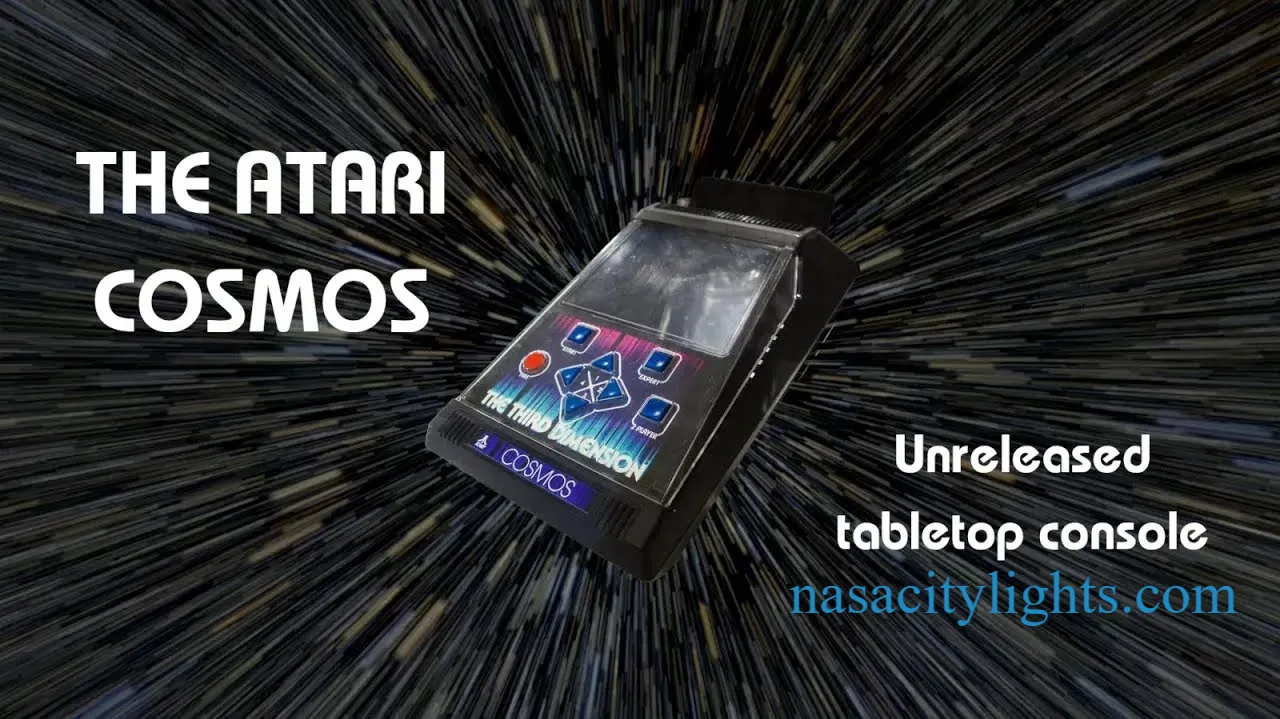
The Atari Cosmos is one of the most fascinating unreleased gaming systems in retro video game history. Developed by Atari during the late 1970s and early 1980s, it was designed as a tabletop electronic game that combined red LED lights with holographic images. The concept aimed to make simple electronic games look more immersive at a time when home gaming technology was still developing.
Although the system never reached ordinary retail stores, it continues to attract collectors, gaming historians, and technology enthusiasts. Its unusual display, planned game library, and limited surviving prototypes make it an intriguing piece of gaming history. Understanding its development, cancellation, and potential collector value helps explain why searches for Atari Cosmos price and availability remain popular.
What Was the 1978 Atari Cosmos?
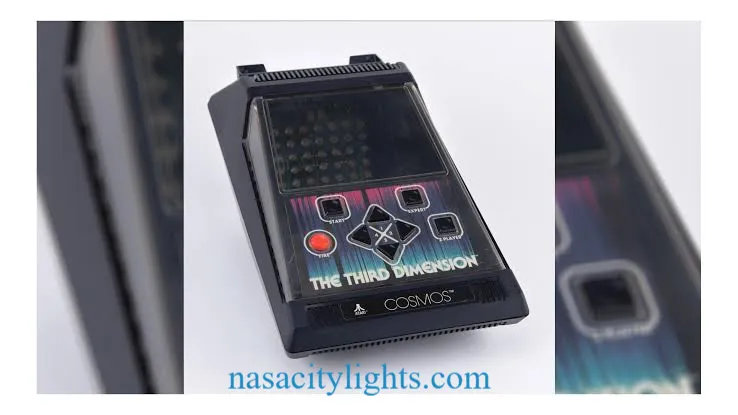
The 1978 Atari Cosmos refers to the early development of an ambitious gaming concept that Atari explored before publicly presenting the system in 1981. The project was associated with Atari engineers Allan Alcorn, Harry Jenkins, and Roger Hector. Rather than functioning like a conventional television-connected console, the Cosmos was designed as a compact tabletop device with its own electronic display and interchangeable game-related overlays.
Its central attraction was the combination of illuminated LEDs and transparent holographic artwork. The images created the appearance of depth, while the lights beneath them provided basic gameplay effects. Despite its futuristic presentation, the system did not offer fully interactive, moving holograms. This distinction is important because modern descriptions can make the technology sound more advanced than it actually was.
The History and Development of Atari Cosmos
Atari began exploring the Cosmos concept around 1978, during a period when electronic entertainment companies were experimenting with new ways to make games more appealing. The company had already established itself through arcade successes and growing interest in home gaming. A compact system featuring holographic imagery offered an opportunity to create something visually different from the pixel-based displays and television games familiar to consumers.
The project eventually reached a public showcase at the 1981 New York Toy Fair. Reports describe strong initial interest from retailers, with more than 8,000 pre-orders often cited in accounts of the system’s history. However, retailer interest did not guarantee commercial success. Questions about the technology, manufacturing priorities, and the product’s position within Atari’s growing gaming business ultimately contributed to the project’s cancellation.
Atari Cosmos Features and Technology
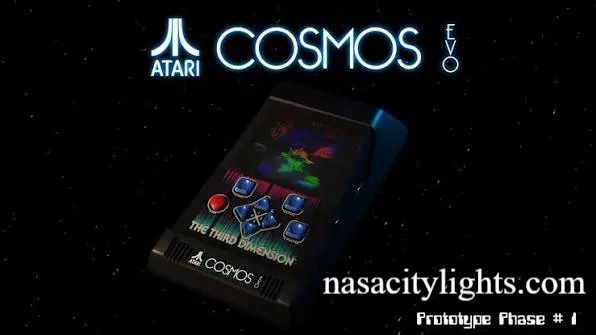
The Cosmos used a grid of red LEDs positioned behind or beneath a transparent holographic image. When the LEDs illuminated different positions, they produced simple visual effects against the static artwork. This arrangement created a pseudo-three-dimensional presentation without requiring a conventional television screen. The holographic layer supplied the scenery, while the electronic lights communicated the game’s limited action.
Another unusual feature involved its cartridges. Instead of containing the main game software in the way many later cartridges did, the Cosmos cartridges primarily held holographic film and included a physical notch that helped identify the selected game. The game logic was built into the console itself. The system also used an AC adapter, a COPS 411 processor, and supported gameplay for up to two players.
| Feature | Description |
|---|---|
| Display | Red LED grid with holographic overlays |
| Game logic | Built into the console |
| Cartridges | Holographic film and game-identification notch |
| Processor | COPS 411 |
| Power | AC adapter |
| Players | Up to two, depending on the game |
| Commercial release | Cancelled before general retail release |
These design choices made the Cosmos an interesting experiment in display technology. Its holograms were static backgrounds rather than interactive three-dimensional environments, but the combination was unusual for its time and helps explain the lasting curiosity surrounding the system.
Planned Games for the Atari Cosmos
Atari envisioned a collection of games that could use different holographic backdrops while relying on the console’s built-in electronics. Titles associated with the planned library include Asteroids, Basketball, Dodge, Football, Outlaw, Roadrunner, Sea Battle, Space Invaders, and Superman. These names suggest an attempt to cover several familiar genres, from sports and action to space-themed entertainment.
The planned games are also relevant to collectors because surviving documentation, overlays, and prototype materials can help establish what Atari intended to release. However, a title appearing in historical references does not mean that a finished commercial cartridge was sold. Buyers should distinguish between documented plans, prototype components, promotional materials, and products that actually reached stores.
Why Was the Atari Cosmos Never Released?
Despite the reported retailer interest, Atari cancelled the Cosmos by the end of 1981. Historical accounts point to several possible factors, including concerns about the holographic effect, internal business priorities, and the risk that another gaming product might compete with sales of the Atari 2600. The static nature of the holograms also made the device less impressive than some observers may have expected from its futuristic presentation.
Manufacturing decisions and the need to prioritize other products may also have influenced the outcome. Although a limited pilot production run is often reported, the Cosmos never became a mainstream consumer product. As a result, only a small number of units, prototype shells, and related materials are known or reported to have survived. Its cancellation transformed what might have been an unusual gaming accessory into a sought-after historical artifact.
How Much Is a 1978 Atari Cosmos Worth?
The value of a 1978 Atari Cosmos depends heavily on what is being offered. A genuine working prototype is fundamentally different from an empty shell, a holographic overlay, a promotional photograph, or an unrelated Atari product described with the same keywords. Because the Cosmos was never released commercially, there is no ordinary retail price history that can be used to calculate a standard market value.
Reports about rare Atari Cosmos prototypes have cited auction prices reaching tens of thousands of dollars. Such figures should not be treated as a guaranteed valuation for every example. Condition, authenticity, provenance, completeness, and the details of a specific sale can substantially affect the final price. Anyone researching how much an Atari Cosmos is worth should prioritize documented auction results over unsupported online estimates.
Atari Cosmos Value: What Affects Its Price?
Several factors can influence the collectible value of an Atari Cosmos artifact. The most important is authenticity: buyers need evidence that the item is genuinely connected to Atari’s cancelled project. Historical paperwork, original photographs, ownership records, and credible specialist assessments can make a significant difference when establishing an item’s identity.
Condition and completeness also matter. A functioning prototype with well-documented components may attract more interest than a damaged shell or an isolated overlay, although individual collectors may value different materials for different reasons. Demand can change over time, too, particularly when rare gaming artifacts receive renewed attention. An asking price reflects what a seller hopes to receive, while a completed sale provides stronger evidence of what a buyer actually paid.
Atari Cosmos Price: Original Cost vs. Modern Value
People searching for the original 1978 Atari Cosmos price may expect to find a manufacturer’s suggested retail price or a historical store listing. However, the system’s unreleased status makes that comparison difficult. A planned price, if documented, would not necessarily represent a price paid by consumers because the product did not enter ordinary retail distribution.
Modern collector prices are a separate matter. A genuine prototype may be valued according to rarity, documentation, historical significance, and interest among specialized collectors. Meanwhile, an online listing for a related Atari item may have little connection to the Cosmos itself. Before publishing a specific dollar figure, writers and buyers should verify the item being discussed and check credible auction records for comparable artifacts.
Atari Cosmos for Sale: Where Can Collectors Look?
Collectors interested in finding an Atari Cosmos for sale can monitor specialist video game auctions, established vintage gaming marketplaces, and communities focused on early Atari hardware. Online platforms such as eBay may contain relevant search results, but those results can include unrelated merchandise, reproductions, photographs, accessories, or listings that use the name simply to attract attention.
Before making a purchase, examine the description and photographs carefully. Ask the seller for provenance, additional images, and any available documentation linking the item to Atari’s original development project. Check completed sales rather than relying solely on active asking prices. Because genuine prototypes are exceptionally uncommon, patience and careful verification are more useful than rushing into a purchase based on a claim of rarity.
How to Verify an Atari Cosmos Prototype Before Buying
Authenticating a suspected prototype requires more than recognizing the Atari name or a familiar-looking design. Buyers should look for consistent construction details, credible ownership history, period documentation, and photographs that can be compared with trustworthy historical references. When the item is expensive, an independent specialist’s opinion may help reduce the risk of purchasing a misidentified or misrepresented artifact.
Warning signs include vague descriptions, missing provenance, photographs that do not show the actual item, and sellers who cannot explain its history. It is also important to understand exactly what is included in the sale. A prototype shell, a working electronic unit, a holographic overlay, and a complete documented development artifact are not interchangeable. Clear evidence protects both the buyer and the historical record.
Atari Cosmos Compared With Other Atari Systems
Unlike commercially released systems such as the Atari 2600, the Cosmos was designed around a self-contained tabletop display rather than a television connection. Its holographic overlays attempted to give simple LED-based gameplay a distinctive visual identity. This made the concept quite different from the familiar cartridge-based home consoles that helped establish Atari’s reputation among consumers.
The comparison also explains why the Cosmos occupies a special place in retro gaming history. Released consoles can be evaluated through production numbers, retail history, and a relatively broad market of used examples. The Cosmos must instead be understood through surviving prototypes and historical documentation. Its rarity may increase collector interest, but it also makes price comparisons less straightforward than those for mass-produced systems.
Why Atari Cosmos Still Interests Retro Gaming Collectors
The Cosmos remains interesting because it represents an ambitious attempt to combine emerging display ideas with accessible electronic entertainment. Its designers explored how static holographic imagery and simple lights could create a distinctive experience without the cost or complexity of a full video display. Even though the system was never commercially launched, the concept illustrates the experimentation that helped shape the wider gaming industry.
For collectors, the appeal comes from more than scarcity alone. The Cosmos connects a recognizable gaming company with a cancelled product, a distinctive technical approach, and a documented development story. Preserving surviving units and related materials helps researchers understand how gaming hardware evolved. Its unusual history also serves as a reminder that an innovative idea does not always become a successful retail product.
Conclusion: Is the Atari Cosmos Valuable Today?
The Atari Cosmos is an important example of an unreleased gaming project from Atari’s early development era. Its combination of red LEDs, holographic overlays, built-in game logic, and planned titles made it different from conventional consoles. Although it never reached general retail release, its unusual design and limited surviving artifacts have made it a topic of lasting interest among gaming historians and collectors.
Its modern value cannot be established through a single universal price. Authenticity, condition, provenance, completeness, and verified auction results all play essential roles in evaluating a particular item. Anyone hoping to buy, sell, or research a Cosmos artifact should verify the evidence carefully and avoid treating speculative listings as confirmed market values. For collectors, its greatest appeal lies in the rare opportunity to study an ambitious idea that never became a mainstream gaming product.
Frequently Asked Questions
What was the 1978 Atari Cosmos?
The Atari Cosmos was an unreleased tabletop gaming system developed by Atari, featuring red LEDs and static holographic overlays.
How much is a 1978 Atari Cosmos worth?
A genuine prototype may be worth tens of thousands of dollars, but its actual value depends on authenticity, condition, provenance, and verified sales.
Was the Atari Cosmos ever released?
No, Atari cancelled the project in 1981 before it reached general retail distribution.
What was the original Atari Cosmos price in 1978?
There is no widely established retail selling price because the system was never commercially released.
Can I find an Atari Cosmos for sale on eBay?
You can search eBay for related listings, but verify carefully whether an item is an authentic prototype or merely related memorabilia.
What affects the value of an Atari Cosmos prototype?
Authenticity, documentation, physical condition, completeness, rarity, and collector demand are key factors.
Was there a 1979 or 1987 Atari Cosmos?
The Cosmos is associated with development beginning around 1978 and public presentation in 1981; claims about other dates should be checked against reliable historical sources.
Why is the Atari Cosmos considered rare?
It was cancelled before general release, leaving only a small number of surviving prototypes and related artifacts.
Author Name: Hamid Ali
Email: johanharwen314@gmail.com
Also Read: