
How Are Astronauts Selected by NASA? The Real Process in 2026
Introduction
Have you ever watched a rocket launch and wondered what it actually takes to sit in that seat? You are not alone. Millions of people dream about space, but only a tiny handful ever make it past NASA’s front door. So how are astronauts selected by NASA, exactly? It is not luck, and it is not just about being smart. It is a long, detailed, and honestly quite brutal process that tests your brain, your body, and your character all at once.
In this article, we will walk through exactly how are astronauts selected by NASA, from the basic eligibility rules to the final interview room. You will also learn what skills matter most, how training works after selection, and why the odds are so slim. By the end, you will have a clear, honest picture of this incredible journey.
What Is NASA’s Astronaut Selection Process?
NASA’s astronaut selection process is a multi stage evaluation designed to find people who can handle the physical, mental, and emotional demands of spaceflight. It combines a strict paper screening, hands on interviews, medical testing, and psychological evaluation. NASA is not just looking for genius level intelligence. It wants people who stay calm under pressure and work well in tight, high stakes teams.
So when people ask how are astronauts selected by NASA, the short answer is this. NASA filters thousands of applicants down to a small group through education checks, experience checks, interviews, and medical exams, then trains the finalists for about two years before they become full astronauts.
Minimum Eligibility Requirements
Before you even think about interviews, you need to meet some hard baseline requirements. NASA will not consider you without these boxes checked.
Citizenship
You must be a U.S. citizen, or in some cases a permanent resident, to apply for the NASA astronaut candidate program. This is a strict rule with no exceptions.
STEM Degree
You need a master’s degree in a STEM field. That includes engineering, biological science, physical science, computer science, or mathematics, and it must come from an accredited school. A two year head start toward a doctoral program in a related field can sometimes count in place of the degree.
Relevant Experience or Flight Time
Alongside your degree, NASA wants proof that you can apply your knowledge in the real world. You generally need at least two years of related professional experience in your STEM field, or 1,000 hours of pilot in command time flying jet aircraft. Teaching STEM subjects at the K through 12 level can also count.
Medical and Physical Fitness
You must pass NASA’s long duration flight astronaut physical. This is a demanding medical exam that checks your vision, blood pressure, heart health, and overall physical resilience, since your body will face extreme conditions in orbit.
Step by Step: How Are Astronauts Selected by NASA
Now let’s break down how are astronauts selected by NASA once you actually hit submit on your application.
- Online Application. Every application goes through USAJOBS, the federal government’s official hiring website. You build a detailed resume and answer specific questions about your background.
- Qualification Review. NASA staff sort through thousands of applications and remove anyone who does not meet the minimum education, experience, or citizenship rules.
- Interviews. Qualified candidates move through several interview rounds at the Johnson Space Center in Houston. These include panel interviews, group exercises, and one on one conversations with current astronauts.
- Medical Evaluations. Finalists undergo extensive medical testing, including vision checks, cardiovascular screening, and psychological assessment.
- Final Selection. NASA leadership reviews every finalist and picks a small class, often between eight and twelve people, to become astronaut candidates.
This entire cycle can take more than a year from application to final announcement, so patience is just as important as talent here.
Skills NASA Looks for Beyond the Resume
Understanding how are astronauts selected by NASA means looking past degrees and flight hours. NASA also studies personality and behavior closely.
- Leadership. Can you make smart decisions under pressure and take responsibility when things go wrong?
- Teamwork. Space missions rely on tight coordination, so NASA wants people who genuinely support their crewmates.
- Problem solving. Equipment fails, plans change, and you need to think on your feet without panicking.
- Communication. You need to explain complex ideas clearly to teammates, mission control, and sometimes the public.
- Adaptability. Missions rarely go exactly as planned, so flexibility matters more than perfection.
I always find it interesting that NASA cares just as much about how you behave in a group exercise as how well you score on paper. A brilliant scientist who cannot cooperate with others simply will not make the cut.
What Happens After Selection? Astronaut Candidate Training
Getting selected is not the finish line. It is actually the starting line. New astronaut candidates, often called ASCANs, begin about two years of intense training before they are eligible for a mission.
Training covers a wide range of skills, including:
- Spacecraft systems, so candidates understand every button and system they might need to operate.
- Spacewalk or EVA training, practiced underwater in NASA’s Neutral Buoyancy Laboratory, which simulates weightlessness using a giant pool with full scale spacecraft mockups.
- Robotics, since astronauts often operate robotic arms to move equipment or dock spacecraft.
- Survival training, preparing candidates for emergency landings in water, wilderness, or extreme climates.
- International Space Station operations, teaching candidates how to live and work safely on the orbiting laboratory.
Even scientists and doctors in the group must complete flight training in the T-38 jet trainer, which helps build the quick decision making skills needed in space.
It is also worth mentioning that NASA does not work alone. It partners with international space agencies like ESA, JAXA, and CSA, and astronauts from these agencies often train alongside NASA candidates and fly together on shared missions to the International Space Station.
How Competitive Is NASA Astronaut Selection?
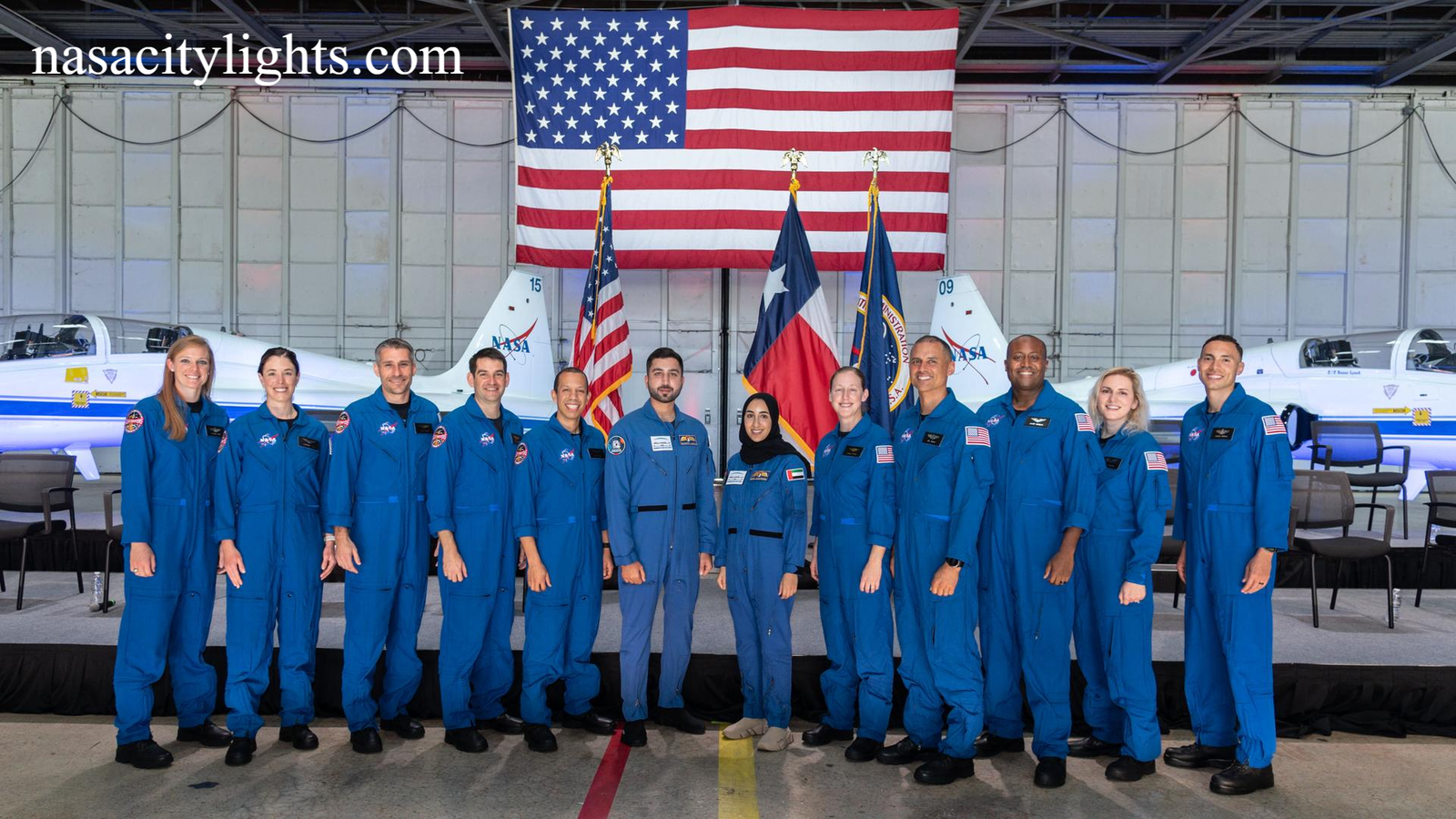
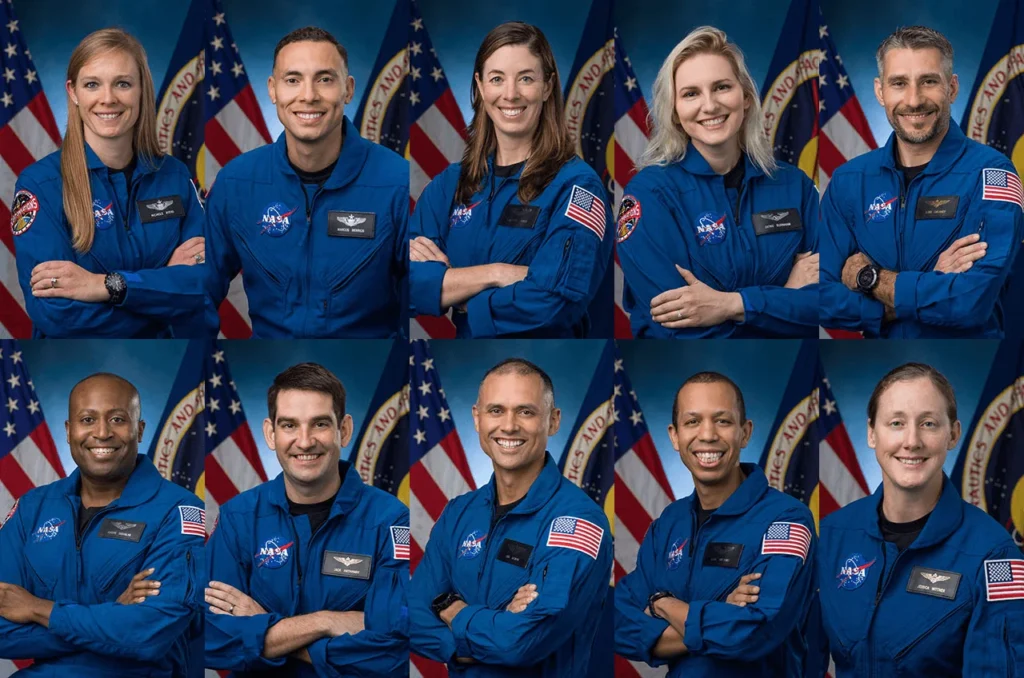
If you are still wondering how are astronauts selected by NASA and whether you have a real shot, here is the honest truth. It is incredibly competitive. When NASA opened applications in 2024, more than 8,000 people applied, and only 10 were chosen. Since NASA began selecting astronauts in 1959, it has picked around 370 people total.
That means your odds are often lower than getting into an elite university or landing a spot in an exclusive military program. Yet every single astronaut in that small group started exactly where you are now, curious and asking questions.
Frequently Asked Questions
How do you become a NASA astronaut? You earn a STEM master’s degree, gain relevant work or flight experience, apply through USAJOBS, and pass a series of interviews and medical exams before completing two years of training.
What qualifications does NASA require? NASA requires U.S. citizenship or permanent residency, a STEM master’s degree, at least two years of related experience or 1,000 hours of jet pilot in command time, and the ability to pass a strict physical exam.
Does NASA require military experience? No, military experience is not required, though many astronauts do come from military backgrounds. Civilian scientists, doctors, and engineers are selected regularly as well.
How difficult is it to become a NASA astronaut? It is extremely difficult. Thousands of qualified applicants compete for only a handful of spots in each selection cycle, making the acceptance rate lower than most top universities.
What happens after astronauts are selected? Selected candidates complete about two years of training covering spacecraft systems, spacewalks, robotics, survival skills, and space station operations before becoming eligible for a mission.
Can international candidates apply to NASA? NASA astronaut candidates must be U.S. citizens or permanent residents, but international partners like ESA, JAXA, and CSA run their own astronaut selection programs and often train and fly alongside NASA crews.
Is a pilot’s license required to apply? No, a pilot’s license is not required unless you are applying through the jet flight hour pathway instead of the professional experience pathway.
Final Thoughts
So, how are astronauts selected by NASA in simple terms? It comes down to strong education, real world experience, physical health, and the right mindset, all tested through a long and detailed process. It is tough, it is competitive, and it is not something that happens overnight.
If this journey excites you, start now. Build your STEM skills, gain real experience, stay healthy, and keep learning. You might just be answering the question of how are astronauts selected by NASA from personal experience one day. What steps will you take first? Feel free to share this article with anyone who dreams of the stars.
nasacitylights.com
Email: johanharwen314@gmail.com
Author Name: Hamid Ali
About the Author: Hamid Ali is a science and career content writer who enjoys breaking down complex topics like space exploration into simple, practical guides for everyday readers. He writes about STEM careers, aerospace, and emerging technology, aiming to make ambitious dreams feel a little more achievable through clear, honest information.