
How Astronauts Survive In Space: The Incredible (and Dangerous) Truth About Life in Orbit
Introduction
Imagine waking up floating above your bed, brushing your teeth without a sink, and looking out the window to see the entire Earth below you. That is not a dream. That is Tuesday for an astronaut.
How astronauts survive in space is one of the most fascinating questions in modern science. Space is not just empty. It is actively trying to kill you. There is no air to breathe, no pressure to keep your body together, extreme temperatures that swing from burning hot to freezing cold, and radiation pouring in from every direction. Yet humans have lived and worked in orbit for decades, with some staying aboard the International Space Station for over a year at a stretch.
So how do they do it? In this article, you will learn exactly how astronauts stay alive, healthy, and sane hundreds of miles above Earth. From the oxygen they breathe to the psychological tricks they use to stay mentally sharp, you will get the full picture of what survival in space actually looks like.
The Harsh Reality of Space: Why It Is So Deadly
Before we talk about survival, you need to understand what astronauts are up against.
Space is a vacuum. That means there is virtually no air pressure. Without protection, the gases in your blood would start to bubble. Your lungs would collapse. You would lose consciousness in about 15 seconds and die within two minutes.
Beyond the vacuum, there is temperature. In sunlight, surfaces in space can reach 250 degrees Fahrenheit (121°C). In shadow, they plunge to minus 250 degrees Fahrenheit (minus 157°C). Your body cannot handle either extreme without serious protection.
Then there is radiation. On Earth, our atmosphere and magnetic field block most of the harmful cosmic rays and solar radiation. In low Earth orbit, astronauts receive roughly ten times more radiation than people on the ground. On a trip to Mars, that number climbs even higher.
All of this means that every system aboard the International Space Station (ISS) and every piece of equipment astronauts wear or use is designed with one goal: keep the human body alive.
Breathing in Space: Where Does the Oxygen Come From?
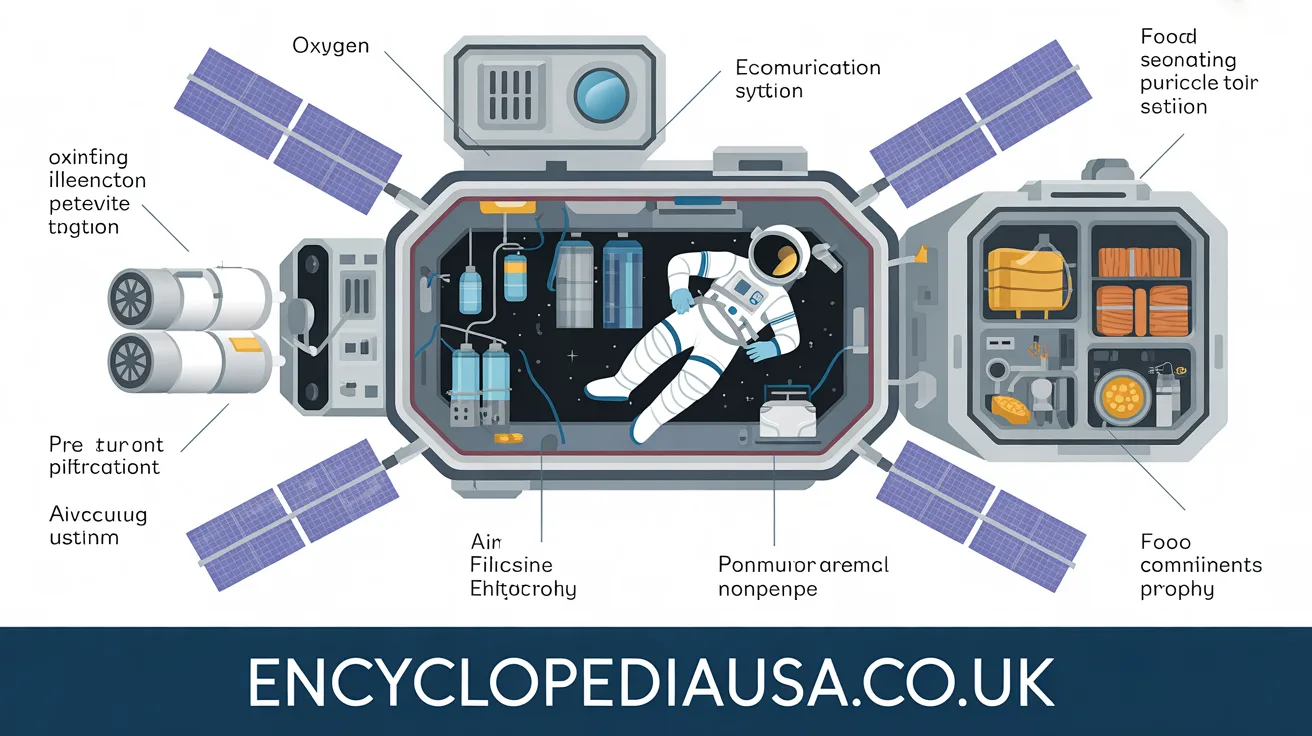
You might be wondering how astronauts breathe in an environment with no air. The answer is a carefully managed life support system that produces and recycles oxygen inside the spacecraft.
The Oxygen Generation System
The ISS uses a process called electrolysis to produce oxygen. Electricity splits water molecules into hydrogen and oxygen. The oxygen gets pumped into the cabin air. The hydrogen is vented into space or used in other chemical processes.
This system, called the Oxygen Generation Assembly, runs continuously. It needs a constant supply of water to work, which is partly why water recycling is so critical aboard the station.
Backup Oxygen Sources
The ISS also carries solid fuel oxygen canisters as a backup. These canisters contain a chemical called sodium perchlorate. When ignited, it releases oxygen. They are essentially emergency oxygen candles and can supply the crew if the main system fails.
Carbon dioxide is another issue. Every breath you exhale contains CO2, and in a sealed environment, it builds up fast. The ISS uses carbon dioxide scrubbers, chemical systems that pull CO2 out of the air and prevent toxic buildup. The station also uses a more advanced Carbon Dioxide Removal Assembly (CDRA) that keeps air quality within safe limits around the clock.
Water in Space: Recycling Every Drop
Water is critical for life, and launching it from Earth is incredibly expensive. It costs roughly $10,000 per pound to send anything to space. So NASA and its partners have developed one of the most advanced water recycling systems ever built.
The Water Recovery System aboard the ISS recycles almost every drop of moisture it can find. That includes:
- Urine (yes, really)
- Sweat
- Moisture exhaled from breathing
- Water from experiments and hygiene
The system filters, purifies, and processes this water until it meets drinking standards. In fact, astronaut Scott Kelly described the recycled water as cleaner than most tap water on Earth.
Astronauts drink about 1.8 liters of water per day, similar to what you and I consume. The difference is that almost none of it is wasted. The recycling efficiency on the ISS is now over 90%, meaning the crew generates most of their drinking water from what would otherwise be waste.
Food in Space: Eating Without Gravity
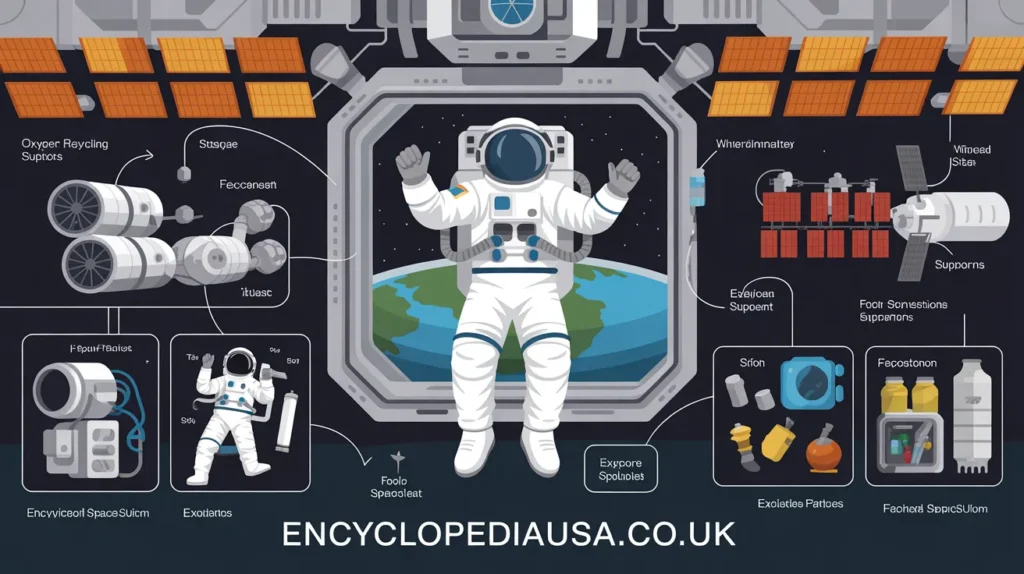
Food is more than just fuel. It is comfort, culture, and a crucial part of mental health on long missions. NASA food scientists have developed hundreds of space-compatible meals that astronauts can eat in microgravity.
How Space Food Works
Most space food comes in one of these forms:
- Thermostabilized: Cooked and heat-treated to kill bacteria. Think pouches of chicken or vegetables.
- Freeze-dried: Water is removed, then hot water is added before eating. Scrambled eggs and soups often come this way.
- Irradiated: Exposed to radiation to extend shelf life. Certain meats fall into this category.
- Natural form: Foods like nuts, granola bars, and candy-coated chocolates that need no preparation.
Crumbs are a serious concern in microgravity. A floating bread crumb can get into equipment or be inhaled. That is why tortillas replaced bread on space missions years ago. Tortillas stay together, do not crumble, and are flexible enough to use as a wrap.
Does Food Taste Different in Space?
It does, and science has an explanation. In microgravity, body fluids shift toward the head. This causes a stuffy-nose feeling that dulls taste and smell. As a result, astronauts often crave stronger flavors. Spicy food, hot sauce, and bold seasonings become more popular in orbit than they ever were on Earth.
Temperature Control: Not Too Hot, Not Too Cold
The ISS has to manage extreme temperature swings. The station orbits Earth every 90 minutes, meaning it passes from blazing sunlight into total darkness 16 times a day.
The station handles this through an Active Thermal Control System. Ammonia coolant flows through loops inside and outside the station, absorbing heat from equipment and the crew, then releasing it into space through large radiator panels on the outside of the station.
Inside the cabin, the temperature is kept between 65 and 80 degrees Fahrenheit (18 to 27°C), similar to a comfortable office building. Fans circulate air constantly to prevent pockets of carbon dioxide from building up around sleeping crew members.
Radiation Protection: The Invisible Threat
Radiation is one of the most serious long-term risks for astronauts. You cannot see it, feel it, or taste it. But over time, it damages DNA, increases cancer risk, and can harm the central nervous system.
How the ISS Handles Radiation
The station’s aluminum walls provide some shielding. Certain areas, like the sleeping quarters, have additional water-filled panels that absorb radiation more effectively. Water is one of the best radiation shields available because hydrogen atoms are excellent at absorbing high-energy particles.
Astronauts wear personal dosimeters that measure how much radiation they absorb each day. NASA sets lifetime exposure limits and tracks each astronaut’s cumulative dose. If someone approaches their limit, they come home.
Solar Storms
When the sun releases a massive burst of energy called a solar flare or coronal mass ejection, astronauts on the ISS move to more shielded areas of the station and stay there until the event passes. Future deep-space missions to the Moon or Mars will need much more advanced radiation shielding since they will leave Earth’s protective magnetic field entirely.
Keeping the Body Healthy: Exercise and Medical Care
One of the most surprising facts about life in space is how hard astronauts have to work just to keep their bodies functioning normally.
Muscle and Bone Loss
In microgravity, your muscles and bones do not have to work against gravity. Without that constant stress, they start to break down. Astronauts can lose up to 20% of their muscle mass in just two weeks without exercise. Bone density drops at a rate of about 1 to 2% per month, much faster than even elderly people lose bone on Earth.
To fight this, astronauts exercise two hours every day. They use specially designed equipment, including:
- A treadmill with bungee cords to simulate gravity
- A stationary bike
- The Advanced Resistive Exercise Device (ARED), which replicates weightlifting using vacuum cylinders
Even with all this exercise, most astronauts return to Earth with some bone and muscle loss. Full recovery typically takes weeks to months.
Vision Problems
About 70% of astronauts who spend time on the ISS experience some degree of vision change. Fluid shifts toward the head in microgravity, which increases pressure inside the skull. This pushes against the optic nerve and can flatten the eyeball slightly, causing farsightedness.
NASA is actively researching this condition, called Spaceflight Associated Neuro-ocular Syndrome (SANS), because it is one of the bigger obstacles to long-duration missions.
Medical Care in Orbit
There is no hospital in space. Every ISS crew member receives medical training before launch. The station carries a medical kit stocked with medications, surgical tools, and diagnostic equipment. Flight surgeons on the ground are available 24 hours a day and can guide crew members through most medical procedures via video.
For serious emergencies, a Soyuz spacecraft is always docked at the station and can return the crew to Earth in about three hours.
Sleep in Space: Rest When You Are Floating
Sleeping in microgravity sounds fun until you realize there is no “lying down.” Astronauts sleep in small, personal sleeping quarters called crew cabins. They zip themselves into sleeping bags attached to the wall to keep from floating around and bumping into things.
The biggest challenge is not floating. It is the 16 sunrises and sunsets the station experiences every day. Without a normal day-night cycle, the body’s internal clock gets confused.
NASA addresses this by strictly controlling lighting aboard the station. Blue-tinted lights during work hours signal daytime. Warmer, dimmer lights at night tell the body it is time to sleep. Most astronauts sleep about 6 to 7 hours per night, slightly less than they would on Earth.
Mental Health in Space: Staying Sane Far From Home
Physical survival is just one part of the equation. Mental health is equally important, and long-duration missions put enormous psychological stress on crew members.
Isolation and Confinement
Astronauts live in a space roughly the size of a six-bedroom house, which sounds spacious until you realize they cannot leave, cannot see their families in person, and face the constant hum of machinery and recycled air.
NASA selects astronauts partly for their psychological resilience. But even the most resilient people need support structures. The ISS crew communicates with family through video calls, emails, and even private phone calls. Psychologists on the ground monitor crew wellbeing and hold regular check-ins.
The Overview Effect
Interestingly, many astronauts report a profound psychological shift when they see Earth from orbit for the first time. The borders between countries disappear. The planet looks small and fragile. Astronauts describe feeling an overwhelming sense of connection to all of humanity. Researchers call this the overview effect, and studies suggest it can be a deeply positive psychological experience that helps astronauts stay motivated during tough missions.
Team Dynamics
A crew stuck together in a small space for months can develop friction. NASA studies group dynamics extensively and designs crews for compatibility. Crew members also have clearly defined roles and responsibilities, which helps reduce conflict and give everyone a sense of purpose.
The Spacesuit: A Personal Spacecraft
When astronauts leave the station for a spacewalk, their spacesuit becomes their entire life support system. The Extravehicular Mobility Unit (EMU) used by NASA astronauts is essentially a personal spacecraft.
It provides:
- Pressurized oxygen to breathe
- Temperature regulation through water-cooled undergarments
- Radiation shielding
- A Heads-Up Display for information
- Up to 8.5 hours of life support
- A built-in emergency jet pack in case the astronaut becomes untethered
Putting on an EMU takes about 45 minutes and requires a partner. Before any spacewalk, astronauts breathe pure oxygen for several hours to purge nitrogen from their blood. This prevents decompression sickness, the same condition that affects scuba divers who surface too quickly.
Communication: Staying Connected to Earth
The ISS maintains near-constant communication with mission control through a network of relay satellites. Astronauts have access to internet (though with a slight delay), video calls, and even social media.
Data transfer speeds have improved significantly in recent years. Astronauts now stream videos, send high-resolution photos, and participate in live broadcasts with schools, journalists, and the public.
This connection to Earth is not just about sharing information. It is a lifeline for mental health. Hearing familiar voices, seeing family faces, and even scrolling through news from home all help astronauts maintain a sense of normalcy during long missions.
Conclusion: Human Ingenuity at Its Finest
How astronauts survive in space is a story of extraordinary human ingenuity. Every breath, every sip of water, every meal, every exercise session, and every night of sleep is the result of decades of research, engineering, and problem-solving.
Space will never be easy or safe. But we keep going back, and the systems we have developed to keep astronauts alive are among the most impressive technological achievements in history.
If this topic has sparked your curiosity, think about this: the next generation of missions will take humans to the Moon and eventually to Mars. The survival challenges there will be even greater. It makes you wonder: what new solutions will we come up with? Share your thoughts, or pass this article to someone who has ever looked up at the night sky and dreamed of going there.
Frequently Asked Questions
1. How do astronauts breathe in space? The ISS uses electrolysis to split water into hydrogen and oxygen. The oxygen is pumped into the cabin, and carbon dioxide scrubbers remove the CO2 astronauts exhale.
2. What do astronauts eat in space? They eat thermostabilized, freeze-dried, and irradiated foods in pouches. Most meals are rehydrated with hot water. Tortillas replace bread to avoid floating crumbs.
3. How do astronauts sleep in space? They use sleeping bags attached to the walls of small personal cabins. Lighting is adjusted to simulate a normal day-night cycle since the ISS experiences 16 sunrises daily.
4. How do astronauts stay healthy in space? They exercise two hours every day using treadmills, bikes, and resistance machines. Regular medical check-ins with flight surgeons on the ground help monitor their health.
5. How does water work on the ISS? The Water Recovery System recycles urine, sweat, and moisture from the air into clean drinking water with over 90% efficiency.
6. What protects astronauts from radiation in space? The station’s aluminum walls, water-filled panels in sleeping areas, and personal dosimeters help manage radiation exposure. Astronauts shelter in shielded areas during solar storms.
7. How do astronauts deal with the psychological stress of space? They maintain regular contact with family through video calls and messaging. Psychologists on the ground conduct regular mental health check-ins, and crews are selected for compatibility.
8. How long can astronauts survive in space? The longest single stay aboard the ISS is 371 consecutive days, set by cosmonaut Oleg Kononenko. Most missions last between 6 and 12 months.
9. What happens to the human body in microgravity? Muscles and bones weaken without the stress of gravity. Fluids shift toward the head, causing vision changes. The immune system can also become less effective over time.
10. How do astronauts go to the bathroom in space? The ISS has specially designed toilets that use airflow instead of gravity to direct waste. Urine is collected and eventually processed into drinking water.
Author Bio
James Calloway is a science and technology writer with over eight years of experience covering space exploration, aerospace engineering, and human physiology. He has written for science publications and education platforms, making complex topics accessible to general audiences. James holds a degree in science communication and is passionate about inspiring the next generation of space enthusiasts.