
How Big Is Pluto? Size, Diameter, and Comparisons With Earth and the Moon
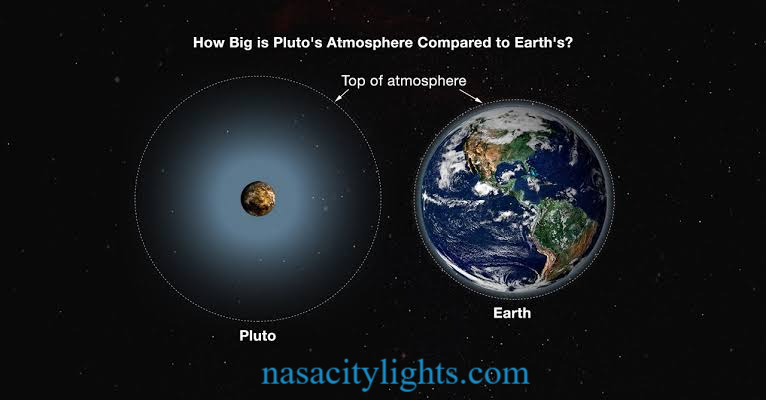
Pluto may look like a tiny point of light in the night sky, but this distant world is far larger than most everyday objects. Located in the Kuiper Belt beyond Neptune, Pluto is a fascinating dwarf planet with icy landscapes, mountains, and a thin atmosphere. Understanding its size becomes easier when we compare it with familiar objects, including Earth, the Moon, and other planets.
The answer to how big is Pluto is surprisingly simple: Pluto has a diameter of approximately 2,377 kilometers (1,477 miles). That makes it roughly one-fifth the width of Earth and smaller than Earth’s Moon. However, its small size does not make it unimportant. Pluto remains one of the most intriguing objects in our solar system, and NASA’s New Horizons mission has revealed details that changed our understanding of this distant world.
How Big Is Pluto in Diameter, Kilometers, and Miles?
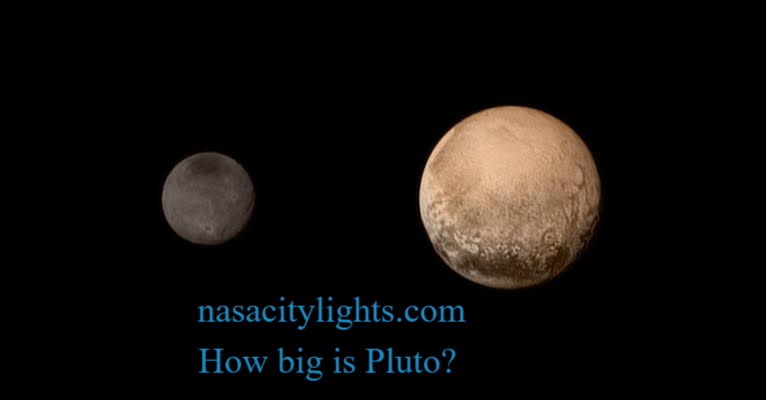
Pluto measures approximately 2,377 kilometers (1,477 miles) across at its widest diameter. NASA’s New Horizons spacecraft confirmed a diameter of about 2,370 kilometers (1,473 miles) during its historic flyby in July 2015. These measurements helped settle a long-standing debate about Pluto’s dimensions, which had remained uncertain before spacecraft observations provided more detailed information.
When discussing Pluto’s size, it is important to distinguish diameter from other measurements. Diameter describes the distance across a spherical object through its center, while circumference measures the distance around it. Surface area describes the total area of its exterior, and volume measures the space contained inside. These figures help scientists compare celestial objects more accurately.
Here are some useful measurements for understanding Pluto:
| Measurement | Approximate value |
|---|---|
| Diameter | 2,377 km (1,477 miles) |
| Mean radius | 1,188 km (738 miles) |
| Circumference | 7,468 km (4,640 miles) |
| Surface area | 17.7 million km² |
| Volume | 7.0 billion km³ |
Pluto’s measurements show that it is a compact world compared with the major planets. Although its diameter is relatively small, its surface contains varied geological features, including icy plains, mountains, and craters. Its size also helps scientists investigate how dwarf planets form and evolve in the colder outer regions of the solar system.
How Big Is Pluto Compared to Earth?
Pluto is much smaller than Earth. Earth has an average diameter of approximately 12,742 kilometers (7,918 miles), while Pluto measures around 2,377 kilometers (1,477 miles). This means Pluto’s diameter is only about 18.6% of Earth’s diameter. Put simply, Earth is approximately 5.4 times wider than Pluto, making the difference between the two worlds easy to understand.
The comparison becomes even more striking when scientists consider volume. Because volume increases in three dimensions, a planet can contain far more material than its diameter alone might suggest. Earth has roughly 150 times Pluto’s volume, although their actual masses also depend on their different compositions and densities. Pluto contains substantial amounts of ice and rock, while Earth has a much larger rocky interior and a metallic core.
| Feature | Pluto | Earth |
|---|---|---|
| Diameter | 2,377 km | 12,742 km |
| Diameter in miles | 1,477 miles | 7,918 miles |
| Classification | Dwarf planet | Terrestrial planet |
| Relative diameter | 18.6% of Earth | 100% |
Earth’s much larger size also contributes to its stronger surface gravity and ability to retain a substantial atmosphere. Pluto has weaker gravity and an extremely thin atmosphere that can change as it moves along its orbit. Despite these differences, both worlds have complex geological histories and features that scientists continue to study.
How Big Is Pluto Compared to Our Moon?
One of the most surprising facts about Pluto is that it is smaller than Earth’s Moon. The Moon has a diameter of approximately 3,475 kilometers (2,159 miles), compared with Pluto’s diameter of about 2,377 kilometers (1,477 miles). Pluto is therefore around 68% as wide as the Moon, meaning our natural satellite is approximately 1.46 times wider.
Their relative sizes become even more interesting when volume and mass are considered. Pluto has roughly one-third of the Moon’s volume and about one-sixth of its mass. This difference reflects not only their diameters but also their internal compositions and densities. The Moon is primarily rocky, while Pluto contains a mixture of rock and various types of ice.
| Feature | Pluto | Earth’s Moon |
|---|---|---|
| Diameter | 2,377 km | 3,475 km |
| Diameter in miles | 1,477 miles | 2,159 miles |
| Relative diameter | 68% of the Moon | 100% |
| Type | Dwarf planet | Natural satellite |
Although the Moon is larger, Pluto has a different astronomical role. The Moon orbits Earth, while Pluto travels around the Sun. Pluto also has several known moons, including Charon, its largest companion. These differences demonstrate why size alone cannot explain the classification or behavior of objects in space.
How Big Is Pluto Compared to Mercury and Mars?
Mercury is the smallest of the eight major planets, but it is still considerably larger than Pluto. Mercury has a diameter of approximately 4,880 kilometers (3,032 miles), making it just over twice as wide as Pluto. This comparison can surprise people who remember Pluto as the ninth planet in older school textbooks. Its former planetary status does not mean it was ever larger than Mercury.
Mars is larger still, with a diameter of approximately 6,779 kilometers (4,212 miles). That makes Mars almost 2.9 times wider than Pluto. Both Mercury and Mars have rocky surfaces, but their geological histories, temperatures, atmospheres, and orbital characteristics differ from those of the icy dwarf planet. Pluto’s location in the outer solar system exposes it to much colder conditions.
| Celestial body | Approximate diameter |
|---|---|
| Pluto | 2,377 km (1,477 miles) |
| Mercury | 4,880 km (3,032 miles) |
| Mars | 6,779 km (4,212 miles) |
| Earth’s Moon | 3,475 km (2,159 miles) |
These comparisons show that Pluto is smaller than several familiar objects in the solar system. However, it remains scientifically important because its surface and atmosphere offer clues about the conditions under which distant icy worlds develop. Studying Pluto also helps scientists understand other objects that occupy the Kuiper Belt.
How Big Is Pluto Compared to Other Planets?
Pluto is tiny compared with most of the solar system’s major planets. Jupiter, the largest planet, has a diameter of approximately 139,820 kilometers, making it nearly 59 times wider than Pluto. Saturn, Uranus, and Neptune are also substantially larger. Even the relatively small terrestrial planets, Mercury, Venus, Earth, and Mars, exceed Pluto’s diameter.
A useful way to understand this difference is to compare approximate diameters. The figures below show how Pluto fits into the broader range of sizes found in the solar system.
| Object | Approximate diameter |
|---|---|
| Pluto | 2,377 km |
| Mercury | 4,880 km |
| Mars | 6,779 km |
| Venus | 12,104 km |
| Earth | 12,742 km |
| Neptune | 49,244 km |
| Uranus | 50,724 km |
| Saturn | 116,460 km |
| Jupiter | 139,820 km |
Pluto is classified as a dwarf planet rather than one of the eight major planets because it has not cleared the neighborhood around its orbit of other objects. This classification reflects its orbital environment, not simply its small diameter. Pluto shares its distant region with numerous icy bodies, making it part of a larger population of objects beyond Neptune.
How Big Is Pluto Compared to a Human?
Comparing Pluto with a human being illustrates the enormous difference between everyday measurements and astronomical dimensions. If an adult is approximately 1.7 meters tall, Pluto’s diameter of about 2,377 kilometers is equivalent to more than 1.3 million human heights placed end to end. This is an illustrative calculation rather than a practical physical arrangement, but it provides a sense of Pluto’s enormous scale.
Even though Pluto is small compared with planets, it is still a world with a diameter measured in thousands of kilometers. Its surface contains broad plains, mountains made of water ice, and regions covered with frozen nitrogen and other volatile materials. A person standing on its surface would encounter extreme cold, very weak gravity, and an environment that is completely unlike Earth’s.
This comparison also highlights why photographs can be misleading. Pluto may appear as a tiny dot when viewed from Earth because of its enormous distance from the Sun and our planet. Close-up images from spacecraft reveal a complex landscape that telescopes cannot easily show in comparable detail from such a great distance.
How Big Is Pluto Compared to Australia and the United States?
Pluto’s diameter is similar to the scale of large geographic regions on Earth, which makes country comparisons useful for visualizing its size. Pluto measures around 2,377 kilometers across. Australia is approximately 4,000 kilometers wide from east to west at its broadest points, so Pluto’s diameter is notably smaller than Australia’s maximum width.
The contiguous United States measures roughly 4,500 kilometers from east to west, depending on the locations used for comparison. Pluto is therefore around half that width. This is why NASA often describes Pluto as about half the width of the United States. These comparisons refer to linear distances, not total surface areas.
| Comparison | Approximate width or diameter |
|---|---|
| Pluto | 2,377 km |
| Australia, east to west | Around 4,000 km |
| Contiguous United States, east to west | Around 4,500 km |
It is important not to confuse width with area. Pluto is a spherical world, whereas Australia and the United States are regions of Earth’s surface. Comparing their widths helps readers imagine Pluto’s diameter, but it does not mean their land areas or surface areas are equivalent.
Why Is Pluto So Small?
Pluto formed in the distant outer solar system, where temperatures are extremely low and icy materials are common. It belongs to the Kuiper Belt, a region containing many small bodies left over from the formation of the solar system. Unlike the major planets, Pluto did not grow into a large world capable of dominating its orbital neighborhood.
Its classification as a dwarf planet was established by the International Astronomical Union in 2006. Under the organization’s definition, a major planet orbits the Sun, has enough mass for its gravity to make it nearly round, and has cleared the neighborhood around its orbit. Pluto meets the first two conditions but not the third. This explains its current classification more accurately than its size alone.
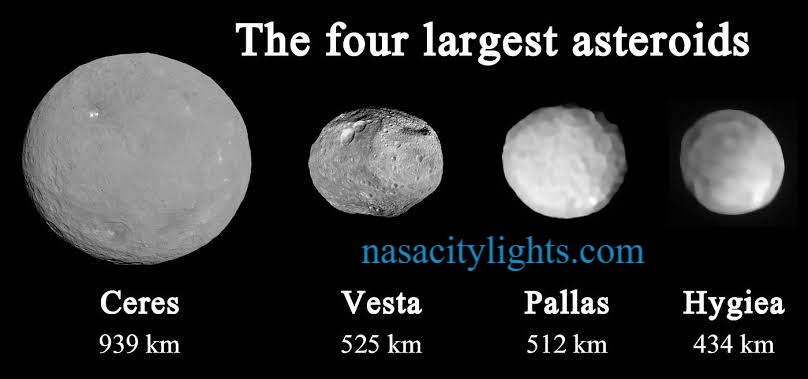
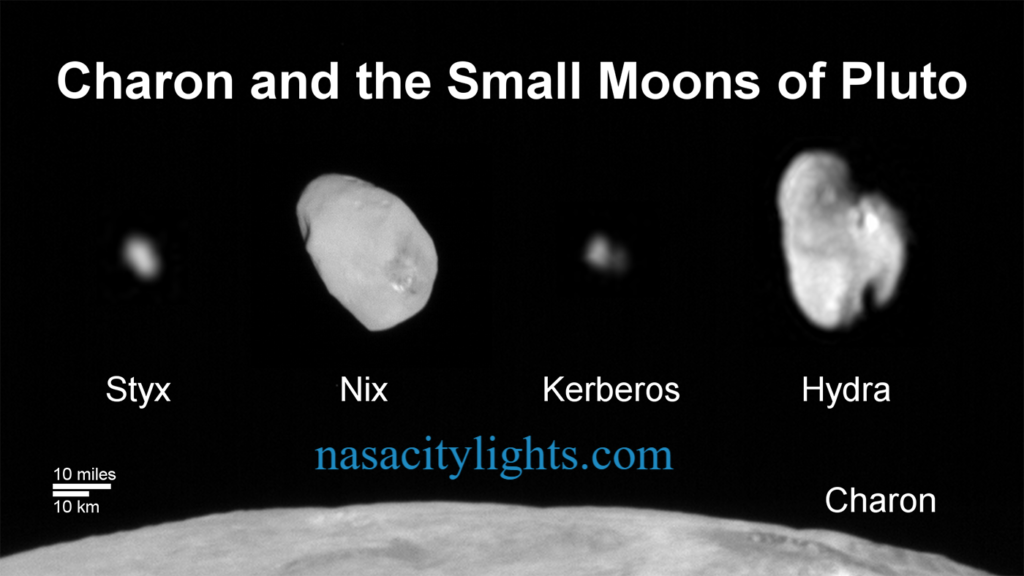
Pluto is nevertheless the largest known dwarf planet by diameter, although Eris is very close in size and is more massive. Its system includes five known moons, with Charon being the largest. Charon’s diameter is approximately 1,212 kilometers, around half Pluto’s diameter. The two bodies orbit a shared center of mass located outside Pluto, making their relationship unusual among planetary systems.
How Do Scientists Know Pluto’s Size?
For decades, scientists estimated Pluto’s dimensions using telescopes and observations of its brightness, motion, and interactions with other objects. These methods offered valuable information, but the measurements remained uncertain because Pluto is extremely distant and appears very small from Earth. Improvements in astronomical instruments gradually narrowed the possible range of its diameter.
A major breakthrough came when NASA’s New Horizons spacecraft flew past Pluto in July 2015. The spacecraft captured detailed images and gathered scientific measurements that allowed researchers to determine its diameter more accurately. NASA reported a diameter of approximately 2,370 kilometers, slightly larger than many earlier estimates. The mission also revealed mountains, glaciers, varied terrain, and evidence of a complex geological history.
Scientific measurements can be rounded differently depending on the source and the level of precision used. That is why some references list Pluto at about 2,370 kilometers, while others give approximately 2,377 kilometers. Both figures communicate its general size, but an article should use a consistent measurement and identify authoritative sources such as NASA when presenting scientific facts.
Conclusion: Putting Pluto’s Size Into Perspective
Pluto has a diameter of approximately 2,377 kilometers (1,477 miles), making it a small world compared with Earth and all eight major planets. It is smaller than Earth’s Moon, Mercury, and Mars, yet its surface features and system of moons make it an important object for planetary science. Comparisons with continents and countries also help turn an unfamiliar astronomical measurement into something easier to imagine.
Understanding how big Pluto is involves more than memorizing a number. Its diameter, volume, mass, composition, and location each reveal something different about this distant dwarf planet. Thanks to NASA’s New Horizons mission, scientists now have a much clearer picture of Pluto’s dimensions and landscape. Although Pluto is small in planetary terms, it remains a remarkable world that continues to expand our understanding of the outer solar system.
Frequently Asked Questions
How big is Pluto?
Pluto has a diameter of approximately 2,377 kilometers (1,477 miles).
How big is Pluto compared to Earth?
Pluto is about 18.6% of Earth’s diameter, making Earth approximately 5.4 times wider.
Is Pluto smaller than our Moon?
Yes, Pluto is about 68% of the Moon’s diameter.
What is Pluto’s diameter in kilometers?
Pluto’s diameter is approximately 2,377 kilometers, although NASA commonly reports a rounded measurement of 2,370 kilometers.
How big is Pluto in miles?
Pluto is approximately 1,477 miles in diameter.
Is Pluto bigger than Mercury?
No, Mercury is approximately 4,880 kilometers
Also Read: