
Starship SpaceX: The Most Thrilling and Terrifying Rocket Ever Built in 2026
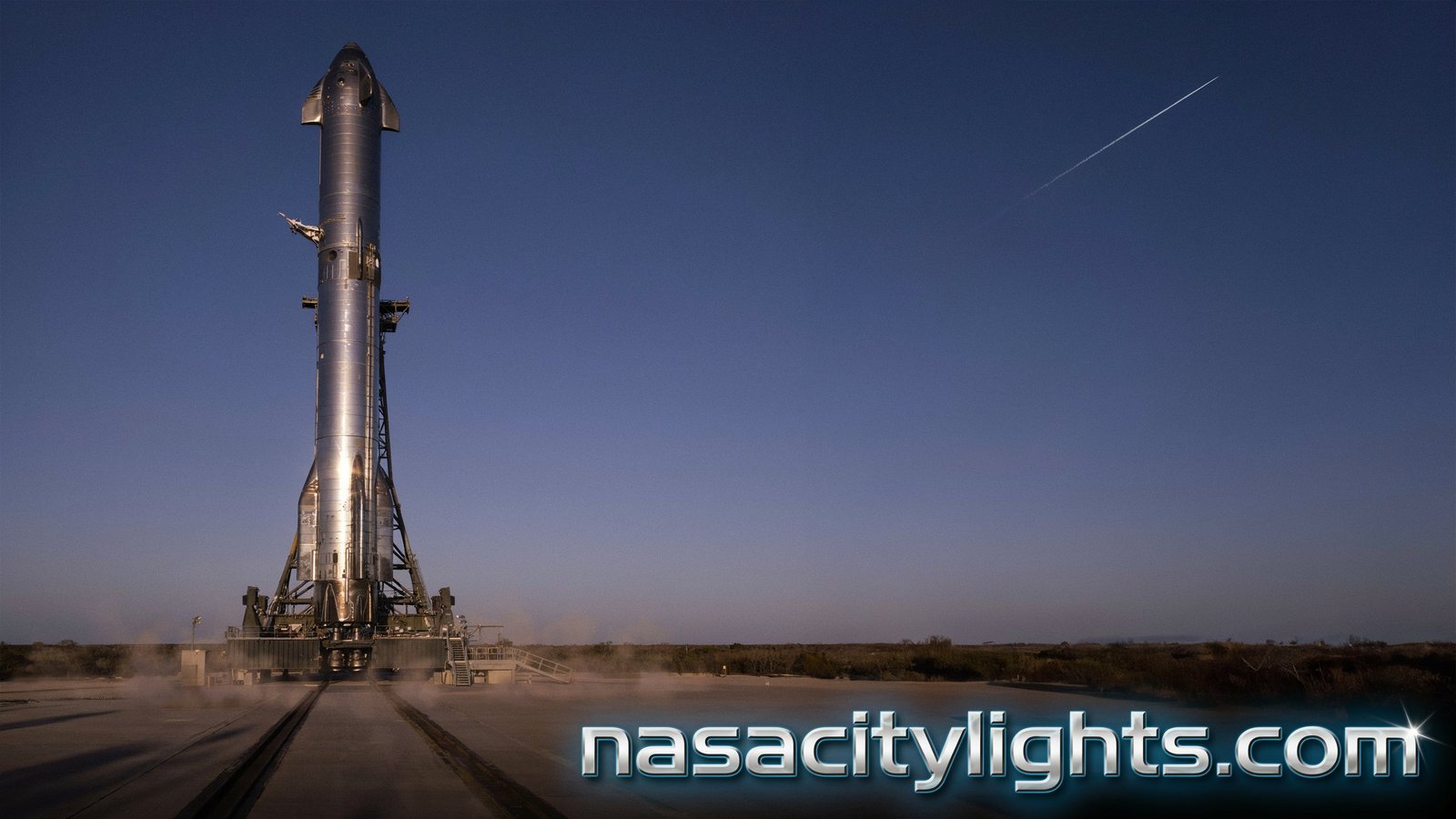
Table of Contents
- Introduction
- What Is Starship SpaceX and Why Does It Matter?
- The Two Parts of Starship: Super Heavy and the Ship Itself
- How Big Is Starship SpaceX Really?
- The Goal: Why SpaceX Built Starship
- Key Milestones in the Starship SpaceX Journey
- The Chopstick Catch: A Moment That Changed Everything
- Starship SpaceX and the Moon Mission
- Mars Is the Real Target
- What Critics and Competitors Say
- What Starship Means for Everyday People
- Conclusion
- FAQs
Introduction
Imagine watching a rocket taller than a 40-story building launch itself into the sky, come back down, and get caught by a pair of giant mechanical arms. That is not science fiction. That already happened. And it happened because of Starship SpaceX, the most ambitious rocket program in human history.
If you have been following the space industry even casually, you have heard the name. Starship SpaceX is Elon Musk’s bet on the future of humanity. It is designed to carry people and cargo to the Moon, to Mars, and eventually beyond our solar system. The sheer scale of this machine is hard to wrap your head around until you start looking at the numbers.
This article covers everything you need to know. You will learn how Starship works, what it has already achieved, why NASA chose it for a crewed Moon landing, and what its critics get right and wrong. Whether you are a space enthusiast or just someone who wonders what all the noise is about, this guide gives you a grounded, honest, and engaging look at the rocket everyone is talking about.
What Is Starship SpaceX and Why Does It Matter?
Starship SpaceX is a fully reusable launch system developed by SpaceX, the private aerospace company founded by Elon Musk in 2002. It is designed to replace every other rocket SpaceX currently uses, including the Falcon 9 and Falcon Heavy. The goal is a single vehicle that can do everything.
What makes it different from every rocket before it is full reusability. Traditional rockets are either partially or fully expendable. You use them once and they fall into the ocean. Starship is designed so that both stages, the Super Heavy booster and the Starship spacecraft, return to Earth and land safely. That changes the economics of space travel in a fundamental way.
Think of it like the difference between a single-use plastic bottle and a reusable water bottle. If you throw away every rocket after one flight, launching anything into space stays extremely expensive. If you can reuse the same rocket hundreds of times, the cost drops dramatically.
SpaceX has stated that it wants Starship to eventually cost around two million dollars per launch once fully operational. For context, a Falcon 9 launch costs around 67 million dollars. A NASA Space Launch System launch costs over two billion dollars. The gap is staggering.
The Two Parts of Starship: Super Heavy and the Ship Itself
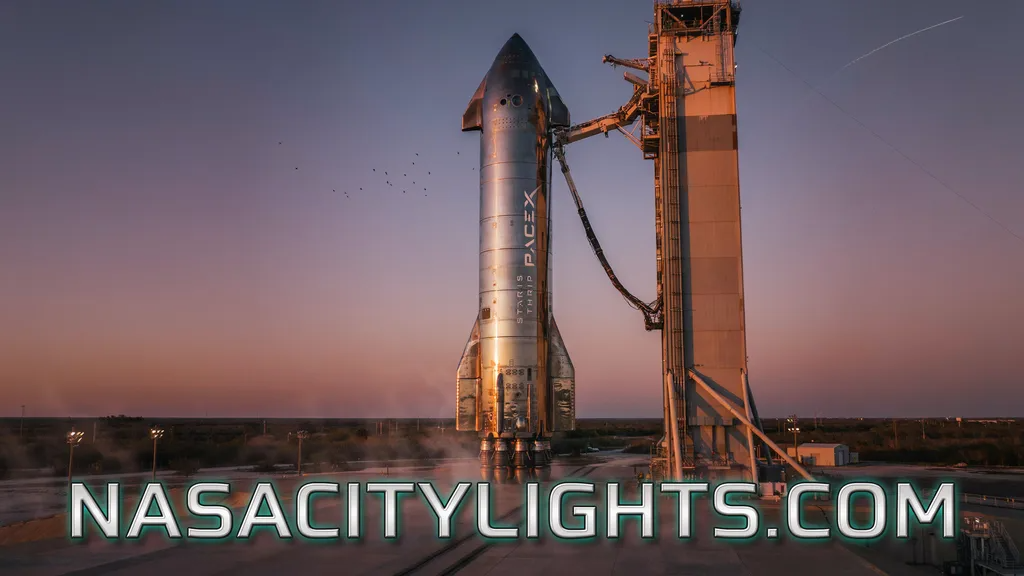
Starship SpaceX is actually two vehicles stacked on top of each other. Understanding both parts helps you appreciate the full picture.
Super Heavy: The Booster
Super Heavy is the bottom stage. It is the first stage booster that provides the initial thrust to get the combined vehicle off the ground. It stands about 71 meters tall on its own. It is powered by 33 Raptor engines, which burn liquid methane and liquid oxygen.
Super Heavy does not go to orbit. Its job is to push the upper stage high enough and fast enough to continue on its own. Then it separates and returns to the launch site to be caught by the launch tower’s mechanical arms, nicknamed Mechazilla.
Starship: The Upper Stage Spacecraft
The top section is also called Starship. It is the spacecraft that actually reaches orbit, goes to the Moon, or travels to Mars. It is about 50 meters tall on its own and runs on six Raptor engines. Three are designed for vacuum operation and three are for atmospheric flight.
Together, the stacked system reaches about 121 meters tall. That makes it the tallest rocket ever built, surpassing NASA’s Saturn V rocket that took astronauts to the Moon in the 1960s and 1970s.
How Big Is Starship SpaceX Really?
Numbers help, but they do not fully capture the scale. Here are some comparisons that make it real for you.
- Starship SpaceX is taller than the Statue of Liberty, which stands at 93 meters including its pedestal
- It is taller than Big Ben in London, which reaches 96 meters
- Its 33 Raptor engines produce about 16.7 million pounds of thrust at liftoff
- The Saturn V, which remains legendary, produced about 7.6 million pounds of thrust
- Starship can carry up to 150 metric tons to low Earth orbit in its fully reusable configuration
- In an expendable configuration, that capacity could reach 250 metric tons
The payload capacity is what gets aerospace engineers excited. No rocket in history has been able to carry this much mass to orbit. That opens up mission types that were previously impossible or impractical.
The Goal: Why SpaceX Built Starship
SpaceX did not build Starship just to win a rocket competition. The mission, as Elon Musk has stated repeatedly, is to make humanity a multi-planetary species. Specifically, SpaceX wants to establish a self-sustaining city on Mars within the next few decades.
That sounds bold. It is bold. But Starship SpaceX is the vehicle designed to make that vision physically possible. Mars missions require enormous cargo capacity. They require the ability to refuel in orbit. They require a vehicle that can land on Mars and potentially launch back to Earth. Starship is designed to do all of those things.
Beyond Mars, SpaceX also uses Starship for more near-term commercial purposes. These include:
- Launching large batches of Starlink internet satellites
- Carrying NASA astronauts to the lunar surface under the Artemis program
- Point-to-point travel on Earth, where Starship would transport passengers between cities in under an hour
- Deploying large commercial satellites that no current rocket can accommodate
- Scientific missions that require massive telescope or sensor arrays
The business logic and the visionary mission run in parallel. SpaceX needs commercial revenue to fund the Mars dream. Starship serves both.
Key Milestones in the Starship SpaceX Journey
The road to where Starship stands today was not smooth. It was filled with explosions, setbacks, and incremental wins. Here is a clear timeline of the most important moments.
Early Prototype Tests (2019 to 2021)
SpaceX tested a series of low-altitude Starship prototypes called Starhopper and then the SN series. These were single-stage vehicles that tested the Raptor engine and basic flight controls. Several exploded on landing. SN15 became the first prototype to land successfully in May 2021.
Integrated Flight Test 1 (April 2023)
The first full orbital test flight of the complete Starship SpaceX stack launched from Boca Chica, Texas. The rocket cleared the launch pad and reached an altitude of about 39 kilometers before the flight termination system was activated. The vehicle exploded. But SpaceX called it a success because the launch pad survived and they collected enormous data.
Integrated Flight Test 2 (November 2023)
The second test reached space for the first time. Both stages successfully separated. The Super Heavy booster performed a flip maneuver before being lost. Starship reached its planned altitude before losing contact. Another step forward.
Integrated Flight Test 3 (March 2024)
Starship SpaceX reached orbital velocity for the first time. The vehicle successfully opened and closed its payload door in space. It demonstrated propellant transfer technology. Re-entry heating data was collected before the vehicle was lost over the ocean.
Integrated Flight Test 4 (June 2024)
Both vehicles survived re-entry. Super Heavy splashed down in the Gulf of Mexico. Starship made a controlled splashdown in the Indian Ocean. This was a major technical success.
Integrated Flight Test 5 (October 2024)
This is the moment that genuinely shocked the world. Super Heavy returned to the launch site and was caught by the mechanical arms of the launch tower. This had never been done before with any rocket booster. Starship completed its flight and landed in the ocean. The catch was a turning point in rocket engineering history.
The Chopstick Catch: A Moment That Changed Everything
I want to spend a moment on this because the chopstick catch deserves its own section. It is not just a cool trick. It is a structural engineering breakthrough that changes how we think about rocket recovery.
Traditional rocket landing involves deploying landing legs and touching down on a pad. That works, but it adds weight and mechanical complexity to the rocket. SpaceX decided to remove the landing legs from Super Heavy entirely and instead have the launch tower catch the booster using two large arms.
The benefits are enormous. A lighter booster means more payload capacity. A faster turnaround is possible because the booster is already back at the launch site. The same infrastructure that stacks the rocket can also catch it.
During Integrated Flight Test 5, Super Heavy returned to the launch site at Boca Chica, slowed down using its engines, and was caught between the chopstick arms of the Mechazilla tower. The precision required is extraordinary. The booster has to be within centimeters of its target while decelerating from hypersonic speed.
SpaceX repeated this achievement in subsequent test flights. What was once considered impossible is now becoming routine.
Starship SpaceX and the Moon Mission
NASA selected Starship SpaceX as the Human Landing System for its Artemis program. This means Starship will be the vehicle that lands American astronauts on the Moon for the first time since 1972.
The contract, worth billions of dollars, was awarded to SpaceX in 2021. NASA’s plan involves launching astronauts on its own Space Launch System rocket to lunar orbit. The crew then transfers to a waiting Starship, which descends to the lunar surface, and later returns the crew to the orbital spacecraft.
This mission profile requires Starship to be refueled in orbit before heading to the Moon. SpaceX plans to launch multiple Starship tanker vehicles that dock with the crewed Starship and transfer propellant. This is another capability that has never been demonstrated at this scale.
The first crewed Artemis Moon landing is currently targeted for the mid-2020s, though timelines in aerospace tend to shift. What matters is that NASA, the organization that put humans on the Moon in the first place, has bet its next crewed lunar landing on Starship SpaceX.
Mars Is the Real Target
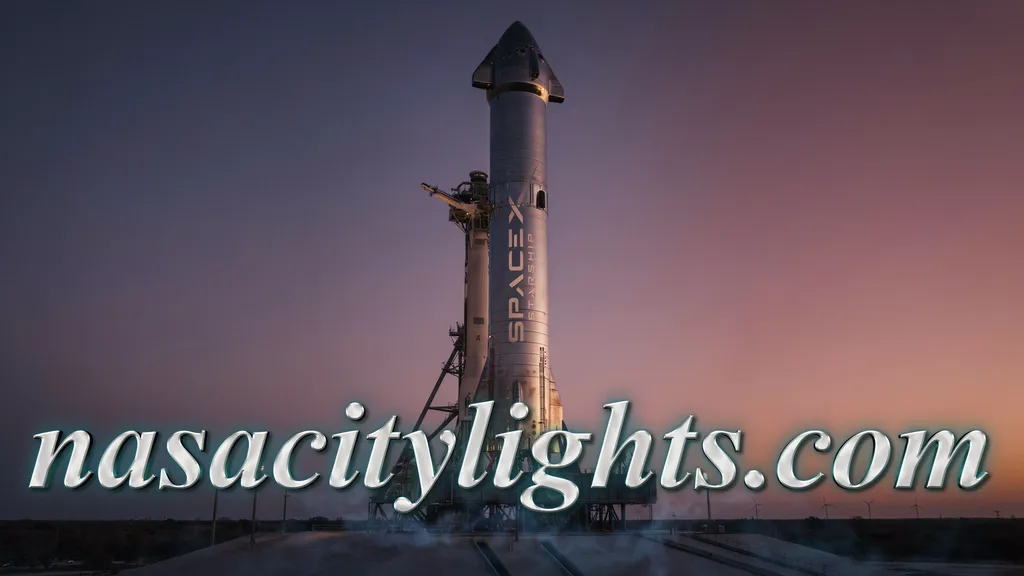
The Moon is a stepping stone. Elon Musk has been clear that Mars is the primary motivation behind Starship SpaceX. He wants to establish a permanent human settlement there within the next 20 years.
The numbers required for a Mars city are staggering. Musk has talked about needing a fleet of Starships launching during every Mars transfer window, which opens roughly every 26 months when Earth and Mars align favorably. He has mentioned figures like 1,000 Starships carrying thousands of people per launch window.
Mars presents challenges that the Moon does not. The journey takes six to nine months. The atmosphere is thin but present, which means re-entry heating is a factor. Resources on Mars include water ice and carbon dioxide, which can theoretically be used to produce methane fuel for return trips. SpaceX calls this in-situ resource utilization.
Starship is designed around this idea. It uses methane as fuel specifically because methane can be synthesized on Mars. Hydrogen-based rockets, like the ones NASA has used historically, would not have this advantage.
Whether a Mars city is achievable in the timeline Musk describes is debated among aerospace experts. But the engineering logic behind Starship SpaceX as the vehicle for that mission is sound.
What Critics and Competitors Say
Not everyone is a believer. Starship SpaceX has serious critics, and their concerns deserve honest attention.
The Safety Question
Starship will eventually carry humans. The gap between flying uncrewed test vehicles and certifying a rocket for human spaceflight is enormous. SpaceX will need to demonstrate extraordinary reliability before NASA or any other agency puts people on board. The Falcon 9 took years and many flights to reach that standard.
The Timeline Problem
SpaceX has missed timelines before. The company is famously optimistic about schedules. Critics point out that every Starship milestone has arrived later than originally projected. For a vehicle supposed to carry humans to the Moon in the near term, schedule slips have real consequences for NASA’s Artemis planning.
Environmental Concerns
Early Starship launches caused significant damage to the launch site and scattered debris over a wide area. Environmental groups raised concerns about the impact on local wildlife and ecosystems near Boca Chica. SpaceX has improved its launch infrastructure considerably since then, but the tension between rapid testing and environmental stewardship remains.
Competition
Blue Origin, founded by Jeff Bezos, is developing its own large launch vehicle called New Glenn and a lunar lander called Blue Moon. United Launch Alliance and other companies are building next-generation rockets. No competitor currently matches Starship’s scale or reusability ambitions, but the landscape is evolving.
What Starship Means for Everyday People
You might be wondering what any of this means for you personally. Fair question. Here is how Starship SpaceX could affect your life over the coming decades.
Lower satellite costs. Starship can launch massive numbers of Starlink satellites per mission. This drives down the cost of global internet coverage, which benefits users in remote areas who currently have no reliable connectivity.
Space tourism. SpaceX has already sold seats on future Starship missions to private customers, including a trip around the Moon called the dearMoon project. As costs fall, more people will have access to space travel.
Scientific breakthroughs. Large space telescopes, planetary probes, and space stations become more feasible when your launch vehicle can carry 150 metric tons to orbit for a fraction of current costs.
Point-to-point travel. SpaceX has proposed using Starship to fly passengers between major cities on Earth in under an hour. New York to Shanghai in 39 minutes. This remains speculative for now, but the vehicle is technically capable.
Inspiration. This one is harder to measure but very real. When millions of people watched the chopstick catch live, something shifted. The sense that humanity is genuinely becoming a spacefaring civilization moved from abstract to tangible.
Conclusion
Starship SpaceX is the most consequential rocket program of our lifetime. It is rewriting the rules of what is physically and economically possible in space. From catching a booster with mechanical arms to being chosen for NASA’s Moon landing mission, Starship has already achieved things that experts once called impossible.
The challenges ahead are real. Human certification, timelines, environmental responsibilities, and the sheer ambition of a Mars city all require honest scrutiny. But the engineering progress is undeniable. What SpaceX has built and demonstrated with Starship SpaceX is extraordinary by any standard.
You are living through the early chapters of something that future generations will read about in history books. The question is not whether Starship will change space travel. The question is how quickly and how completely it does so.
What part of the Starship program excites or concerns you most? Share your thoughts with someone who follows the space industry, or revisit this article after the next major test flight and see how the story has evolved.

FAQs
1. What is Starship SpaceX designed to do?
Starship SpaceX is a fully reusable launch system designed to carry large payloads and eventually people to the Moon, Mars, and beyond. It also serves commercial purposes like satellite deployment and cargo delivery.
2. How tall is Starship SpaceX?
The complete stacked vehicle stands approximately 121 meters tall, making it the tallest rocket ever built, taller than the Saturn V that carried astronauts to the Moon.
3. How many engines does Starship have?
The Super Heavy booster uses 33 Raptor engines. The Starship upper stage uses six Raptor engines. Together they produce roughly 16.7 million pounds of thrust at liftoff.
4. Has Starship carried humans yet?
As of the time of writing, Starship has only flown uncrewed test missions. Human flights are planned for the future, starting with NASA’s Artemis lunar landing mission.
5. Why did SpaceX choose methane as fuel for Starship?
Methane can theoretically be produced on Mars using local resources, which is critical for the mission of establishing a self-sustaining Mars city where return flights need locally made fuel.
6. What is the chopstick catch?
The chopstick catch refers to the mechanical arms on the Mechazilla launch tower catching the returning Super Heavy booster instead of landing it on legs. SpaceX first achieved this in October 2024.
7. How much can Starship carry to orbit?
In its fully reusable configuration, Starship can carry up to 150 metric tons to low Earth orbit. In an expendable configuration, that figure rises to around 250 metric tons.
8. Is Starship SpaceX safe for humans?
No crewed Starship missions have flown yet. SpaceX must complete an extensive certification process before NASA or any human passengers fly on the vehicle.
9. How does Starship compare to the Saturn V?
Starship is taller and more powerful than Saturn V and is fully reusable. Saturn V was expendable. Starship also has far greater payload capacity.
10. When will Starship fly to Mars?
SpaceX has discussed uncrewed Mars missions in the late 2020s and crewed missions in the early 2030s, though these timelines are subject to change based on development progress.
Also Read in NasaCitylights.com
Email: johanharwen314@gmail.com
Author Name: Hamid Ali
About the Author: Hamid Ali is a passionate science and technology writer who specializes in aerospace, space exploration, and emerging tech. He has a deep interest in how transformative technologies shape the future of humanity and enjoys making complex topics accessible to everyday readers. Hamid believes that great writing should inform, inspire, and challenge the way you think. When he is not researching the next generation of rockets, he is writing about the ideas and innovations that will define the decades ahead.