
How Does a Space Telescope Work? The Amazing Truth Behind Its Power
Introduction
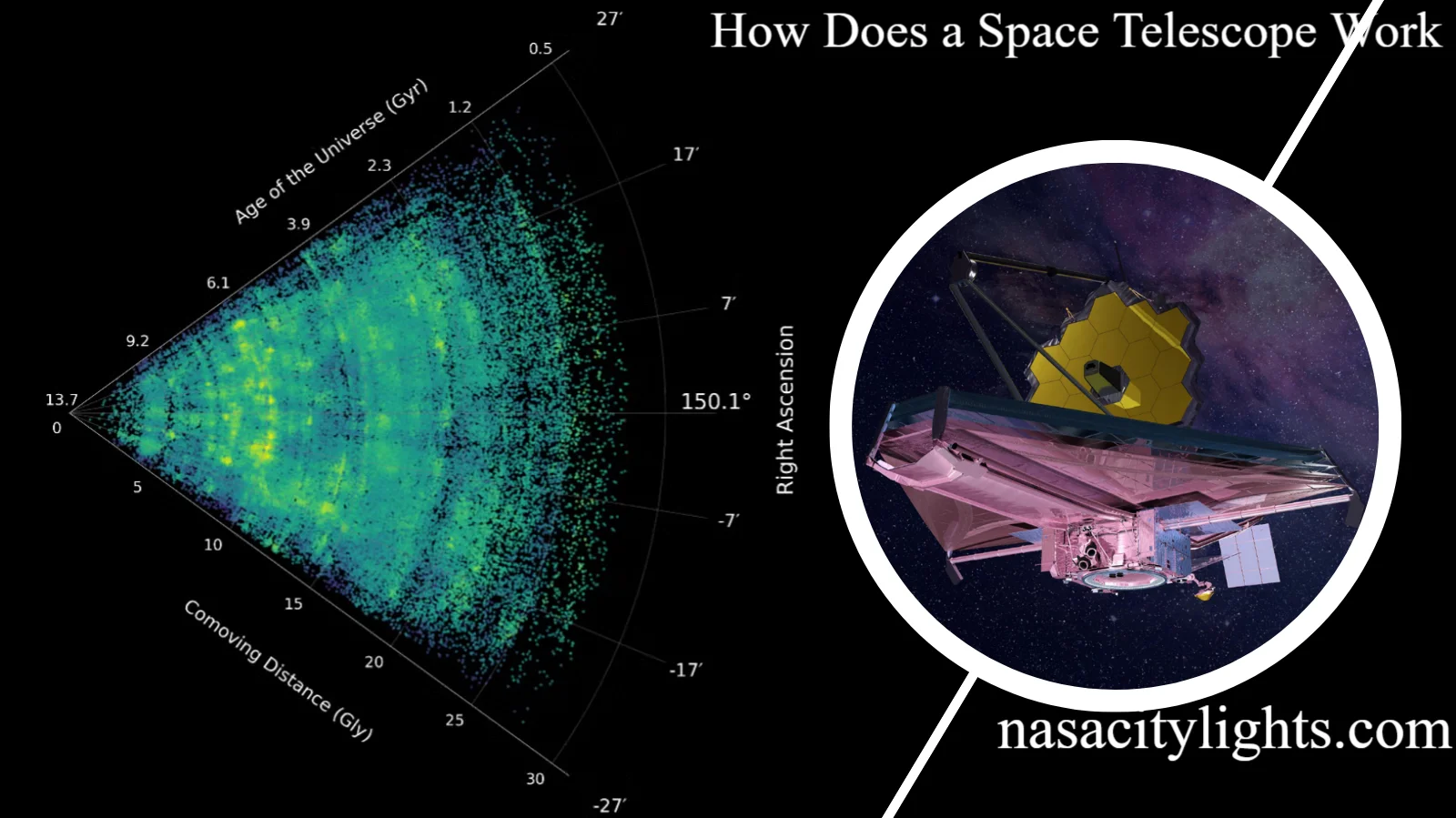
Have you ever looked up at a photo of a distant galaxy and wondered how anyone managed to capture something so far away? That stunning image did not come from a telescope on a mountaintop. It came from a machine floating hundreds of miles above your head. So how does a space telescope work? In simple terms, it collects light using mirrors, focuses that light onto sensitive detectors, and turns it into digital data that scientists on Earth can study.
It sounds simple, but the process behind it is truly fascinating. These machines orbit our planet, dodge atmospheric interference, and send back images that reshape our understanding of the universe. In this article, you will learn exactly how a space telescope works, why it performs better than ground based telescopes, what it can actually detect, and how all that data travels millions of miles back to Earth. By the end, you will understand this technology in a way that feels simple, not complicated.
What Is a Space Telescope?
A space telescope is a scientific instrument placed in orbit around Earth or sent deeper into space. Unlike telescopes on the ground, it does not sit inside an observatory building. It floats freely in space, pointed toward stars, planets, and galaxies.
You might already know famous examples like the Hubble Space Telescope or the James Webb Space Telescope. Both orbit far from Earth’s surface and capture images that ground telescopes simply cannot match.
How Does a Space Telescope Work? The Basic Process
Let us break down how does a space telescope work into clear steps. Every space telescope follows a similar process, even though each one has unique instruments and goals.
Step 1: Collecting Light
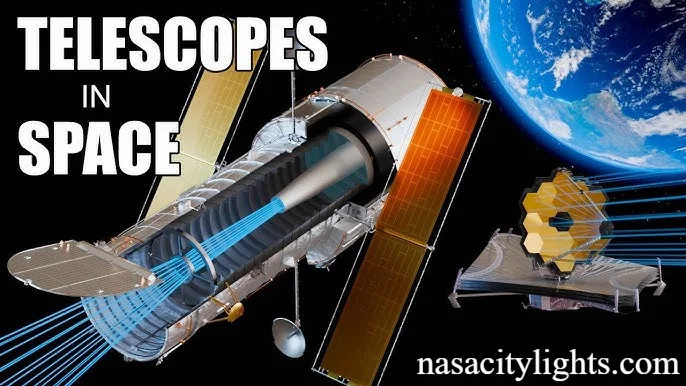
Every space telescope starts by collecting light. This light comes from stars, planets, galaxies, and other cosmic objects. A large mirror inside the telescope gathers this light and directs it toward a smaller mirror.
The bigger the mirror, the more light the telescope can collect. That is why engineers design massive mirrors for powerful telescopes like the James Webb Space Telescope.
Step 2: Focusing the Light
Once the mirrors collect the light, they focus it onto instruments and detectors. This step works similarly to how your eye focuses light onto your retina. The telescope aligns mirrors with precision so the light lands exactly where it needs to go.
This is a crucial part of how does a space telescope work, because even a tiny misalignment can blur the final image.
Step 3: Converting Light Into Data
After the light reaches the detectors, sensors convert it into digital data. These detectors work like advanced digital cameras. They measure the brightness, color, and wavelength of the incoming light.
This data does not look like a finished photo yet. It exists as raw numbers that scientists later process into the beautiful images you see online.
Step 4: Sending Data Back to Earth
Once the telescope creates digital data, it needs to send that information back home. Space telescopes use radio signals to transmit data to ground stations on Earth. These stations receive the signals, process them, and turn them into images and scientific reports.
This is one of the most important parts of understanding how does a space telescope work, since without transmission, none of the collected data would ever reach scientists.
Why Are Space Telescopes Better Than Ground Telescopes?
You might wonder why we bother launching telescopes into space when we already have huge telescopes on mountains. The answer comes down to one major obstacle: Earth’s atmosphere.
Here is why space telescopes have a clear advantage.
- They avoid atmospheric distortion, which causes stars to twinkle and blurs images taken from the ground.
- They observe wavelengths of light that the atmosphere blocks completely, such as X-rays and most infrared light.
- They operate day and night without worrying about weather, clouds, or daylight.
- They capture sharper, clearer images with far greater detail.
I always find it amazing that a telescope orbiting Earth can see billions of light years away, while a similar telescope on the ground would struggle to capture even a fraction of that clarity. This is exactly why answering how does a space telescope work also means understanding the atmosphere’s limitations.
What Does a Space Telescope Detect?
Not all space telescopes look for the same type of light. Depending on their instruments, they detect different wavelengths across the electromagnetic spectrum.
Visible Light
Some telescopes, like Hubble, mainly capture visible light. This is the same type of light your eyes can see, which makes the images relatable and stunning.
Infrared Light
Infrared telescopes, such as the James Webb Space Telescope, detect heat signatures. This allows scientists to see through dust clouds and observe newly forming stars and planets.
Ultraviolet Light
Ultraviolet detectors help scientists study hot, young stars and energetic events happening in distant galaxies.
X rays and Gamma Rays
Some telescopes specialize in detecting X-rays and gamma rays. These wavelengths come from extremely powerful cosmic events, such as black holes and exploding stars.
Understanding these different wavelengths gives a fuller picture of how does a space telescope work across various missions and instruments.
How Do Space Telescopes Send Data to Earth?
Once a telescope collects and processes its data, it needs a reliable way to send it home. Space telescopes rely on radio communication systems to transmit digital information to ground stations.
Here is a simple breakdown of the transmission process.
- The telescope converts collected light into digital signals.
- It sends these signals through an antenna using radio waves.
- Ground stations on Earth receive the signals.
- Scientists process the raw data into readable images and reports.
This communication system plays a critical role in how does a space telescope work, since the entire mission would be pointless without a way to share discoveries with the world.
Real World Examples of Space Telescopes
Learning the theory is helpful, but real examples make everything click. Let us look at a few space telescopes that show exactly how this technology performs in action.
- Hubble Space Telescope: Launched in 1990, it revolutionized astronomy with detailed images of galaxies, nebulae, and star clusters.
- James Webb Space Telescope: Launched in 2021, it observes infrared light and studies the earliest galaxies in the universe.
- Chandra X ray Observatory: Focuses on X-ray emissions from black holes and supernova remnants.
- Spitzer Space Telescope: Specialized in infrared observations before retiring in 2020.
Each of these missions answers how does a space telescope work in its own unique way, depending on the wavelengths it targets and the instruments it carries.
Why This Technology Matters
Space telescopes do more than take pretty pictures. They help scientists understand how stars form, how galaxies evolve, and even how our own solar system came to exist. They also search for signs of habitable planets outside our solar system.
Every time a telescope sends back new data, researchers get closer to answering some of humanity’s biggest questions. That is why funding and building these machines remains such a priority for space agencies around the world.
Conclusion
So, how does a space telescope work? It collects light using powerful mirrors, focuses that light onto sensitive detectors, converts it into digital data, and transmits everything back to Earth through radio signals. This process allows scientists to explore galaxies, stars, and cosmic events that we could never study clearly from the ground.
Space telescopes give us a window into the universe that ground based telescopes simply cannot match. They help us see further, understand deeper, and dream bigger about what exists beyond our planet.
What part of this process surprised you the most? Feel free to share this article with someone who loves space, or explore more content to keep learning about the universe above us.
Frequently Asked Questions
How does a space telescope work in simple terms? A space telescope collects light using mirrors, focuses it onto detectors, converts it into digital data, and sends that data back to Earth using radio signals.
Why do space telescopes orbit Earth instead of staying on the ground? Orbiting Earth allows telescopes to avoid atmospheric distortion and detect wavelengths of light that the atmosphere blocks.
What is the biggest space telescope in use today? The James Webb Space Telescope currently holds the title of the largest and most powerful space telescope in operation.
Can space telescopes see planets outside our solar system? Yes, many space telescopes detect exoplanets by measuring changes in light as planets pass in front of their host stars.
How long do space telescopes usually last? Lifespan varies by mission, but many space telescopes operate for a decade or longer, depending on fuel, technology, and maintenance needs.
Do space telescopes need constant human control? Space telescopes generally operate through automated systems, though scientists on Earth send commands and monitor performance regularly.
What happens to the data collected by a space telescope? Ground stations receive the transmitted data, then scientists process it into images and research findings for public and academic use.
Why can space telescopes detect X-rays and gamma rays? Since Earth’s atmosphere blocks these wavelengths, only telescopes positioned above the atmosphere can detect them effectively.
nasacitylights.com
Email: johanharwen314@gmail.com
Author Name: Hamid Ali
About the Author: Hamid Ali is a science writer who enjoys breaking down complex space technology into simple, easy to understand explanations. He focuses on making astronomy accessible for students, educators, and curious readers who want to learn how the universe works.