
Starlink Stock: Price, IPO, and How to Invest in 2026
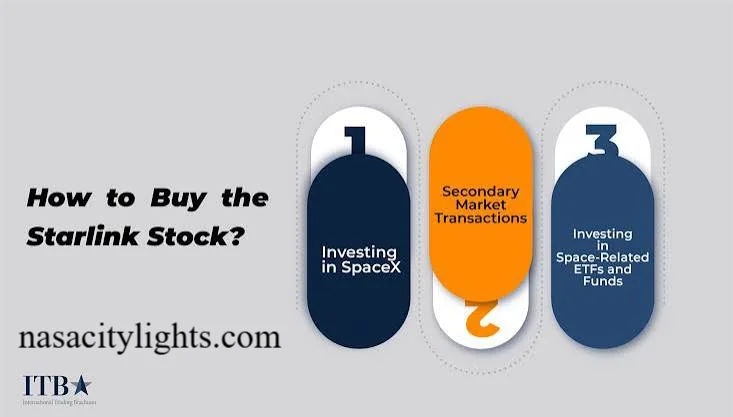
If you’re searching for Starlink stock, the first thing to understand is that there is still no separately listed Starlink stock ticker. However, the situation changed dramatically in June 2026 when Starlink’s parent company, SpaceX, completed its initial public offering.
SpaceX began trading on Nasdaq under the ticker SPCX on June 12, 2026, after pricing its IPO at $135 per share. The company ultimately issued 638.9 million Class A shares, including the underwriters’ full overallotment, raising approximately $85.7 billion in gross proceeds.
That means investors looking for exposure to Starlink can now potentially get it through SpaceX shares, although buying SpaceX stock is not the same as owning a pure-play Starlink business.
You cannot currently buy a separately listed Starlink share. The publicly traded route is SpaceX stock, ticker SPCX, which gives investors exposure to Starlink alongside SpaceX’s other businesses.
Is Starlink Publicly Traded?
No. Starlink does not have its own publicly traded stock. It operates as SpaceX’s connectivity business rather than as a separately listed company.
The important development is that SpaceX became a public company in June 2026. Its Class A shares trade on Nasdaq and Nasdaq Texas under SPCX.
So there is an important distinction:
| Investment | Publicly traded? | Ticker |
|---|---|---|
| Starlink | No separate listing | None |
| SpaceX | Yes | SPCX |
| Boeing | Yes | BA |
| Lockheed Martin | Yes | LMT |
| Iridium Communications | Yes | IRDM |
If a website claims that Starlink stock trades under a dedicated Nasdaq ticker, be careful. It may be confusing Starlink with SpaceX or with an unrelated company.
What Is Starlink?
Starlink is SpaceX’s satellite internet and connectivity network. It uses a large constellation of low Earth orbit satellites to provide broadband connectivity to consumers, businesses, governments, aircraft, ships and other customers.
Its biggest advantage is its ability to provide high-speed internet in places where traditional wired or cellular infrastructure can be difficult or expensive to deploy.
The service has expanded well beyond its original rural-internet use case. SpaceX is also developing enterprise, aviation, maritime and mobile connectivity opportunities.
By the end of the second quarter of 2026, SpaceX reported 12 million Starlink subscribers, up from 6 million a year earlier.
How Does Starlink Make Money?
Starlink primarily makes money by selling connectivity services and related equipment.
Its business can broadly be viewed across several customer groups:
- Consumer broadband subscribers
- Enterprise customers
- Government customers
- Aviation
- Maritime
- Mobile connectivity
- Specialized government services through Starshield
SpaceX reported $7.548 billion in connectivity revenue for the first six months of 2026. Of that, $4.633 billion came from consumers and $2.915 billion came from enterprise and government customers.
The company’s connectivity segment also generated $2.844 billion of operating income during the first half of 2026, showing that the business is not simply growing revenue while losing money.
Is Starlink Profitable?
Yes, Starlink’s broader connectivity business is generating substantial operating profit.
There is an important accounting distinction, however. SpaceX reports a Connectivity segment, rather than publishing a standalone public-company income statement for “Starlink” as if it were an independent corporation.
For Q2 2026, SpaceX reported:
- $4.291 billion in connectivity revenue
- $1.656 billion in operating income
- $2.597 billion in adjusted EBITDA
- 12 million Starlink subscribers
Connectivity revenue increased 66% year over year in the quarter.
This makes Starlink one of the most important economic engines inside SpaceX.
What Happened to the Starlink IPO?
There has been years of speculation about a separate Starlink IPO.
That speculation became less straightforward after SpaceX itself went public.
Rather than spinning Starlink into a separate publicly traded company first, SpaceX completed its own IPO in June 2026. The offering priced at $135 per share, and trading began June 12 under SPCX.
Therefore, there is currently no confirmed Starlink IPO date for a separate listing.
A future Starlink spin-off remains theoretically possible, but investors should not treat an unannounced Starlink IPO as a scheduled event.
Starlink IPO Valuation
Because Starlink has not completed a separate IPO, there is no official Starlink IPO valuation or official Starlink IPO price.
Instead, investors can look at the market valuation of SpaceX.
SpaceX’s public-market valuation has fluctuated significantly since its IPO. On September 14, 2026, SpaceX shares closed at about $148.15, according to market data, after trading between $146 and $152.56 during that session.
That is above SpaceX’s $135 IPO price but well below some of its post-IPO highs.
This volatility demonstrates why investors should not assume that a large, fast-growing company automatically represents a low-risk investment.
Can You Buy Starlink Shares?
You cannot buy Starlink shares as a separate publicly traded security.
However, U.S. investors can potentially buy SpaceX shares (SPCX) through a brokerage that provides access to Nasdaq-listed stocks.
This gives you indirect exposure to Starlink because Starlink operates inside SpaceX.
But SpaceX is much broader than satellite internet. Its investment story also involves:
- Rocket launches
- Starship
- Satellite connectivity
- Artificial intelligence infrastructure
- Government and defense services
- Other space-related projects
Therefore, SPCX should not be viewed as a pure Starlink stock.
What Is the Starlink Stock Price?
There is no separate Starlink stock price because there is no separately listed Starlink security.
If you mean the publicly traded company most closely connected to Starlink, that is SpaceX (SPCX).
SpaceX priced its IPO at $135 per share. The September 14, 2026 closing price was approximately $148.15.
Stock prices change continuously during market hours, so investors should check a live market-data provider or brokerage before placing an order.
Who Owns Starlink?
Starlink is part of SpaceX, the aerospace company founded and led by Elon Musk.
Consequently, investors do not separately purchase an ownership stake in Starlink when they purchase SpaceX shares. Instead, they purchase shares in SpaceX, whose business includes Starlink.
This distinction matters because SpaceX’s overall performance can be influenced by developments outside satellite internet.
Starlink Investment Alternatives
Investors who want exposure to satellite communications or the broader space industry have several alternatives.
Boeing
Boeing (BA) is a major aerospace company involved in commercial aircraft, defense and space systems.
Its space activities include satellites and other systems used for communications and government applications.
Boeing therefore offers aerospace exposure, but its business is substantially different from Starlink.
Lockheed Martin
Lockheed Martin (LMT) operates across aerospace and defense, including space-related systems and satellites.
It can provide exposure to the space and defense industries without depending on consumer satellite broadband.
Iridium Communications
Iridium Communications (IRDM) is one of the more direct publicly traded satellite-communications alternatives.
It operates a low Earth orbit satellite network supporting voice, data, maritime, aviation, government and Internet of Things applications.
Unlike Starlink, Iridium is already a standalone public company.
Space ETFs as an Alternative
Investors who don’t want to select an individual space stock can consider exchange-traded funds.
Examples include:
- ARK Space & Defense Innovation ETF (ARKX)
- Procure Space ETF (UFO)
- SPDR S&P Kensho Final Frontiers ETF (ROKT)
An ETF can spread exposure across multiple companies rather than concentrating an investment in one stock.
However, an ETF is not the same as investing directly in Starlink or SpaceX. Its performance depends on the holdings, weighting methodology, fees and broader market conditions.
How to Invest in SpaceX and Starlink Exposure
If you want exposure through SpaceX, the basic process is straightforward:
- Open a brokerage account that supports Nasdaq-listed U.S. stocks.
- Search for SPCX, SpaceX’s stock ticker.
- Review the current market price and company information.
- Decide how much of your portfolio to allocate.
- Choose a market or limit order.
- Review the order before submitting it.
- Monitor the investment over time.
Remember that buying SpaceX shares does not mean you own Starlink directly.
What Could Drive Starlink’s Future Growth?
Starlink’s growth story has several potential drivers.
Subscriber growth: SpaceX reached 12 million Starlink subscribers by the end of Q2 2026.
Enterprise expansion: Businesses, airlines, maritime operators and government customers are becoming increasingly important parts of the connectivity business.
Mobile connectivity: SpaceX is expanding Starlink’s role in mobile communications and has been pursuing additional spectrum and carrier partnerships. Reuters reported on September 15 that Starlink had more than 12 million users and was increasingly challenging traditional wireless providers.
Satellite technology: Next-generation satellites are intended to increase network capacity and data density, potentially supporting more customers and higher usage.
These opportunities are balanced by significant capital requirements, competition, regulation, launch capacity and execution risks.

Starlink Stock FAQs
Starlink stock price
There is no separate Starlink stock price because Starlink does not have its own public ticker. The closest public-market investment is SpaceX stock, which trades under SPCX.
Why is Starlink stock so low?
Starlink does not have a separate stock price, so it cannot technically be described as having a “low” Starlink stock price. SpaceX shares have experienced volatility since their $135 IPO price, reflecting changing investor expectations about the company’s overall businesses.
Starlink stock Nasdaq
Starlink itself does not have a Nasdaq ticker. SpaceX trades on Nasdaq under SPCX, giving public investors indirect exposure to Starlink.
Starlink stock release date
There is no announced release date for a separate Starlink stock. SpaceX, Starlink’s parent company, began public trading on June 12, 2026.
Starlink stock price estimate
Any future Starlink stock price estimate would be speculative because Starlink has no separately traded shares. Investors should distinguish estimates for SpaceX’s valuation from hypothetical estimates for a future Starlink spin-off.
Starlink stock release date and price
There is currently no official Starlink stock release date or IPO price. SpaceX’s IPO was priced at $135 per share in June 2026.
Starlink stock price today live
There is no live Starlink share price. For the publicly traded parent company, SpaceX (SPCX), the September 14, 2026 closing price was about $148.15. Live prices can change during the trading session.
Is Starlink stock for sale?
Not as a standalone stock. Investors can buy SpaceX shares under the ticker SPCX, which provides indirect exposure to Starlink and SpaceX’s other businesses.
The Bottom Line
The phrase “Starlink stock” can be misleading in 2026. Starlink is still not a separately listed public company, but its parent company, SpaceX, is now publicly traded under SPCX.
That is a major change for investors. SpaceX’s June 2026 IPO provides a public-market route to gain indirect exposure to Starlink’s rapidly growing connectivity business. SpaceX reported 12 million Starlink subscribers and $7.548 billion in connectivity revenue during the first half of 2026.
Still, buying SpaceX is not equivalent to buying a pure-play satellite internet company. Investors are buying exposure to the broader SpaceX business, including its space, connectivity and other operations.
As with any investment, potential growth should be weighed against valuation, volatility, competition, regulation and execution risk.
Author Bio: Hamid Ali is a business and finance writer covering stocks, investing, technology companies, and emerging market opportunities. His work focuses on presenting complex financial topics in clear, accurate, and easy-to-understand language for everyday investors.
Author Name: Hamid Ali
Email: johanharwen314@gmail.com
Also Read: