
Losing Gravity: The Shocking Truth Behind Weightlessness in Space
Introduction
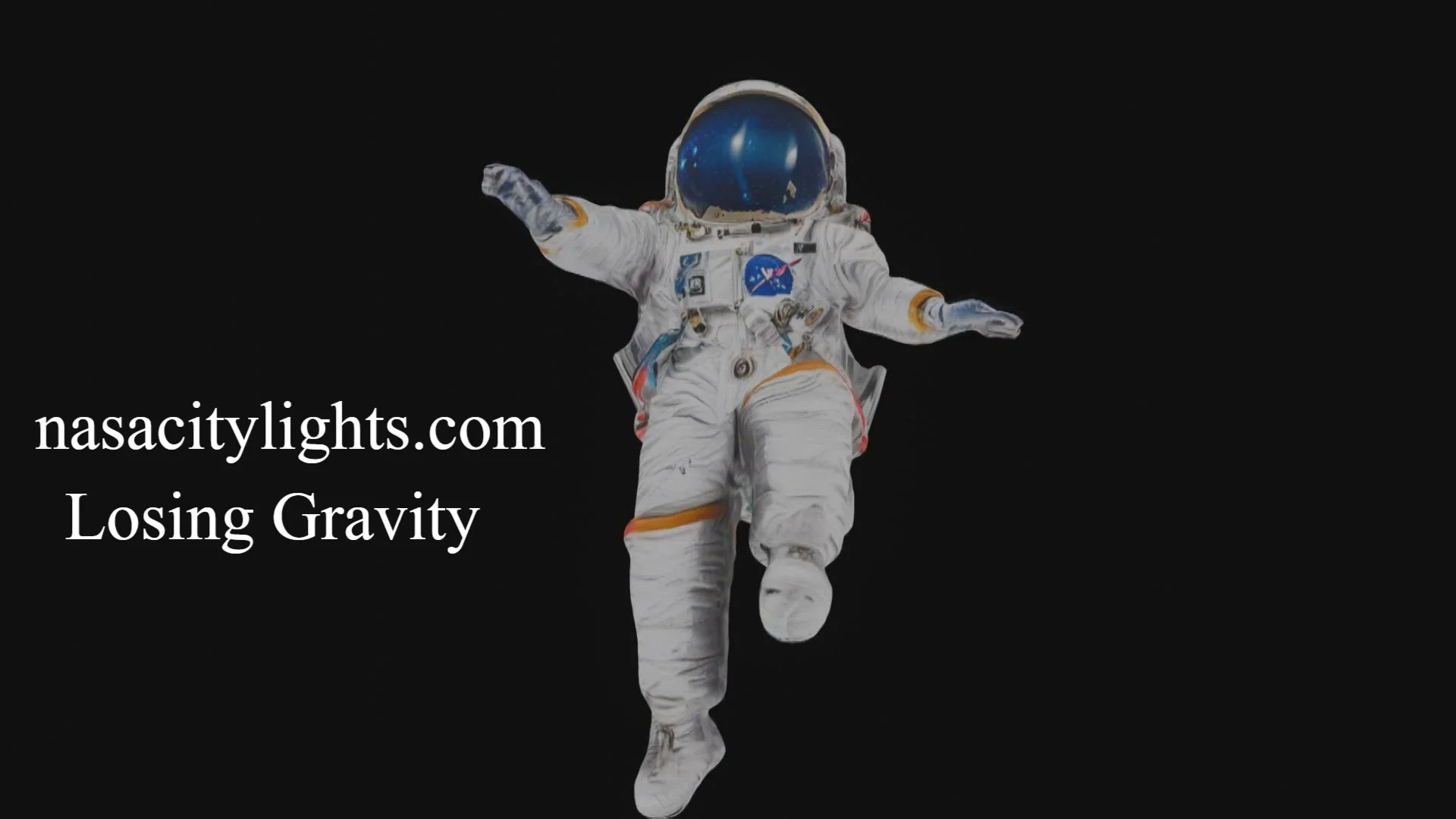
Have you ever watched astronauts floating inside the International Space Station and wondered what is really going on? It looks like magic, but it is not. Many people describe this as losing gravity, and honestly, it is easy to see why. You watch someone drift across a room with no effort at all, and your brain assumes gravity has simply switched off.
Here is the twist though. Gravity never actually disappears. Not on Earth, and not even in space. What you are seeing is a fascinating trick of physics called free fall, and it feels a lot like losing gravity even though the force itself is still very much active.
In this article, you will learn exactly what losing gravity means, why astronauts appear weightless, and what would truly happen if Earth ever lost its gravitational pull. We will also clear up common confusion between zero gravity and microgravity, using real examples from NASA and modern spacecraft.
What Does Losing Gravity Actually Mean?
When people talk about losing gravity, they usually mean a noticeable drop in the effects of gravity on their body or on an object. This happens during free fall, inside orbiting spacecraft, or in specialized training environments here on Earth.
It does not mean gravity has vanished. Gravity is a fundamental force that exists everywhere in the universe. What changes is how strongly you feel its pull at any given moment.
Think of it this way. If you jump off a diving board, you feel a brief moment of weightlessness before hitting the water. That sensation is a tiny taste of losing gravity, even though Earth’s gravitational force never stopped acting on you for even a second.
Can Humans Actually Lose Gravity on Earth?
No, they cannot. Earth’s gravity is constant and always present, no matter where you stand on the planet. You cannot switch it off, block it, or escape it while standing on solid ground.
However, you can experience temporary weightlessness. This happens through:
- Free falling from a height, such as skydiving
- Riding a roller coaster during a steep drop
- Flying aboard a special aircraft used for astronaut training
- Bungee jumping at the peak of the fall
These moments create a sensation similar to losing gravity, but the force itself remains fully intact. Your body simply falls at the same rate as everything around it, so nothing pushes back against you.
Why Do Astronauts Appear to Lose Gravity in Space?
This is where things get really interesting. Astronauts aboard the International Space Station are not actually far enough from Earth to escape its gravity. In fact, gravity at that altitude is still about 90 percent as strong as it is on the surface.
So why do they float?
The answer lies in orbit. Astronauts and their spacecraft are constantly falling toward Earth, but they are also moving forward so fast that they keep missing the planet. This creates a continuous free fall around Earth, which produces the floating effect we associate with losing gravity.
NASA explains this using a simple idea. Imagine throwing a ball so hard that it curves around the entire Earth instead of landing. That is essentially what an orbiting spacecraft does every single day.
The Real Reason Behind Floating Astronauts
Here is a quick breakdown of what causes this effect:
- The spacecraft moves at roughly 17,500 miles per hour
- This speed matches the curve of the Earth below it
- Gravity pulls the spacecraft down at the same rate it moves forward
- The result is a never ending fall that never actually lands
This is why astronauts, tools, water droplets, and even food crumbs drift freely inside the cabin. Everything is falling together at the same speed.
Zero Gravity vs Microgravity: Which Term Is Correct?
You have probably heard the phrase zero gravity used in movies, news reports, and casual conversation. It sounds accurate, but scientifically speaking, it is a bit misleading.
Gravity is never actually zero in low Earth orbit. NASA and other space agencies prefer the term microgravity because it more accurately describes the tiny residual gravitational effects still present during orbit.
Here is a simple comparison:
| Term | Accuracy | Common Usage |
|---|---|---|
| Zero Gravity | Not scientifically precise | Popular media, casual speech |
| Microgravity | Scientifically accurate | NASA, scientific research |
So next time someone mentions losing gravity or floating in zero gravity, you will know the more correct term is actually microgravity.
What Would Happen If Earth Lost Gravity?
This question fascinates almost everyone at some point. What would truly happen if our planet experienced real losing gravity, not just the temporary kind astronauts feel?
The results would be catastrophic almost instantly.
- The atmosphere would drift away into space within minutes
- Oceans and rivers would lift off the surface and scatter
- The Moon would no longer stay in orbit around Earth
- Satellites would spin off into random, uncontrolled paths
- Every loose object, including people, would float uncontrollably
Basically, life as we know it would end almost immediately. Gravity is not just a background force. It holds our entire planetary system together, keeps our atmosphere breathable, and gives structure to everything around us.
Thankfully, this scenario remains purely theoretical. Earth’s gravity comes from its mass, and that mass is not going anywhere anytime soon.
Losing Gravity vs Weightlessness: What Is the Difference?
These two terms often get mixed up, so let us clear things up.
Losing gravity suggests that gravity itself is disappearing or weakening. As we have already covered, this rarely happens in any real, lasting sense.
Weightlessness describes the sensation of having no perceived weight, even though gravity is still acting on you. This happens during free fall or orbit, where nothing supports your body against gravity’s pull.
In simple terms, weightlessness is what you feel. Losing gravity, at least in casual conversation, is often used to describe that same feeling, even though it is not technically what is happening.

Real World Examples From NASA and Spacecraft Missions
NASA has spent decades studying microgravity and its effects on the human body. A few well known examples include:
- The International Space Station, where astronauts live in continuous free fall around Earth
- NASA’s Vomit Comet aircraft, which creates short bursts of weightlessness for astronaut training
- Satellites orbiting Earth, which stay in place through the same free fall principle
- Deep space missions, where gravity from Earth, the Sun, and other bodies constantly interacts with the spacecraft’s path
Each of these examples shows that losing gravity, in the way most people imagine it, does not actually occur. Instead, objects and astronauts experience a delicate balance between motion and gravitational pull.
Frequently Asked Questions
Can gravity disappear completely? No. Gravity is tied to mass, and as long as an object has mass, it will produce gravity. It cannot simply vanish.
Why do astronauts float if gravity still exists? They are in continuous free fall around Earth, moving fast enough to stay in orbit instead of falling to the ground.
What would happen without gravity on Earth? The atmosphere, oceans, and even people would drift away, and the Moon would leave its orbit almost immediately.
Is zero gravity a real scientific term? Not exactly. Scientists prefer microgravity, since a small amount of gravity is always present in orbit.
Can you experience losing gravity on Earth? Yes, briefly. Activities like skydiving or riding certain roller coasters create short moments of weightlessness.
Do astronauts train for microgravity before going to space? Yes. NASA uses special aircraft that fly in parabolic curves to simulate short periods of weightlessness.
Does gravity get weaker the higher you go? Yes, slightly. Gravity decreases with altitude, but even at the International Space Station, it remains fairly strong.
Final Thoughts on Losing Gravity
Losing gravity might sound like something out of science fiction, but the real explanation is even more fascinating. Gravity never truly disappears. Instead, astronauts and objects in orbit experience a continuous state of free fall that creates the illusion of losing gravity altogether.
Understanding the difference between weightlessness, microgravity, and actual losing gravity helps you see space travel in a whole new light. It also shows just how important gravity is for keeping our planet, our atmosphere, and our daily lives stable.
So next time you see astronauts floating on your screen, you will know exactly what is happening behind that incredible view. Do you find the idea of losing gravity as fascinating as I do? Share this article with a friend who loves space, and keep exploring the science that shapes our universe.
nasacitylights.com
Author Name: Hamid Ali
Email: johanharwen314@gmail.com
About the Author: Hamid Ali is a science writer who enjoys breaking down complex space and physics concepts into simple, relatable explanations. He is passionate about making topics like gravity, space travel, and astronomy easy for everyday readers to understand and enjoy.