
Steam Frame News: Price, Specs, Release & Review
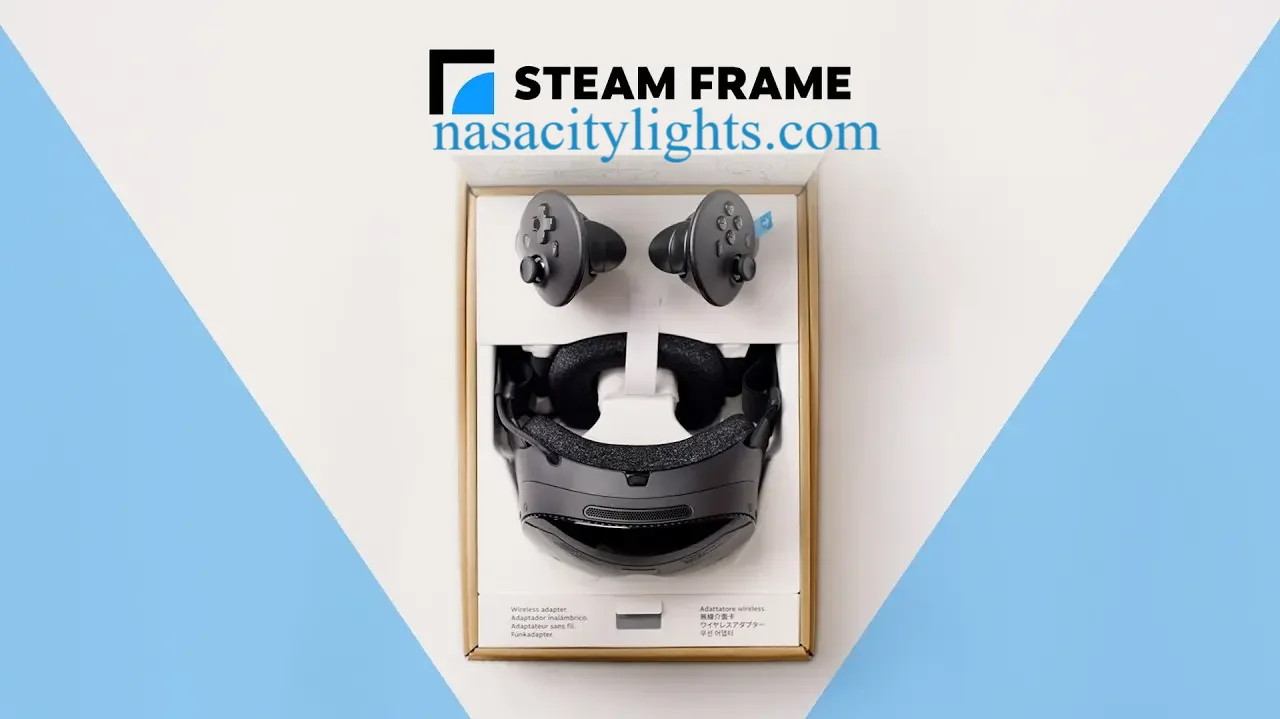
Steam Frame news has become one of the biggest stories in PC VR after Valve officially launched its new wireless virtual reality headset on September 14, 2026. The device combines standalone VR gaming with wireless PC streaming and is designed to access a much larger portion of the Steam library.
Valve is positioning the Steam Frame differently from a conventional VR headset. Rather than requiring a permanent cable connection to a gaming PC, it focuses heavily on wireless streaming while also running selected games directly on the headset.
The launch price, however, is significant. The 256GB Steam Frame costs $1,059 in the US and £889 in the UK, while the 1TB model costs $1,299 and £1,089 respectively.
So what exactly does Valve’s new VR headset offer, and is it designed for mainstream players or dedicated PC VR enthusiasts?
What Is the Steam Frame?
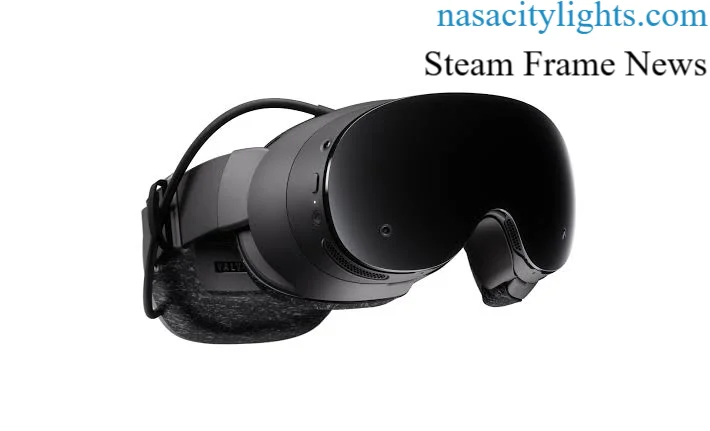
The Steam Frame is a wireless VR headset and controller system from Valve designed for both VR and non-VR gaming.
Unlike the Valve Index, the Frame does not rely on a traditional DisplayPort connection to a PC. Its main idea is to stream games wirelessly while also offering standalone functionality.
Valve says the headset can handle an entire Steam library through streaming, while more than 100 games were already Steam Frame Standalone Verified at launch. Every headset also includes a copy of Half-Life: Alyx.
The system runs SteamOS on a Qualcomm Snapdragon 8-series processor and uses ARM technology with software translation to make selected PC games possible on the headset itself.
That makes Steam Frame more than simply a VR display. It is effectively a small computer built around wireless gaming.
Steam Frame Price and Release
Valve officially launched the Steam Frame on September 14, 2026.
Here is the launch pricing:
| Model | US Price | UK Price |
|---|---|---|
| Steam Frame 256GB | $1,059 | £889 |
| Steam Frame 1TB | $1,299 | £1,089 |
Prices include VAT where applicable in regions where Valve lists VAT-inclusive pricing.
Valve is using a reservation system rather than simply opening unlimited direct sales. Sign-ups for the initial reservation period were scheduled to close on September 17 at 10 a.m. Pacific, with the first batch of purchases beginning September 18.
This approach is also intended to help reduce reseller activity.
Steam Frame Hardware and Specs
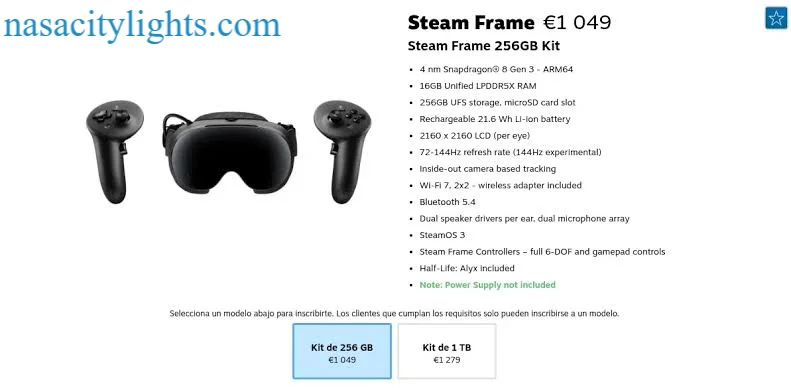
The Steam Frame combines high-resolution displays with pancake optics, eye tracking and wireless connectivity.
Key hardware includes:
- Dual 2160 × 2160 LCD displays
- Multi-element pancake lenses
- Up to 144Hz refresh rate, with 144Hz described as experimental
- Approximately 110-degree field of view
- Qualcomm Snapdragon 8-series processor
- 16GB unified memory
- 256GB or 1TB storage
- Wi-Fi 7 connectivity
- Eye tracking
- Wireless PC adapter
- SteamOS
- Dedicated Steam Frame controllers
- Rear-mounted battery
- USB-C connectivity
The headset uses pancake lenses instead of the older Fresnel-style optics found on the Valve Index. Early reviews have generally found the image clear, although LCD technology does not provide the contrast of OLED or micro-OLED displays.
How Good Is the Steam Frame Display?
The Steam Frame display is one of its more interesting hardware features.
Each eye receives a 2160 × 2160 image, giving the headset a high-resolution presentation suitable for both VR games and virtual screens. The pancake lenses are designed to provide a relatively large clear viewing area.
Early testing has found the visuals sharp enough for gaming and reading text, although reviewers have noted that the display does not offer the deep blacks and contrast possible with OLED-based VR headsets.
The headset can operate at different refresh rates, with 144Hz currently treated as an experimental option.
Steam Frame Performance: How Does It Run Games?
Steam Frame performance depends heavily on whether a game is running locally or being streamed from a PC.
Standalone gaming uses the headset’s Snapdragon hardware. This works particularly well for games that have been optimized or verified for the device, but the mobile-class processor cannot match the power of a modern desktop gaming PC.
For demanding PC VR games, Valve’s main solution is wireless streaming.
This is where the Steam Frame becomes particularly interesting.
Steam Frame PC Streaming and Foveated Streaming
Valve has built the Steam Frame around a technology called foveated streaming.
The basic idea is straightforward: the headset tracks where your eyes are looking and prioritizes image quality in that area. Parts of the scene outside your direct focus can receive less data.
This reduces the amount of bandwidth needed to transmit a high-quality VR image wirelessly.
The system also uses Multi-Link Streaming, combining the included wireless adapter with the user’s existing network connection to create a more robust connection.
For PC VR users, this could be one of the most important features of the Steam Frame.
Instead of running a long cable between a computer and headset, players can stream games wirelessly while the technology attempts to minimize bandwidth and latency problems.
Can Steam Frame Play PC Games?
Yes. PC gaming is one of the main purposes of the Steam Frame.
Valve designed the headset to stream games from a gaming PC and access the wider Steam library. The included wireless adapter is intended to create a dedicated connection between the headset and PC.
This means demanding VR experiences such as Half-Life: Alyx can benefit from the power of a desktop computer rather than depending entirely on the Snapdragon processor.
Valve is also using the headset for non-VR Steam games. Those games can appear on a virtual screen, allowing the Frame to function more like a wearable gaming display.
What Games Can Steam Frame Run?
There are effectively several ways to play games on Steam Frame.
1. PC VR streaming
A gaming PC can stream compatible SteamVR titles wirelessly to the headset.
2. Standalone VR games
Valve had more than 100 Steam Frame Standalone Verified games at launch, with the list expected to grow.
3. Non-VR Steam games
Some traditional PC games can run directly on the headset or be accessed through streaming and displayed on a virtual screen.
4. Half-Life: Alyx
Valve includes Half-Life: Alyx with Steam Frame. Users can redeem the game through the headset, although an existing copy does not provide a second license.
This gives the Frame a particularly interesting position: it can function as a standalone VR device while also acting as a wireless window into a much more powerful gaming PC.
Steam Frame Comfort and Design
Comfort is another major part of Valve’s design.
The headset uses a balanced layout, with the battery positioned toward the rear rather than putting all of the weight at the front.
Early reviewers have highlighted the lightweight design as one of the Frame’s strengths. PC Gamer lists the headset at about 408 grams, while other measurements can vary depending on configuration.
The pancake lenses also make it easier to obtain a clear image without having to position the headset with the same precision required by some older VR designs.
For people who plan to spend long sessions inside VR, weight distribution can matter just as much as raw specifications.
Steam Frame Controllers
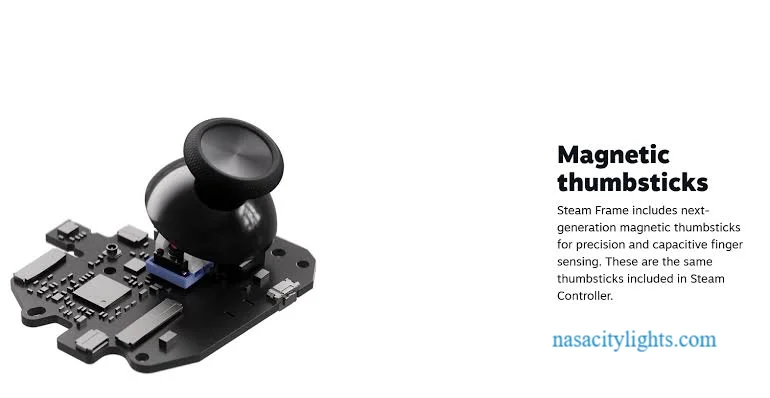
The Steam Frame comes with dedicated wireless controllers.
They provide six degrees of freedom tracking, finger sensing, haptic feedback and controls designed to work with traditional gamepad-style input.
The controllers use replaceable AA batteries, with Valve’s launch information listing approximately 40 hours of battery life.
This controller design is intended to make the headset useful for both traditional gaming and VR experiences.
Steam Frame vs Meta Quest 3
The Steam Frame and Meta Quest 3 approach VR from different directions.
Quest 3 is designed heavily around standalone VR and also supports PC VR. Steam Frame puts much greater emphasis on wireless Steam PC streaming while still supporting standalone games.
The Frame also costs substantially more at launch.
That price difference matters because Quest 3 has already established itself as a more accessible entry point into modern VR, while Valve is targeting users who may already own a capable gaming PC and have a large Steam library.
Steam Frame vs PlayStation VR2
PlayStation VR2 remains a different type of VR system because it is designed around PlayStation 5.
It uses OLED displays, giving it a display characteristic that the Steam Frame’s LCD panels cannot reproduce in the same way.
Steam Frame’s advantage is flexibility. It is designed around SteamOS, PC streaming and standalone functionality rather than being tied to a PlayStation console.
For PC gamers, the choice therefore depends heavily on whether wireless Steam integration or OLED-based console VR is the more important feature.
Is Steam Frame Too Expensive?
The price is probably the biggest discussion surrounding the launch.
At $1,059 for 256GB, the Steam Frame costs considerably more than mainstream standalone VR options. The 1TB version reaches $1,299.
Valve has indicated that memory costs affected the final price. Company developer Jeremy Selan explained that the team had wanted a more affordable device but that the global RAM market affected hardware costs.
That does not automatically make the headset good or bad value. Its value depends on what a buyer expects from it.
Someone looking primarily for inexpensive standalone VR has very different requirements from someone looking for a high-end wireless PC VR system.
Steam Frame Pros and Cons
Pros
- Wireless PC VR streaming
- High-resolution 2160 × 2160 displays
- Pancake lenses
- Eye-tracked foveated streaming
- Standalone gaming support
- SteamOS
- 256GB and 1TB storage options
- Lightweight and balanced design
- Includes Half-Life: Alyx
- Access to a large Steam library
Cons
- High starting price
- Standalone performance is limited compared with a gaming PC
- LCD display lacks OLED-level contrast
- Requires a capable PC for demanding streamed VR games
- Early software reviews have reported bugs and connection issues
- Availability initially relies on a reservation system
Who Is Steam Frame For?
The Steam Frame makes the most sense for users who already have a strong PC gaming setup and want a more convenient wireless VR experience.
It is particularly relevant to:
- PC VR enthusiasts
- Steam users with large game libraries
- VR players who dislike cables
- Gamers interested in standalone and PC gaming
- Technology enthusiasts
- Users who want virtual screens for traditional games
It is less straightforward for someone who simply wants the cheapest way to experience VR.
What Does Steam Frame News Tell Us About the Future of VR?
The most interesting part of the Steam Frame is not simply its resolution or price.
Valve is betting that the future of VR can combine standalone hardware, PC-class game streaming and traditional gaming in one device.
Foveated streaming is particularly important because wireless VR requires large amounts of data to move between a computer and headset. Valve’s approach attempts to reduce that burden by prioritizing the part of the image the player is actually looking at.
Early reviews suggest the concept works well in many situations, although launch software and connectivity remain areas to watch as Valve continues updating the device.
That makes the Steam Frame an important development in VR gaming, even though its launch price places it firmly in the premium hardware segment.
Steam Frame FAQs
What is Steam Frame?
Steam Frame is Valve’s wireless VR headset designed for standalone gaming, wireless PC VR streaming and non-VR Steam games. It runs SteamOS and uses a Qualcomm Snapdragon 8-series processor.
How much does Steam Frame cost?
The 256GB model costs $1,059 in the US and £889 in the UK. The 1TB version costs $1,299 in the US and £1,089 in the UK.
When did Steam Frame release?
Valve officially launched Steam Frame on September 14, 2026. Initial purchases are being handled through a reservation system.
Can Steam Frame play PC VR games?
Yes. Wireless PC streaming is one of the headset’s primary purposes. Valve includes a wireless adapter designed to provide a dedicated connection between a gaming PC and the headset.
Does Steam Frame work without a PC?
Yes. Steam Frame supports standalone gaming, and Valve said more than 100 games were Steam Frame Standalone Verified at launch.
Does Steam Frame include Half-Life: Alyx?
Yes. Valve includes a copy of Half-Life: Alyx with Steam Frame. Users who already own the game cannot redeem another copy for the same device.
Does Steam Frame have pancake lenses?
Yes. Steam Frame uses multi-element pancake lenses with dual 2160 × 2160 LCD displays.
What is Steam Frame foveated streaming?
Foveated streaming uses eye tracking to prioritize high-quality image data around the area where the user is looking, helping reduce the bandwidth required for wireless VR streaming.
Is Steam Frame worth it?
Its value depends on the user’s priorities. The headset is designed primarily for people interested in wireless PC VR, Steam gaming and a combination of standalone and streamed experiences. Its $1,059 starting price makes it a premium purchase rather than an entry-level VR headset.
How much storage does Steam Frame have?
Valve offers two storage configurations: 256GB and 1TB.
Author Bio: Hamid Ali is a technology and gaming writer covering VR headsets, PC gaming, emerging hardware, gaming technology, and the latest developments in the digital entertainment industry. He focuses on creating clear, accurate, and easy-to-understand guides that help readers make sense of new technology and gaming products.
Author Name: Hamid Ali
Email: johanharwen314@gmail.com
Also Read: